




Ahilya is neither nice nor well-settled because her medical degree barely counts. But Shanti Ma loves to tout Ahilya’s six-figure salary in front of the well-wishing relatives who never fail to remind her of her daughter’s single status, and her father regularly repeats to anyone in his vicinity how several boys belonging to several family branches have failed to clear the medical entrance. One by one, he counts their names on his fingers, the ones who are now enrolled in ambiguous undergraduate programs while interning with him at the shop. However, that’s where the unorthodox buck stops. A family wedding, peopled by relatives, brings out Shanti and Kailash’s most conventional selves. Like the dandyish darbaan, they try their best to be their most sporting selves, but fail miserably at it. Perhaps she could hide with her brother and cousins, avoid running into her parents or any of her aunts or uncles today, long enough to stop matchmaking machinations in their tracks.
The door to Room 28 is slightly ajar, and Ahilya pushes it open. There is a card game in progress, and boys and girls of various ages are draped indolently over the enormous double bed. This is definitely the singles’ room. Her anger slowly dissipates as she spots her brother and her four younger cousins. They are trying to peek into each others cards and judging by the thick stack of cards in her youngest cousin’s hand, she is losing big time to the elder ones more experienced in the art of bluffing. The room is littered with half-open suitcases and discarded T-shirts and towels, the dresser heaving under the weight of vanity cases and handbags.
Every spare inch of the carpet is covered with mattresses to accommodate as many cousins as possible. This part of weddings Ahilya loves.
“I bet you are bluffing,” she cries. And creeps up to pull the playing cards out of Ranbir’s hand.
“Didi.” As they hug their sister, boisterous cries fill the room that had been sluggish a few minutes before.
“How is Radhika?” Ahilya asks.
“She’s no longer free to enjoy herself,” says her brother. Ranbir, whose poker face has won him many rounds of bullshit, breaks into an impulsive performance of a coquettish bride. Raucous laughter fills the room again. Some things never change. The bride, Radhika, cannot hang out with them in the crowded singles’ room.
“Like there’s space for one more person in this room,” says Ranbir.
“Is she happy?” She looks at Ranbir and clears space on the table to rest her laptop bag. The mirth slowly fades from his eyes. One of her younger cousins switches on the TV and starts surfing channels. The question takes everyone by surprise, and the younger ones don’t know what to do with it. This room is only about food and fun, not the difficult questions.
“Well, she must be,” Ranbir says with a cynical smile. “After all, she is the chosen one.”
“What do you mean?” says Ahilya.
“Rajiv, our MBA-brother-in-law-to-be, was sent pictures of all the eligi-belles in the family. You know, like a portfolio that shows a designer’s summer collection. Starting with you, finishing with Radhika,” he says. His half-hearted attempt to smile does nothing to soften the blow of his words. Distaste fills Ahilya’s mouth as she realizes how they have all been proffered to Prince Charming, how he has played God and chosen the fairest of them all.
“No need to take it out on Radhika,” says Ahilya. “She can’t help it.” She pats Ranbir’s shoulder. “Just chill!”
“Are you chill?” he says.
“In more ways than one,” she says. Not for the first time, her hands rub away at the goosebumps on her arms. Left to her, she would have chosen March, or October, any month but brumal February to go back home, but it hadn’t been left to her. Who gets married at the peak of winter? Only we North Indians. Not for the first time, she marvels at her clueless, completely self-absorbed family. Kanta Masi, Radhika’s mother, had said as much on her telephone call when she had called Ahilya a month ago to invite her for the wedding.
“You need to be here for the wedding, Ahli,” said her aunt.
“Masi, you should have done it during the Christmas break. I might not get leave again so soon.”
For Kanta Masi, Christmas was not Diwali and paid leaves were minor logistics that did not matter. “You know, beta, we North Indians cannot get married during December. No dates in the panchanga.”
The panchanga tries Ahilya’s soul. The appearance of the complex Hindu calendar is most deceptive. A clone of the paper calendar, it rests passively on the white wall of her father’s study. To an innocent bystander, it appears to be a sleepy, harmless planner, but, like a serpent waiting to strike, it wakes up on days when the family, for once, is laid back and relaxed enough to ignore it. It predicts lunar days, solar days, lunar months, solar months, and to add insult to injury, it foretells movements of the Sun and Moon before finishing on good days. Dates and times that are providential for good beginnings for all life events like naming rituals for newborns, laying foundation stones for new homes, starting a new job, and most importantly, weddings.
She remembered the day she was supposed to start work in New Delhi, a Monday, but the panchanga had suggested the following Thursday of that week was the auspicious date. She had protested, but to no avail. She had to send a quick email citing a personal emergency as the reason for the delay. She was sure that the panchanga had a hand in fixing this February middle-of-the-week date. After all, who gets married on a Wednesday in February?
People who choose each other through photographs.

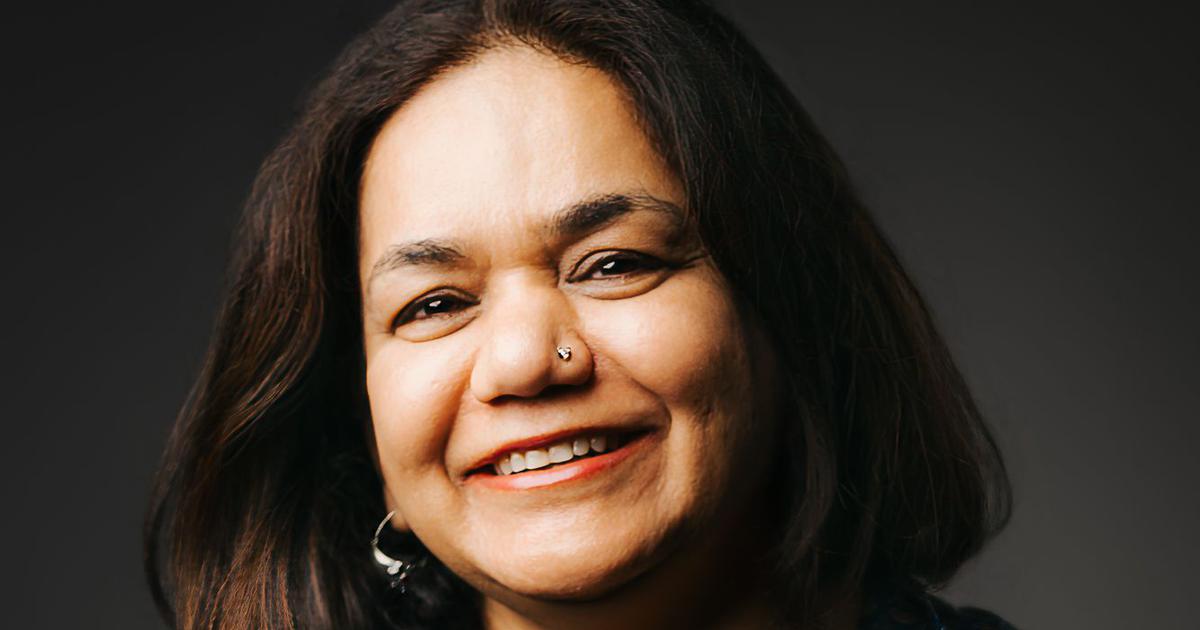
Excerpted with permission from The Wedding, Vandana Nair, Santa Fe Writers Project.
