



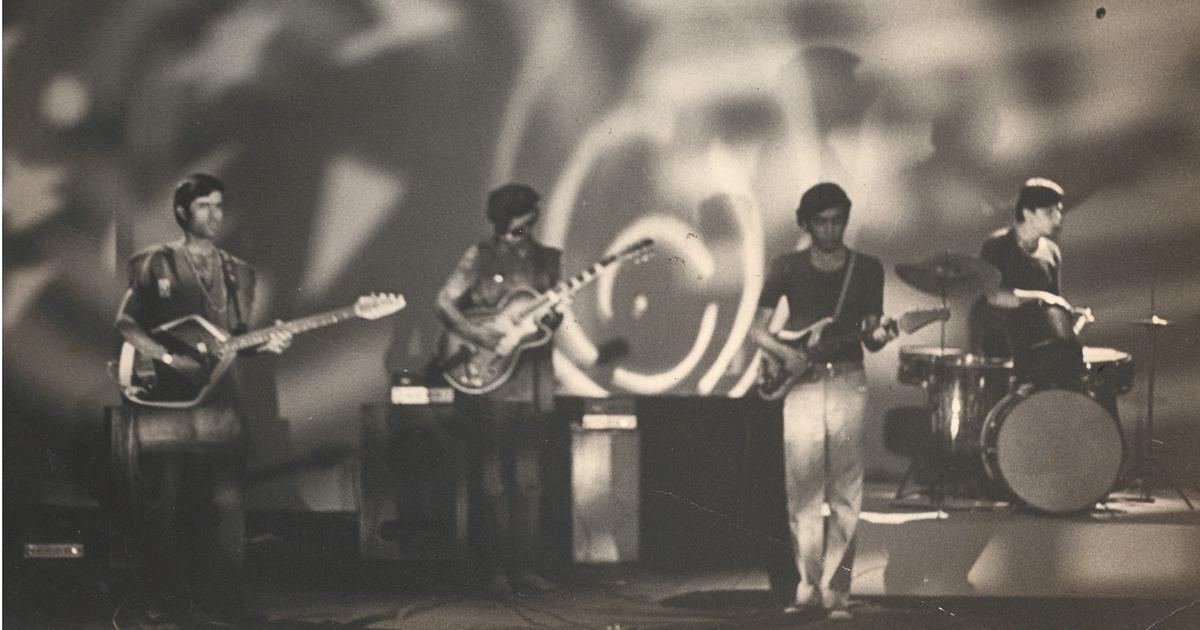
In 1971, a young Parsi guitar player named Cyrus Tata found himself weaving through the Calcutta traffic on his Lambretta scooter with legendary film director Mrinal Sen riding pillion, hanging on to a large amplifier.
They were on an urgent chore. Sen had hired innovative sitar player Ananda Shankar to compose the background music for Calcutta 71. Tata, a member of the Ananda Shankar Orchestra, was among the musicians Shankar had roped in to record the tunes.
But in the middle of the session, Tata’s amplifier broke down. As his guitar was crucial to creating the sitar-driven psychedelia on the soundtrack, the director immediately took charge. He not only recommended an experienced repairman near Moulali, Sen even offered to accompany the young man there.
That scooter ride would seem to be emblematic of Tata’s career, balancing creative music projects and the world of film.
The repair job was successful. The recording was salvaged, and Tata even made a brief on-screen appearance in Calcutta 71 with his band High Noon.
Long after this dash to the technician’s workshop, Sen would be a regular visitor at the Tata home on Madan Street. A quiet camaraderie developed between the director and the guitarist rooted in family ties: Tata’s father, a film distributor, had arranged the finance for Sen’s Interview (1971).
Cyrus Tata himself was later involved with the next two films of Sen’s political trilogy. He distributed Padatik (1973) and played guitar on the soundtrack of both Padatik and Chorus (1974). Sen grew fond of the Tata family – and particularly enjoyed Tata’s mother’s style of preparing the classic Parsi egg dish, akuri.
Decades later, in 2003, Sen would laud Tata in The Statesman as “a talented guitarist, nothing short of being a genius”.
Cut to 1978. Cyrus Tata had established himself as an accomplished musician in Calcutta while also helping run his family’s film distribution business. One day, as he visited the Sovexportfilm office on Wood Street, he happened to be carrying a copy of Eric Clapton’s record 461 Ocean Boulevard.
Igor Gerasimov, the head of Soviet film distribution in eastern India, noticed the album. Gerasimov was usually dismissive of local distributors. But as a fan of rock music himself, he pushed Tata’s name to join the Indian delegation to the Tashkent Film Festival of 1978.
Tata embarked on the fortnight-long trip as part of a 45-member delegation that was a who’s who of Indian cinema. It included Raj Kapoor, Rishi Kapoor, Basu Chatterjee, Shyam Benegal, Gulzar, Shabana Azmi, and Smita Patil.
Upon his return, Tata was appointed distributor of the Soviet film The Gypsy Camp Vanishes into the Blue (1976), which premiered at Calcutta’s Jyoti Cinema and was attended by lead actress Svetlana Toma.
Western music, it was clear, served Tata as both a personal passion and a professional asset, helping him to move between the worlds of music and the movies with ease.
Born in 1952 into a Parsi family with strong musical interests, Cyrus Tata grew up alongside his two sisters. His father, Jamshed, had been transferred from Bombay to Calcutta in the 1940s as part of MB Bilimoria’s film distribution group.
Like many Parsi families of the era, the Tatas had a taste for Western classical music. His mother, Shirin, and younger sister, Arnavaz, played the violin, while his eldest sister, Dhun, was a high-level pianist and had earned a licentiate from Trinity College London.
Cyrus Tata, however, envisioned a different route: he was obsessed with rock and roll. He was especially fascinated by the Beatles and the collective energy of band music. His parents arranged for him to take guitar lessons with Ricky Chadburn, who was a part of the band that played the weekend Gaylords Sessions at Trincas on Park Street.
After six months, Chadburn introduced Tata to the impresario KC Sen, who promptly put the 12-year-old budding musician on stage at his Sunday Band Wagon Show at the New Empire Theatre. “I didn’t have any jitters or stage fright,” recalled Tata. “I was surrounded by friends, musicians, and my teacher.”
Tata tuned regularly into All India Radio programmes such as Musical Bandbox and Lunchtime Variety and began collecting records. “I was a regular customer at Harry’s Music House on Chowringhee and New Gramophone Stores on Lindsay Street,” he said. Both were located just a short walk along his neighbourhood in the Dharamtala area.
Tata attended La Martinière School and later St Xavier’s College in Calcutta. His schoolmates would go on to form the vanguard of the Calcutta rock music scene: drummers Razmick Priantz, Robin Sen, and Nondon Bagchi; and guitarists Deb Mahalanobis, Neil Sen, Adi Irani, and Gyan Singh.
As the son of a film distributor, Tata frequently attended movie screenings hosted by the United States Information Service at the Metropolitan Building near Chowringhee. It was here that he watched the Oscar-winning movie High Noon (1952). That title later became the name of the rock band Tata formed alongside Priantz, Mahalanobis and Anglo-Indian guitarist Ninian Robinson.
Independence Day 1970 was a milestone for Tata. That day, when sitar player Ananda Shankar, who had recently returned from the US, was invited to perform at the inauguration of All India Radio’s Yuvavani programme, the members of High Noon formally joined the Ananda Shankar Orchestra.
For Tata, it opened the door to a busy new phase – concerts across India and abroad, television and radio appearances, and work in Bengali cinema.
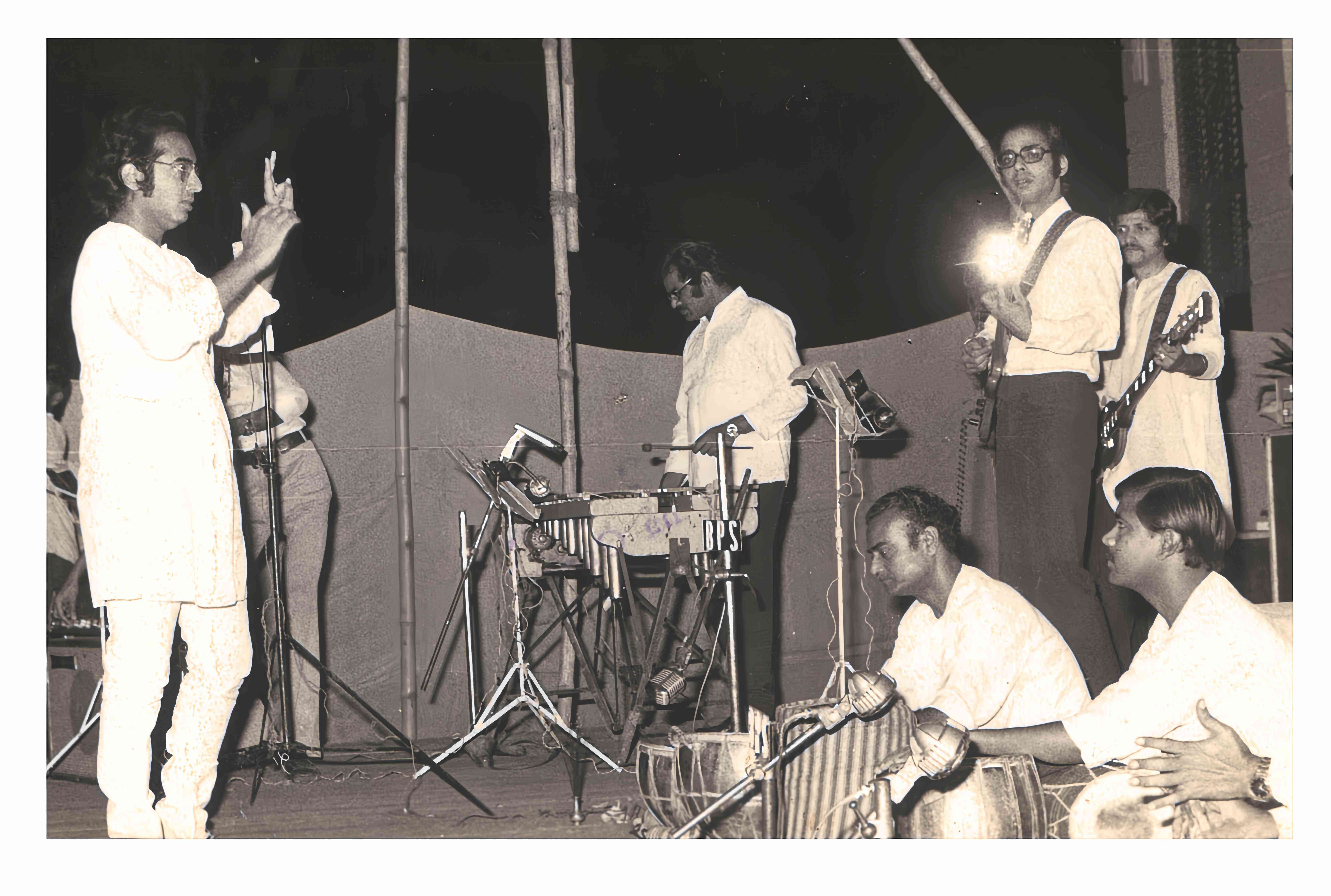
Shankar’s wife, dancer-choreographer Tanusree, described the guitarist as one of her husband’s “closest associates right from the very beginning”. Shankar’s sister, dancer-actress Mamata, recalled that after her brother returned to India from the US in 1970, “all of his best creations happened on Cyrus’s chords”.
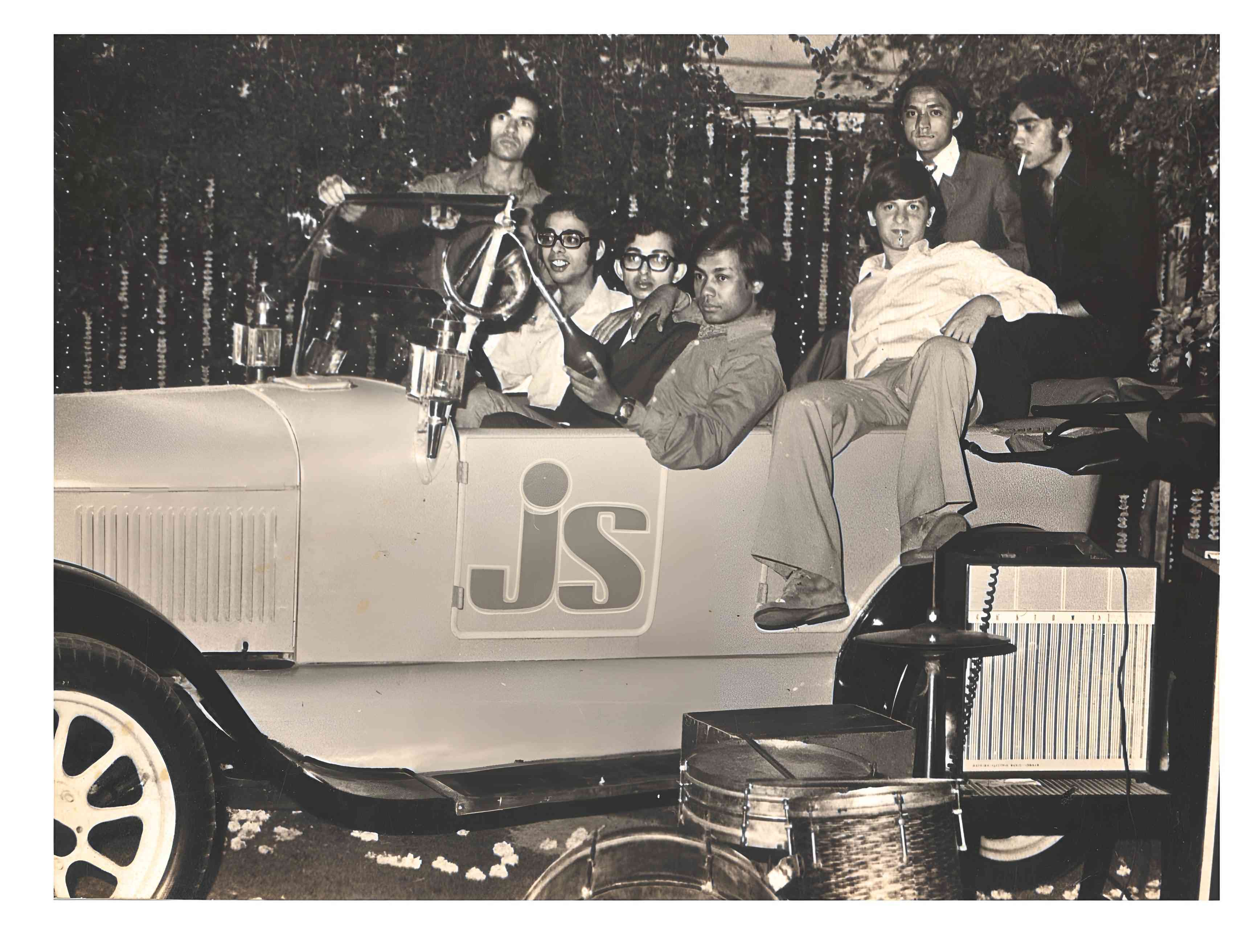
In 1971, High Noon participated in the Cordel-JS Rock contest at Calcutta’s Kalamandir Auditorium and at Bombay’s Sneha Yatra. Tata played lead guitar, performing classic rock songs by bands such as The Who, Cream and the Rolling Stones.
Over time, Tata developed a close bond with the Shankar family. He also performed in Shankarscope (1970), an imaginative production by Ananda Shankar’s father, Uday Shankar, which blended dance, drama and film.
In 1975, Ananda Shankar composed a piece dedicated to Tata. The guitar player toured internationally with the Ananda Shankar Audiovisual Experience ensemble in Kuwait and Belgium.
Through the Ananda Shankar Orchestra, Tata met some of Calcutta’s finest session musicians. Pianist and vibraphonist Anto Menezes “was one of the outstanding musicians I had the privilege to play with and a close friend”, Tata said. “Then there was the drummer Victor Shreeves, whom I met through Anto when the three of us backed Miss Shefali’s [cabaret] stage shows. There was jazz guitarist Chad Bronckhurst, who played in a Shankar recording with us and regularly with [saxophonist] Braz Gonsalves, [vocalist] Pam Crain and [keyboard player] Louis Banks. I also played with Laurie Pereira, one of the last of the old-time Goan jazz singers, who surprisingly spoke to me in perfect Gujarati.”
Tata also worked alongside flautist Aloke Nath Dey, who was director Satyajit Ray’s favoured music arranger, and percussionist Pandit Dinesh, who would go on to participate in several international projects.
Tata said that when he performed with Shankar, he mostly used a percussive rhythm style. He was among the earliest to use the “wah pedal” and the “fuzz” effects in Bengali film recordings. This added a novel texture to his guitar-playing.
Around this time, Tata was invited by veteran multi-instrumentalist V Balsara to play on a Rabindra Sangeet album with vocalist Hemanta Mukherjee. Though Tata’s inclusion initially raised eyebrows among purists, the collaboration was well-received.
In the late 1970s, music director Ajoy and his film director brother Sukhen Das brought Tata in as a session musician to record the song Sudhu Akashe Ki Bidyut Chomkay for the Bengali movie Nyay Anyay (1981).
This was where Usha Uthup, the vocalist on the track, first noticed him.
By then, the “Queen of Indian Pop”, as Uthup would later be known, had already gained attention for Hindi film songs like Ramba Ho and Hari Om Hari. This earned her a wave of concert offers from across India. She decided to form a personal backing band. The Sound had Tony Menezes on keyboards, Emile Issacs on bass, Tata on guitar, Tapan Roy Chowdhury on percussion, and Amal Roy on drums.
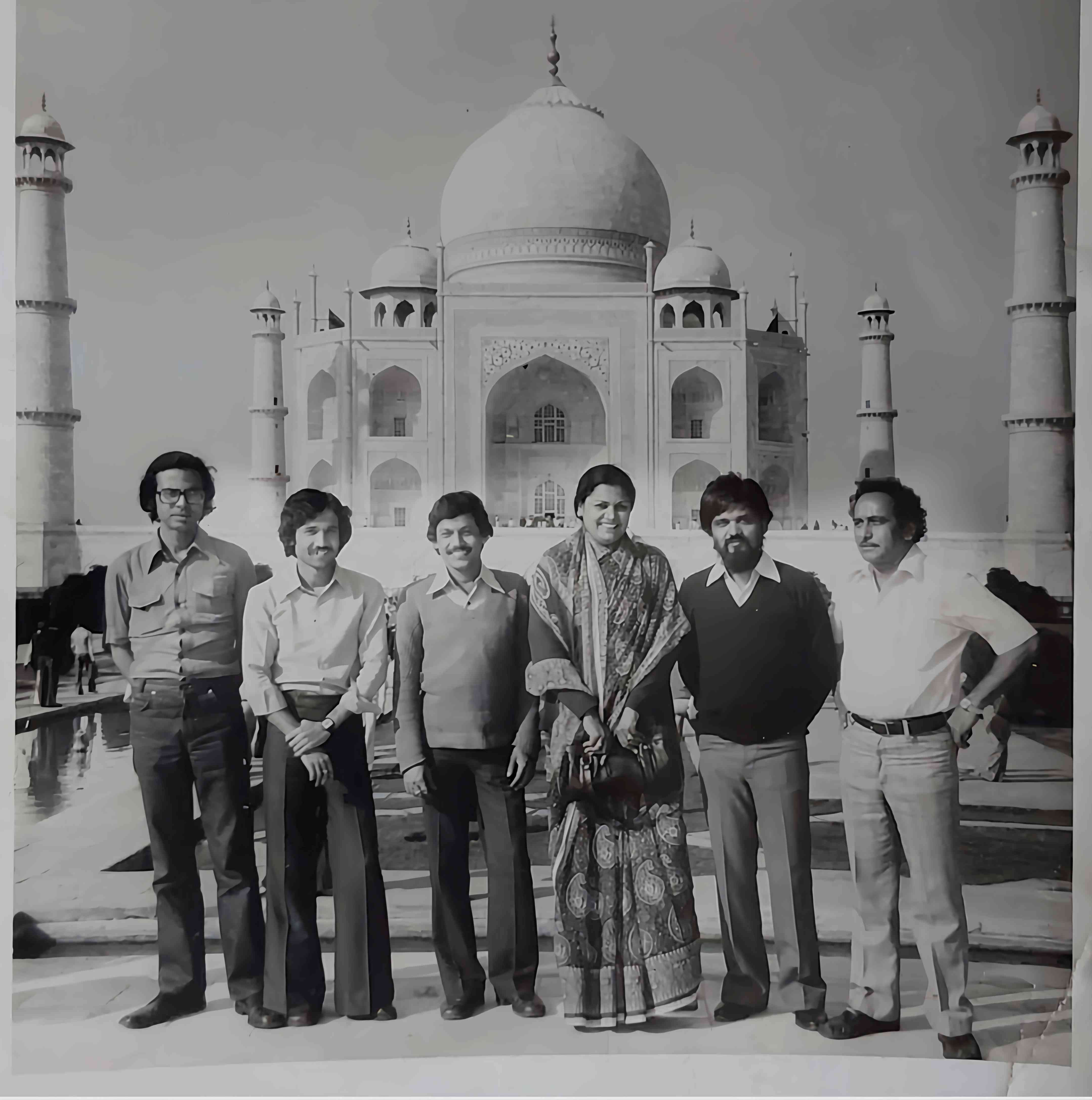
In 1982, Tata toured the United States with Usha Uthup, performing in major cities for almost a month. “She did eclectic sets of Hindi and English songs,” he recalled. Film stars Asrani, Sachin, and Parveen Babi were part of these shows,
In the late 1970s, Tata briefly played with the Calcuttan rock group High. It was through drummer Nondon Bagchi and bassist Llewellyn Hilt that he met two of his biggest musical influences: guitar players Melville Samuel and Bertie Da Silva.
Da Silva introduced Tata to a completely different approach to the guitar. “This was the JJ Cale and Jerry Garcia style – a deeply thoughtful, controlled style that relied on a minimum number of notes,” Tata said.
Thanks to Da Silva, Tata also discovered the music of Bob Dylan and Neil Young, along with the broader soundscape of American folk-rock.
In August 1981, Tata participated in a concert of acoustic folk-rock and country called “A Simple Show” alongside Da Silva and bassist Malcom Peters. In 1984, for their follow-up concert titled The Country Show, Tata expanded his toolkit to the banjo, mandolin, and slide guitar alongside his acoustic and electric lead work. The show earned rave reviews, sparking a series of country music shows.
“He is an underrated madhatter,” Da Silva said about Tata. “He has a fantastic ear…He possesses a rare combination of unique style, creative originality, and a thoughtful approach to fitting ideas into song arrangements. No flash. No overplaying. It requires a lot of musical maturity.”
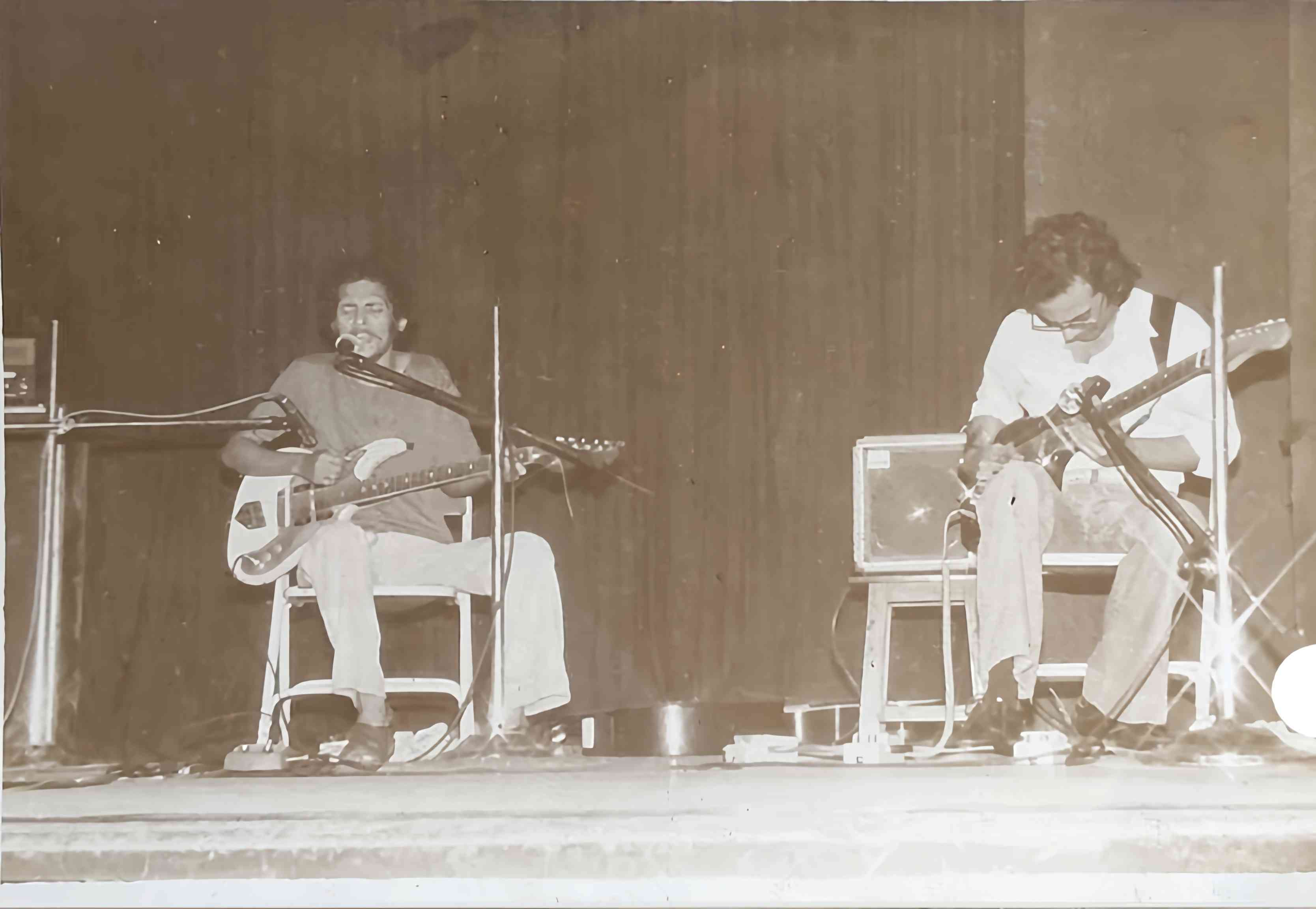
Along with the music, Tata was still involved in film distribution ventures. He enjoyed the unwavering support of close family friends: producer-director Homi Wadia and his wife Mary – better known by her screen name, Fearless Nadia, the first action heroine of Indian cinema.
In 2002, he succeeded the retiring Carlton Kitto as a guitar instructor at the Calcutta School of Music. His creative portfolio further extended to producing a Buddhist meditation cassette for the German-born monk Ashokananda, reviewing music for the Calcutta-based Window on Travel magazine, and serving as the music director for the Calcutta Parsi Dramatic Club’s Parsi New Year plays for 25 years.
Since 2025, however, Tata “simply plays for himself”, exploring his newfound interest in gypsy jazz.
But his peers still speak of his prowess with awe. “His talent has remained unsung,” said dancer Tanusree Shankar. Actress Mamata Shankar described him as “very honest and straightforward”, adding that despite his vast talent, Cyrus Tata “never really craved the recognition he truly deserves”.
Usha Uthup echoed this warmth. “Cyrus is who I would call a consummate musician,” she said. “I have always had a lot of respect for his style of playing. There were times I felt nobody could strum the guitar the way he did.”
Arka Chakraborty is a PhD candidate at SOAS University of London, researching Kolkata’s Anglophone music scene.
