




It won’t be an exaggeration to say that an extraordinary number of novels and short story collections from North-East India are being published. Some of these have been works in translation, but a fair amount has been written in English. Given this variety of literary offerings, one might suspect a repetition of themes and styles, and yet many novels and short story collections have surprised the readers.
Shehnab Sahin’s debut, a collection of stories titled Colour My Grave Purple and Other Stories, joins the ever-growing stack of diverse and compelling literature from the north-east, this time from the state of Assam. Sahin is a student of history – perhaps this could be the reason behind her adoption of a chronological arrangement for the ten stories that comprise this collection, starting in the mid-19th century and ending in 2019.
A new history
What this progressive arrangement therefore achieves is that it gives the reader a sense of Assam’s history, which becomes significant given its persistent erasure in mainstream history books. This narrativisation of history begins by situating the first story of the collection, “Two Leaves in a Bud,” in the context of the beginning of the tea industry in Assam by British colonisers following their discovery of soil conducive to growing tea that fetched a good price in the London tea auction houses.
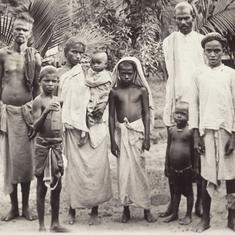
While Assam continues to be known for its tea, Sahin’s story sheds light on the darker history of indentured labourers who were brought to the tea gardens from far-off lands to work in hostile conditions, often with little or no pay. Importantly, the story not only touches upon the emerging resistance towards British colonialism even in faraway Assam but also empathetically depicts the plight of the women, wives or partners of the British men, who were made to accompany and live with them in an alien land bereft of the support of loved ones.
The next story, “Bellows of a Wilted Poppy,” continues thematically in drawing attention to how poppy cultivation in Assam was banned during British colonialism as the land was cleared to grow tea. It also draws attention to certain political weaknesses such as the invasion by the Burmese and the decline of the mighty Ahoms, that paved the way for British rule. However, what stands out in this story is writing back to the empire, noted in the condescension with which the origin of man in the western civilisation is spoken of and compared to native stories of origin, or how an inherent suspicion of western medicine is posited against faith in herbal medicine and practitioners of the same.
But Sahin’s stories do not necessarily present a binary viewpoint of the coloniser-colonised relationship and complicate one’s understanding of “natural” allegiance. In “Ursula,” one is presented with Ursula Graham Bower, a “memsahab,” who is initially viewed with mistrust but through the peculiar manner in which history unfolds, becomes an ally of the locals, a “Naga Queen,” when they come under the threat of the Japanese, an enemy common to both the coloniser and the colonised. Once again, “Ursula” also alludes to a chapter of history barely known outside the northeast about the horrific ways in which it was directly impacted by the Second World War.
Yet another chapter of history, known to most through textbooks or public utterances but not through lived experience, is the Chinese aggression of 1962 and the very real fear of having the Chinese at one’s doorstep. This period of history is evoked in “Sunsets in the East.” As the collection progresses, the politics naturally become more contemporary and therefore possibly more familiar. But one of the strengths of Sahin’s storytelling is that even when a story alludes to Assam’s darkest chapters of the Assam agitation or the violence-filled days of insurgency when the ULFA reigned supreme, Sahin still urges a new perspective.
Therefore, while stories such as “Alliances,” touch upon how along with support of the masses, the youth specially were galvanised during the Assam agitation, ready to abandon their education to fight for the cause, it does not gloss over underlying anxieties of people of different religious communities coexisting seemingly harmoniously and fighting together for a common cause, because these very anxieties have at times flared up and led to unspeakable bloodbaths like the massacre at Nellie. While the playing up of communal tensions in Assam is largely known and recorded by historians and journalists, Sahin’s stories, such as the poignant “Love Is a Flimsy Kite,” examine how the othering is practised, perpetuated and normalised even by those who have been at the receiving end of such targeted attacks themselves. Therefore, the unnamed, indigenous Muslim man from upper Assam breaks off his engagement with the unnamed woman of Sylheti origin, a “miyani”, because he and his family ultimately find her unacceptable. One finds it remarkable that almost all the stories in this collection are either clearly political in their intent or depict even the personal as deeply invested in the political and ideological.
Politics on point
“Freedom in my Blood” traces the trauma of Mamoni, a young girl, as she deals with the taboos associated with menstruation and the isolating rituals she is put through while she grapples to come to terms with a phase of her life nobody had prepared her for. Significantly, the regressive and demanding rituals she is subjected to are thrown into relief against the growing fervour of the Freedom struggle and the excitement preceding the arrival of Mahatma Gandhi in Assam for his first visit.
“Animal Instinct” concerns a growing preoccupation with the Anthropocene in literature from Assam. But while the story depicts the perils of growing human-animal conflicts in the region with urbanisation shrinking forest cover, the story also lays bare the arrogance of the intellectual who presumes to understand and explain these conditions to those living with them.
One story from the collection that can be seen as mired purely in the personal is perhaps the “Devotional Defiance”, which also points to yet another emerging trend in literature from the region – issues of sexuality and sexual identity. Interestingly, the story depicts the protagonist finding safety and acceptance at the religious site of a monastery after he is thrown out of his home once his homosexuality is discovered.
The other story that comes across as intensely personal is, of course, the title story, “Colour My Grave Purple,” that juxtaposes personal loss against those brought about by acts of political violence, such as bomb blasts and shoot-outs and the ability to heal and find meaning in life even when the randomness of tragedy makes it hard.
For a debut collection, Shehnab Sahin’s Colour My Grave Purple and Other Stories is truly a remarkable achievement, marking a depth of understanding of pertinent issues which she weaves into the stories with facility, without compromising either on her politics or the aesthetic demands of literature. One does note a certain unevenness in the quality of the narration of stories, with Sahin appearing to navigate with greater ease the stories from more contemporary times, in contrast to the slight stiffness that one encounters in the first few stories. Also, while the author incorporates elements of folklore or common beliefs and practices representative of the region and its diversity, sometimes the attempt comes across as one to present the region as exotic, which can be problematic. But to achieve a balance between being authentic and exotic is not necessarily an easy act to navigate, especially as writers from the northeast continue to bear the burden of representing their region in a manner agreed upon as acceptable. So small reservations apart, one must state that this is a truly wonderful, diverse, vibrant collection of stories and one looks forward to reading more from Sahin in times to come.
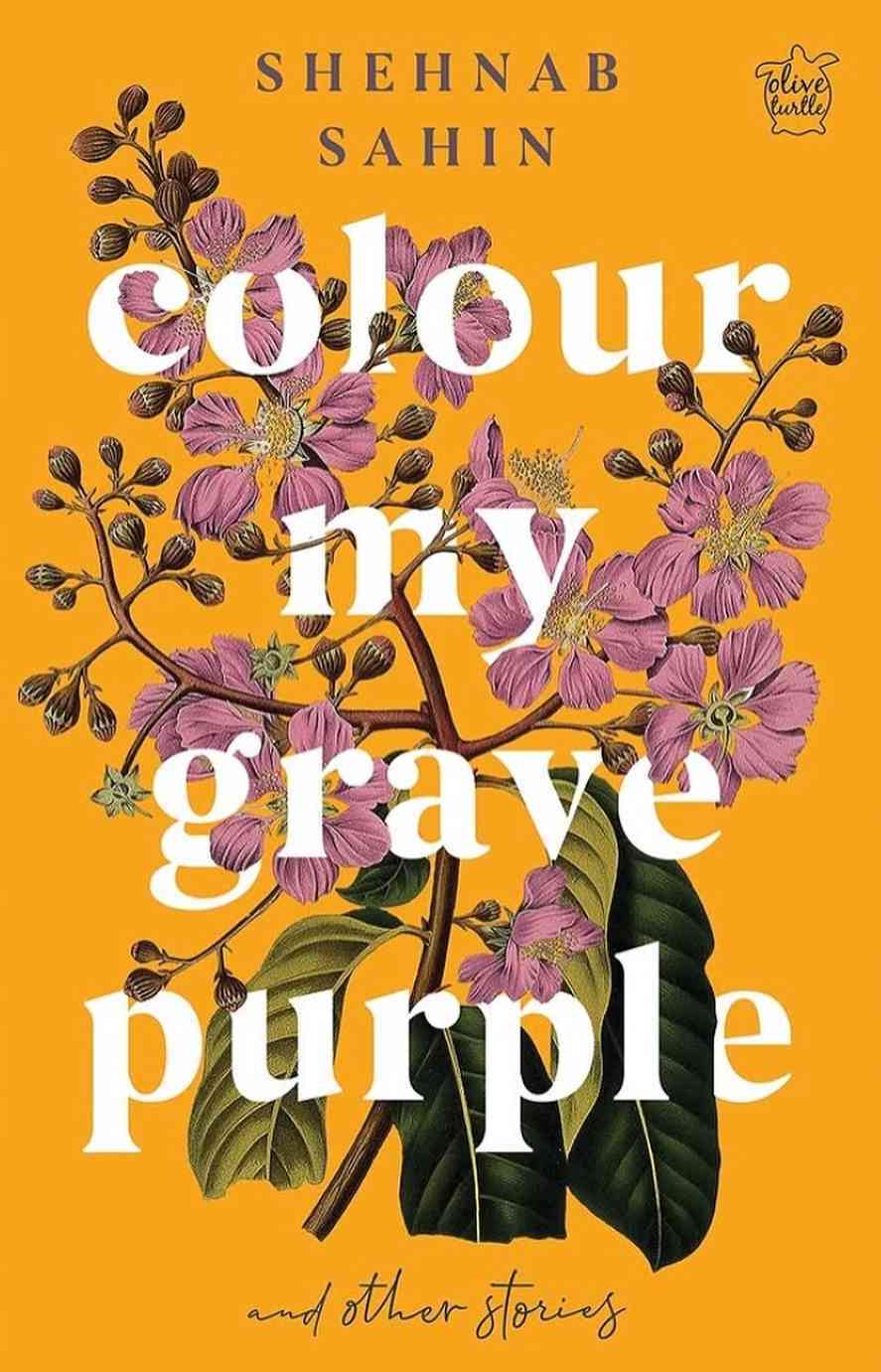
Colour My Grave Purple and Other Stories, Shehnab Sahin, Niyogi Books.
