






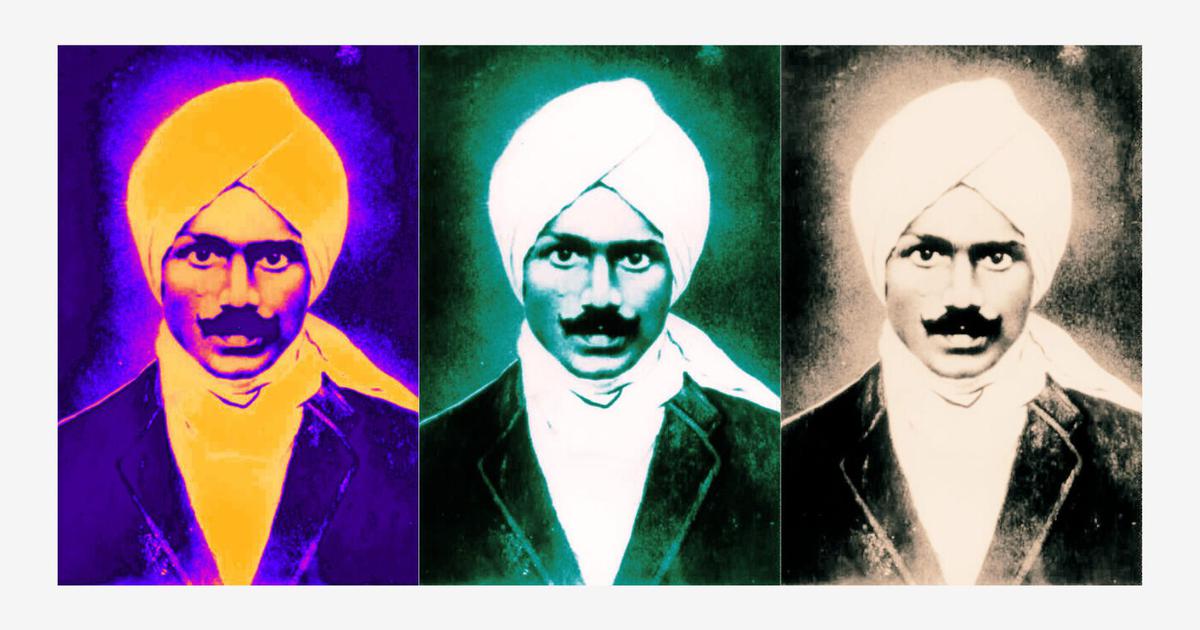
There is room for us to conclude that Bharathi did not merely know of Giuseppe Mazzini as a rebel. Mazzini had a multifaceted personality and Bharathi was familiar not only with Mazzini’s political writings but also his thoughts on art, literature, and so on. In his 1906 article titled “Art”, Bharathi cites Mazzini. While discussing the dearth of art, he writes that Mazzini, the Italian scholar, said that true art is born in two ways – it is born when an epoch ends and when an epoch takes birth. When the people of a country rise with true valour and energy there is a renaissance of art. In times of decline when the people are at a low, great men may appear but not great art. In December of the same year he wrote “Patriotism and schools”, in which he wonders whether to laugh or weep at the Indians who call themselves nationalists, who are there in plenty, who have read about western nationalists like Mazzini and Kossuth; convene meetings like them and pass resolutions; but while the westerners act upon those resolutions, in India they remain just words and not deeds.
All of the above reveal the impact of Mazzini and others on the Indian nationalists, and in particular on Bharathi. When Tilak, VOC and Siva were sent to jail in the latter half of 1908, Bharathi thought it was the end of one stage of the war. According to him, the war of independence started when the cry of “Vande Matharam” was born in 1905, and that the first phase came to an end with Tilak’s deportation; and that the second stage had not started, it was an interregnum when both sides rested. So, he asked what should be the duty of the nationalists and cited the example of Mazzini. He wrote that Mazzini had the good fortune of seeing his country free in his lifetime, and that Mazzini had started Young Italy and that in the first stage, his effort had failed and Austria had triumphed. Then he reproduced four pages of Mazzini’s article to show that Mazzini was not disheartened by defeat but was confident that the next stage would come. “The words of Mazzini fully apply to us. This is why nationalists like Bipin Chandra Pal and Chandra Pal Khaparde who never relied on aid from outsiders have now gone to Europe.” It is worth noting that Va Ve Su Aiyer’s biography of Garibaldi was published in India in 1909–1910.
It is because he was impressed by the writings of Mazzini and others that he wrote in his prayer to Sudanthira Devi that “many westerners by their valour had attained independence and that they were prepared to give up their lives for it.” He called his English journal Bal Bharatha and hailed the arrival of young Bharat, which was unbeatable.
All these are the reasons why he read out the vow of Mazzini’s followers to VOC and why he translated it. It was to strengthen the revolutionary fervour like Bankim did with his Anandamath. It also shows Bharathi’s stance regarding armed struggle and secret societies.
Each member will, upon his initiation into the association of Young Italy, pronounce the following oath in the presence of the initiator:
In the name of God and Italy;
In the name of all the martyrs of the holy Italian cause who have fallen beneath foreign and domestic tyranny;
By the duties which bind me to the land wherein God has placed me, and to the brothers whom God has given me; By the love – innate in all men – I bear to the country that gave my mother birth, and will be the home of my children;
By the hatred – innate in all men – I bear to evil, injustice, usurpation, and arbitrary rule;
By the blush that rises to my brow when I stand before the citizens of other lands, to know that I have no rights of citizenship, no country, and no national flag;
By the aspiration that thrills my soul towards that liberty for which it was created, and is impotent to exert; towards the good it was created to strive after, and is impotent to achieve in the silence and insolation of slavery;
By the memory of our former greatness, and the sense of our present denigration; By the tears of Italian mothers for their sons dead on the scaffold, in prison, or in exile;
By the sufferings of the millions, I, AB, believing in the mission intrusted by God to Italy, and the duty of every Italian to strive to attempt its fulfilment; convinced that where God has ordained that a nation shall be, He has given the requisite power to create it;
that the people are the depositaries of that power, and that in its right direction for the people, and by the people, lies the secret of victory;
convinced that virtue consists in action and sacrifice, and strength in union and constancy of purpose: I give my name to Young Italy, an association of men holding the same faith, and swear: To dedicate myself wholly and forever to the endeavour with them to constitute Italy united and free, independent, republican nation;
To promote by every means in my power – whether by written or spoken word, or by action – the education of my Italian brothers towards the aim of Young Italy; towards association, the sole means of its accomplishment, and to virtue, which alone can render the conquest lasting; To abstain from enrolling myself in any other association from this time forth;
To obey all the instructions, in conformity with the spirit of Young Italy, given me by those who represent with me the union of my Italian brothers; and to keep secret of these instructions, even at the cost of my life;
To assist my brothers of the association both by action and counsel – now and forever. This I do swear, invoking upon my head the wrath of God, the abhorrence of man, and the infamy of the perjurer, if I ever betray the whole or a part of this my oath.
That Mazzini and his work had a deep influence on the youth of Tamil Nadu is evident from the fact that after Ashe was shot dead, the police searched the homes of those who were members of the secret society that rendered support behind the murder and found copies of the oath to be taken by members of the Abhinava Bharat Society.
While Nilakantha Brahmachari was taking steps towards armed struggle, a society called Bharatha Matha Sangam was established with branches in various places in the Thirunelveli district, and in Shencottah and Punalur. Though at first these were localised, when Va Ve Su Aiyer went to Pondy and young men like Vanchi followed him, the reach of the societies spread wider, and it appears to me that the name may have been changed to Abhinava Bharatha Samajam. It is also possible that because Va Ve Su Aiyer was a close friend of Savarkar and had direct contact with Indian revolutionaries while in Europe and even after he came to Pondy, the Bharatha Matha Sangam was renamed Abhinava Bharatha Samajam as a branch of Savarkar’s Abhinava Bharatha Sangam.
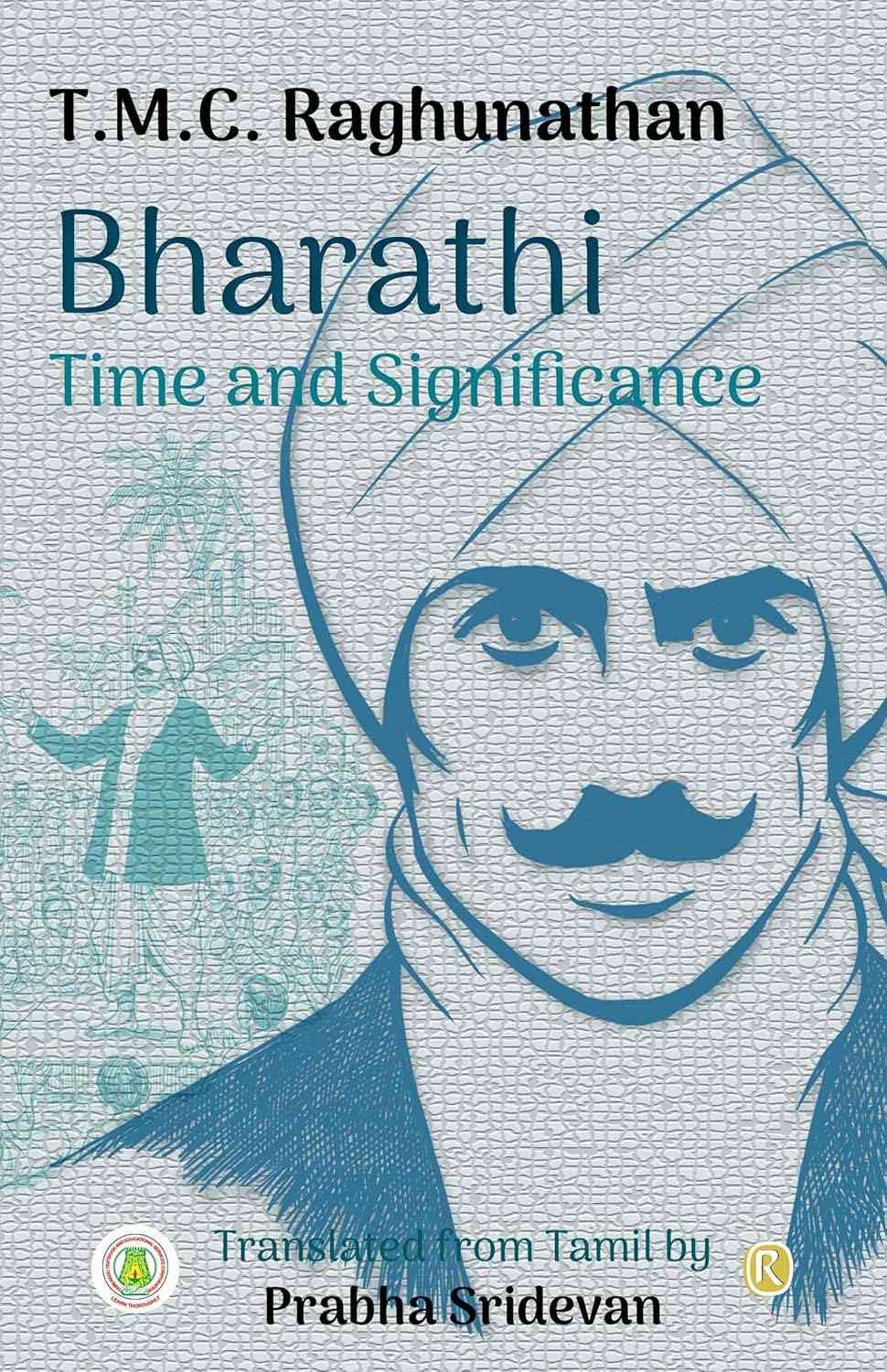
Excerpted with permission from Bharathi: Time and Significance, TMC Raghunathan, translated from the Tamil by Prabha Sridevan, Ratna Books.
