







Mir Taqi Mir and Mirza Ghalib were the two most prominent Urdu poets of 18th-century Mughal India. Apart from being contemporaries with a fair amount of envy for each other’s poetic repertoire, they also held each other in great esteem. Revered as Mir was as Khuda-e-Sukhan (God of Poetry), Ghalib went a step further and praised him in the following couplet:
Reekhta ke tum hi ustad nahin ho Ghalib
Kehte hain agle zamane men koi mir bhi thaYou are not the only master of Rekhta, Ghalib
They say there used to be a Mir in the past
Faisal Devji, much like Mirza Ghalib, reverentially starts his new book Waning Crescent: The Rise and Fall of Global Islam with an interesting couplet by Mir Taqi Mir:
Mir ke din-o-mazhab ko ab puchhte kya ho unne to
Qashqa Khincha, dayr men baytha, kab ka tarq islam kiyaWhy do you ask Mir about his religion and school?
He’s daubed saffron on his forehead and is sitting in a temple
Having long abandoned Islam.
What makes this couplet interesting is the context in which it was written. The Mughal Empire, though on its last legs, was still alive. Muslims living in the subcontinent barely felt any anxiety about their political relevance, or for that matter, any concern regarding their downfall. What is even more curious about this couplet is the treatment of the word “Islam”. Islam at this point in time, and particularly in Mir’s couplet, meant something completely different from what it means today.
What’s in a name?
It is this novel treatment of the word “Islam” that Faisal Devji explores in great detail in Waning Crescent. It also ends up as the subject of the fundamental premise of the book. “Islam was a rare word,” writes Devji, “with a largely negative meaning in the poetic canon of 18th-century India. That is because in Mir’s time it had not yet become the only or even the most important name by which Muslims could be identified.”
Islam at that point in time was at best understood as a set of ritualistic practices rather than a political entity or a civilisation that needed to be saved or resurrected. Mir’s treatment of “Islam” was personal, and did not imply any threat to Islam or to the collective life of Muslims. This distinction is particularly interesting, as it reminds the reader of how unburdened religious vocabulary once was before it became entangled with the identity politics and communal anxieties that shape much of our discourse today.
Sometime around the middle of the 19th century, when most of the Muslim empires in the world were endangered, another Indian poet, Altaf Hussain Hali, in his epic Madd-o-Jazr-e-Islam (The Flow and Ebb of Islam), turned Mir’s interpretation of the word “Islam” on its head. In Hali’s epic, Islam represented a broader idea than just a religion with a set of ritualistic practices. His understanding surpassed all traditional definitions of Islam, which thought of it merely as a theological idea or a conception of law.
Hali dealt with Islam historically, and personified it as an actor in its own right, with the agency to act in shaping the world. It is this vision of Islam, argues Devji, that has come to define and even dominate its modern history. This shift from Mir’s intimate and personal vocabulary of faith to Hali’s civilisational imagination reflects the anxieties of a world in transition where religion has gone on to become more of a question of collective destiny rather than merely a personal belief.
Over the course of the 19th century, Islam was gradually transformed from a set of ritual practices into a comprehensive structure, almost like a system that claimed to act in the world as civilisations did in the nineteenth century and ideologies would in the 20th. During this time, Islam faced the possibility of the downfall of its political empires, but not necessarily of its spiritual expanse.
From this point onwards, it’s this anxiety about the end of Islam end that has marked its influential presence in modern history. To be a Muslim now was to act in a way so as to prevent Islam’s demise and stand as a bulwark against all the projects of reform that put its existence in doubt. According to this conception of Islam, all endeavours spearheaded by the West, which led to the globalisation and progress of the world, acted against the interests of Islam. Devji’s insight here is particularly striking: once Islam was imagined as a historical actor, it lost something of its purely theological character and began to resemble a mortal entity with a finite life. In such a conception, the end of Islam no longer required an apocalypse – history itself could bring it about.
Islam today
But is that really the case? Do all Muslims around the world think of Islam only in historical terms and not in theological ones, as Devji argues? Do not most of the Muslims even today adhere to the five pillars of Islam religiously, which are in fact entirely spiritual in nature? It is this argument that Devji fails to address in his book. The section of Muslims which is not exposed to the global transitions that Islam has gone through, particularly the ones that Devji talks about, are the Muslims for whom Islam is still primarily a theological construct. For them, Hajj or even Namaz are religious practices, and they still believe in the religious definition of the apocalypse.
In the conclusion to his book, Devji attempts to explain the end of Islam as a subject of global concern, with most of the mobilisation in the Muslim world no longer simply having to do with the protection of faith. In the recent women-led protests in Iran after the killing of Mahsa Amini or the student-led demonstrations in Bangladesh that led to the ouster of Sheikh Hasina, there was a notable absence of Islam in public conversations. They often bypassed religious or cultural moorings. The world witnessed the end of the possibility of deploying Islam as a historical, political or even a religious subject of protest. We may be looking at the disappearance of Islam as an agent of history.
In this thoroughly argued book, Devji throws ample light on the changes in the Islamic world and the ways in which Muslims around the world have reacted to these changes. This book is, in a sense, a biography of Islam that traces its journey from being a faith concerned with the scripture or the divine to becoming an ideological system. But this construction, argues Devji, has lost support among Muslims around the world. In fact, movements based on modern ideas of democracy, nationalism or even populism have not percolated deeply in the Muslim world.
This peculiar ambiguity of breaking ties with the old norms and yet being hesitant to accept the new has located the politics of the Islamic world at a crucial juncture. It now faces a vacuum, and is undergoing a churning that might set it on an entirely different trajectory.
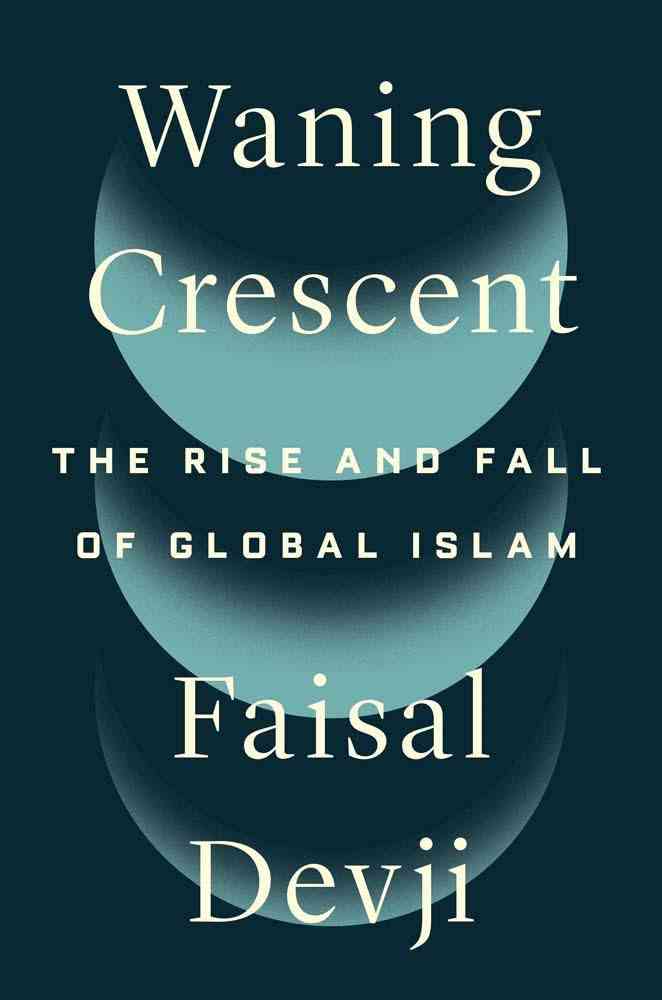
Waning Crescent: The Rise and Fall of Global Islam, Faisal Devji, Yale University Press.
