






On Sunday, Bangladesh announced that there will be no decorative lighting on either government and private buildings for Eid-ul-Fitr, Independence Day and National Day later this month.
The next day, the authorities decided to shut all public and private universities, bringing forward the Eid ul-Fitr holidays as part of emergency measures to conserve electricity and fuel.
Officials said the move will not only reduce electricity consumption but also ease traffic congestion, which leads to fuel wastage.
These are some of the more visible signs of the fallout of the attacks launched by the US and Israel against Iran on February 28. Since then, one question has dominated public concern in Bangladesh: is the Strait of Hormuz closed – and if not, are Bangladeshi ships safe to pass?
The waterway, which is about 33-km at its narrowest point, is a key transport route for the oil and gas produced by states in the Persian Gulf. About 20% of global oil and gas consumption passes through it. But Iran, on the northern shore of the Strait, has declared it will not allow “even a single liter” of oil to reach its enemies.
On Monday, Bangladesh obtained a “safe passage” agreement from Iran for its oil and LNG vessels transiting the Strait, provided that the authorities are notified in advance. But uncertainty is rife. At least 17 ships have been hit in the Strait since February 28, including three on Wednesday.
Since the war started, 12 London-based insurance groups have cancelled war-risk coverage for ships operating there.
Iran has officially agreed to grant safe passage to Bangladeshi oil and LNG vessels traveling through the Strait of Hormuz. Under the new agreement, Bangladeshi ships must notify Iranian authorities before entering the strategic waterway to ensure secure transit.
— Middle East Monitor (@MiddleEastMnt) March 11, 2026
The move comes… pic.twitter.com/24spSuaLKl
As a result, most shipping lines have halted voyages to and from South Asia, regardless of diplomatic arrangements. Though the Strait is technically open for Bangladeshi vessels, the commercial infrastructure that makes shipping viable has collapsed around it.
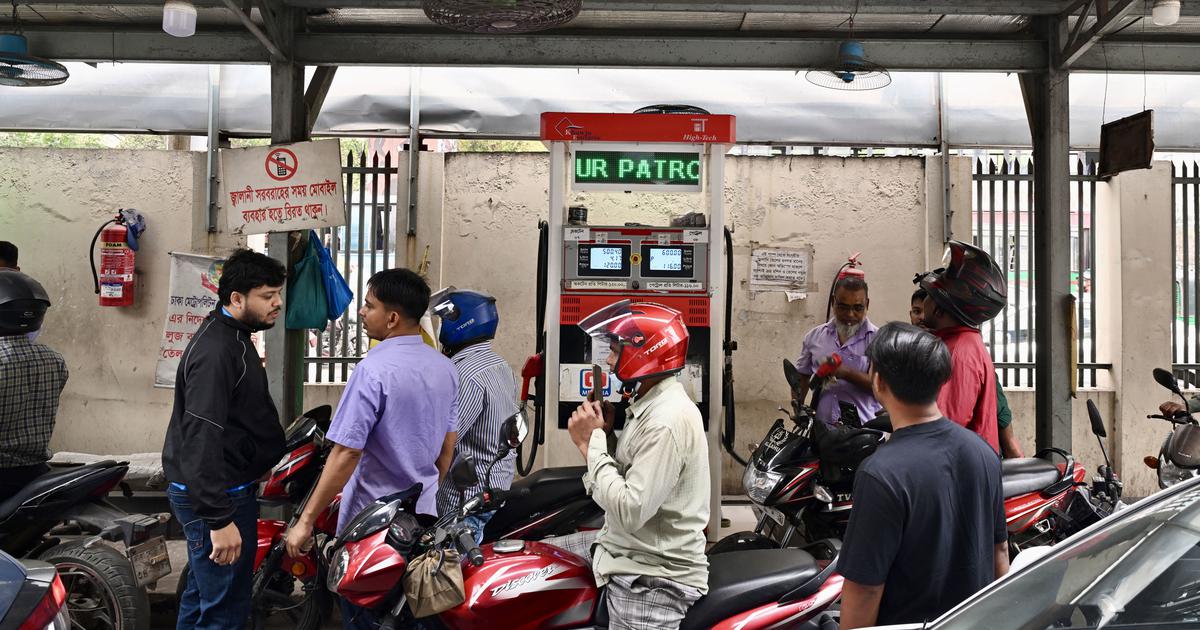
This matters enormously for Bangladesh. Nearly 90% of the country’s fuel passes through Hormuz. With ships increasingly unwilling to make the journey, the consequences are already stacking up – fuel shortages threaten electricity production, factory output has slowed and delivery times for the country’s vital ready-made garment sector have grown longer.
Vessels that do sail are being rerouted around the Cape of Good Hope, adding time and cost to every shipment.
“The alternative route via the Cape of Good Hope increases both lead time and costs,” said Professor Mustafizur Rahman, renowned economist and Distinguished Fellow at the Centre for Policy Dialogue, an independent think tank based in Bangladesh. “This will seriously undermine our competitiveness, especially since our cost of doing business is already high.”
Crude oil has climbed from $70 per barrel before the conflict to over $105, and LPG prices have nearly doubled. The damage extends beyond Bangladesh’s factories.
The crisis will also hurt Bangladesh’s food security, said Rahman. The country’s fertiliser production uses natural gas as an input and supplies could be strained in the middle of the Boro rice season, which runs from December to May.
Already, four out of five state-run fertiliser factories have been shut down to redirect gas supplies to power plants.
In addition to fertiliser supplies being constrained, rising fuel prices and the diesel shortage will make it difficult for the crop to be irrigated.
“The knock-on effect will be economy-wide,” Rahman predicted.
Bangladesh’s strategic fuel reserves are among the lowest in Asia. Foreign exchange reserves – already strained – now face pressure from the surging costs of fuel, food and fertiliser.
Students in Bangladesh have been shut out of classes after the government decided to conserve energy by closing all universities as the effects of the US-Israeli war on Iran continue to take hold. pic.twitter.com/1wDxdCO6Bi
— Al Jazeera English (@AJEnglish) March 9, 2026
During Covid-19, Bangladesh’s ready-made garment sector was severely hit – 3 lakh workers of the estimated 40 lakh workers in the sector lost their jobs.
More trouble came in April, when the US announced a 37% reciprocal tariff on Bangladeshi goods. In July, this was adjusted to 35%. Following a series of trade negotiations and bilateral agreements, the rate was successfully lowered to 19% in February – though this still represented a significant increase in the overall cost of exports.
With the West Asia conflict, a new chain of problems has been created for Bangladesh’s garment industry, noted Md Mohiuddin Rubel, a former director of the Bangladesh Garment Manufacturers and Exporters Association director.
“When oil prices go up, ships face hurdles, shipping costs increase, and insurance goes up, overall import cost rises across the board,” he said.
Delivery timelines are stretching out too. “If it previously took seven days to import something, now there is a container backlog and it takes ten,” he said. “That is how things escalate.”
Rubel warned that if power cuts occur, production costs will rise. “Generators will have to be run, which means higher fuel consumption and increased fuel costs,” he said. “Production will be hampered and time will be wasted.”
Beyond costs, Bangladesh’s garment exports to West Asia are now directly at risk. “From the Middle East, we don’t actually import anything directly for our garments – except oil,” Rubel said. “The real problem is our garment exports to the Middle East. That route is now under threat.”
Also at risk are remittances from Bangladeshis working abroad. In 2025, the country received $32.8 billion in remittances – nearly 47% from West Asia.
In 2025, an estimated 8.6 million Bangladeshis were working abroad. Saudi Arabia employed 48% of them.
If the Gulf economies slow, Bangladeshi workers there will lose income and opportunities.
Already, Iran’s attack on a data centre in Qatar has disrupted regional financial systems, raising concerns about delays in money transfers home.
Government of Bangladesh is deeply concerned about the welfare of its citizens in the Middle East in the wake of recent hostilities in the region including Iran. The suspension of air traffic and air space is affecting Bangladeshi workers destined for Middle East. The government…
— Ministry of Foreign Affairs (@BDMOFA) February 28, 2026
To mitigate the risks, the Bangladesh government is diversifying its sourcing by pursuing direct procurement of 300,000 tonnes of diesel outside traditional long-term contracts. Regional powers India and China have also signalled strong support. India has offered additional supply through the crossborder Friendship Pipeline, from the Numaligarh Refinery in Assam to Parbatipur in Bangladesh.
China has also pledged cooperation to address any looming fuel shortages.
To prevent hoarding and ensure stability, the government has deployed nationwide mobile courts and established dedicated monitoring cells, with particular focus on protecting fuel supplies for the critical Boro irrigation season.
To navigate the crisis, Mustafizur Rahman suggested that Bangladesh should protect its foreign exchange reserves by seeking alternative financing for high-cost imports.
He said that the country should seek “budgetary support from the World Bank, long-term loans from the Islamic Development Bankfor fuel, and fast-tracking the release of aid from existing pipelines”.
By drawing on external sources, Bangladesh could avoid “disproportionate pressure on the reserves” ensuring that funds remain available for critical food and fertiliser imports, Rahman said.
Kaniz Fatem is head of content at Centrist Nation TV in Dhaka.
