


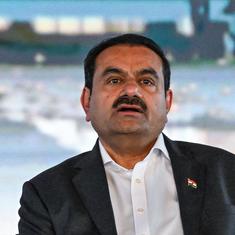
In the 2024 general elections, Indians voted to elect a National Democratic Alliance government. But despite a democratic mandate for a Narendra Modi-led administration, it seems the government that actually took power was controlled by a rather mysterious entity – sources.
When a gas crisis hit India as a result of the joint United States and Israeli attack on Iran, it was not Modi or one of his ministers who kept Indians informed about the situation. Instead, ANI, a news wire seen to be close to the administration, ran updates on gas and petroleum stocks quoting unidentified sources in the government.
On March 3, three days after the war began, ANI quoted “government sources” to say that India was “scouting for alternative sources for importing crude oil, LPG and LNG”. Three days later, “government sources” told ANI that India was “in a comfortable position in crude oil, oil products and LPG”.
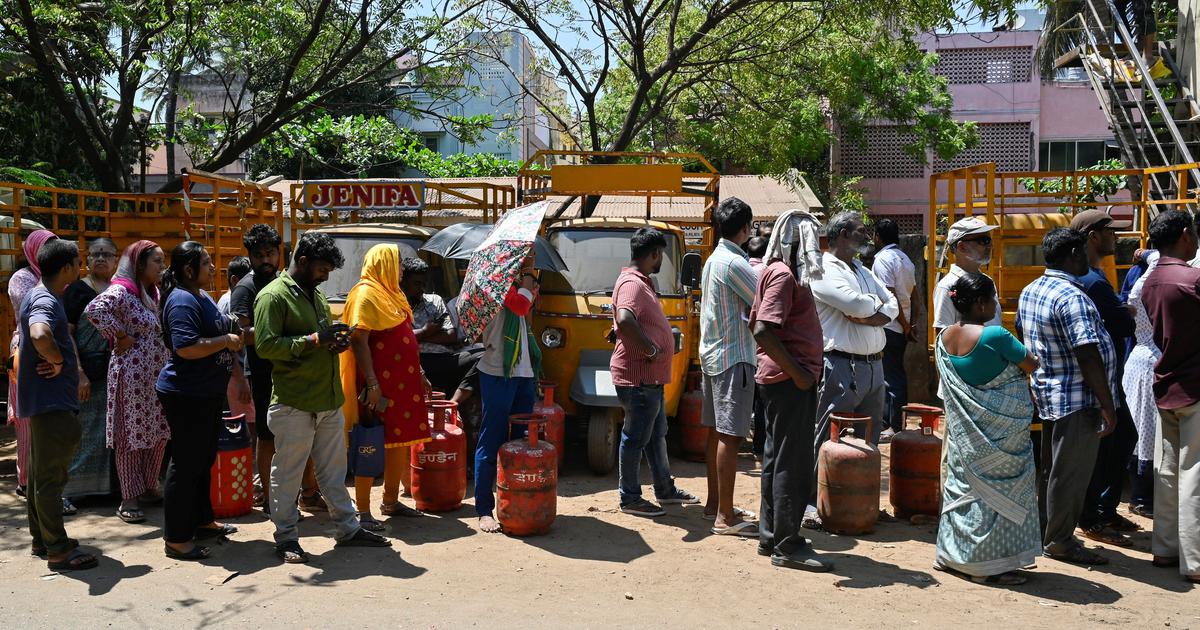
Ten days later, it’s now clear that the “government sources” were not telling the entire truth. Liquified petroleum gas shortages are widespread across India right now.
It was nearly a fortnight after the war began and panic started to spread throughout the country that India’s elected ministers at last started to speak on the record. On Thursday, Prime Minister Modi and Petroleum and Natural Gas Minister Hardeep Singh Puri attacked the “panic” around the gas shortages and appealed to Indians not to spread “rumours”.
This was, of course, darkly ironic because this panic had been caused directly by the fact that senior government ministers did not have the courage to face the press and reassure Indians right at the start of the war.
Part of the blame should also lie with media outlets eager to employ anonymous sources to carry the view of the government. Of course, the use of anonymous sources does have a part in journalism – in exceptional circumstances. It allows journalists to publish information from people who could be persecuted or punished for their views and would otherwise not speak to the press.
But the idea of using anonymous sources to communicate a government’s official view makes little sense. The only thing this achieves is that it allows powerful ministers to evade accountability – the very opposite of what journalism is meant to achieve.
Here is a summary of last week’s top stories.
Judicial decision. The Supreme Court directed the Centre, the state governments and universities to not assign three experts, who were involved in drafting a chapter about “corruption in the judiciary” in a now-withdrawn textbook, responsibilities involving public funds. This includes other curriculum projects.
An affidavit by the National Council of Educational Research and Training said that visiting professor Michel Danino had supervised the drafting of the chapter, and educator Suparna Diwakar and legal researcher Alok Prasanna Kumar were also involved in the process.
The court said that either the three did not have “reasonable knowledge about the Indian judiciary”, or they knowingly misrepresented facts.
Manipur tensions. Two Kuki men who had been missing since Wednesday were found dead in Manipur’s Kamjong district. The bodies were found in a forested area of Thawai Kuki village.
The Kuki-dominated authority of Shangkai village alleged that the two men had been abducted by persons belonging to the Tangkhul Naga community. The village authority said that the public had stopped vehicles plying along the Ukhrul road “out of deep concern for the safety of the detained and missing villagers”.
Amid the tensions, several Tangkhul Naga persons travelling along the Ukhrul-Imphal route had been abducted allegedly by Kuki persons on Wednesday. They were released on Thursday morning.
Meghalaya violence. The April 10 elections to the Garo Hills Autonomous District Council in Meghalaya were postponed after two persons were killed in suspected police firing in the West Garo Hills district amid clashes between tribal and non-tribal groups.
The ethnic faultline widened after the council issued a notification barring non-tribal persons from contesting the polls. Protests erupted on Monday, when the nomination process began, against non-tribal persons being allowed to contest the elections.
On Wednesday, the Meghalaya High Court set aside the notification that made a Scheduled Tribe certificate mandatory to contest the polls.
Passive euthanasia. The Supreme Court allowed life support to be withdrawn for a 31-year-old man who has been in a permanent vegetative state since 2013. This was the first instance in which the court’s directions on passive euthanasia, laid down in a 2018 judgement, have been applied.
The bench passed the order on a plea filed by the family of Harish Rana, who suffered a severe traumatic brain injury in August 2013 after falling from the fourth floor of a building in Chandigarh. Rana’s family had approached the court seeking permission to withdraw life-sustaining treatment.
The court also recommended that the Union government bring in comprehensive legislation on passive euthanasia.
Also on Scroll last week
- From weddings to funerals, Iran war has hit life in India
- ‘Tired and frightened’: How Iranians are facing the war
- Despatch from Dubai: Don’t believe Indian TV news – we are safe and secure
- The farmers preparing for the day Punjab runs out of water
- Why Punjab stands in solidarity with Iran
- Why domestic gig workers in India are unhappy despite the better pay
- Why Bengal’s new governor is sparking talk of president’s rule
- No lights for Eid, closed universities: Bangladesh moves to save fuel amidst West Asia conflict
- Geeta Gandbhir interview: We don’t make art to please everyone, we make art to make a statement’
- Hariharan interview: ‘Independent music is becoming stronger than film music’
Follow the Scroll channel on WhatsApp for a curated selection of the news that matters throughout the day, and a round-up of major developments in India and around the world every evening. What you won’t get: spam.
And, if you haven’t already, sign up for our Daily Brief newsletter.
