




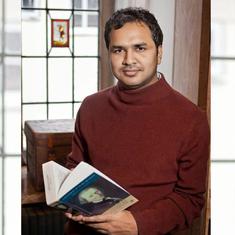

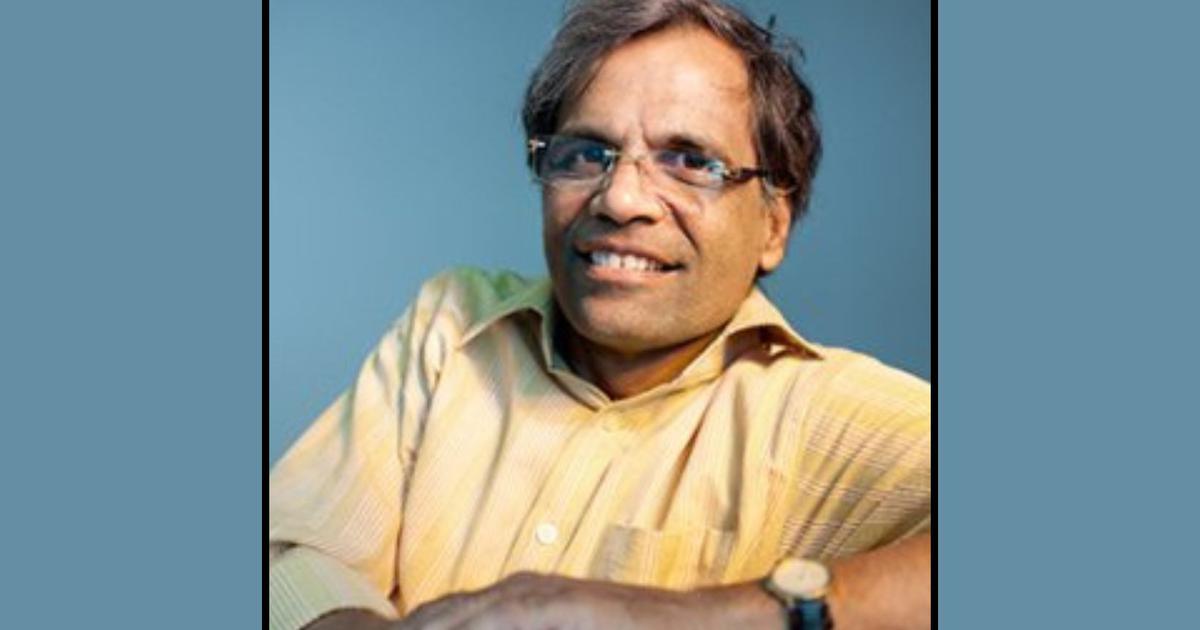
In today’s age of AI-driven hyper-digitalisation, the reader increasingly seems like an endangered species. Nobody writes about readers and nobody reads about readers. Our world seems to be systematically pushing out the reading of literature from mainstream conversation. In such a bleak reality comes the poet Udayan Vajpeyi’s debut novel Love is Participation in Eternity, which puts the reader at the centre of our mental maps. It is a story of two readers, written for the readers by a reader.
All great writers have tirelessly repeated this sacred dictum: Every writer is first a reader. But we are in 2026. The new generation of writers is struggling – the issues of screen time, doom scrolling, brain fog, lack of concentration and attention fragmentation have proven to be serious obstacles to reading and writing. Whenever we speak or write about books, I sense a dilution of our critical faculties. As if, what my beloved poet Mary Oliver termed the “bird of thought”, has flown away, leaving us all in a dense digital haze.
Reading and readers
Therefore, it was a delight to come across a novel which, among other things, does not just celebrate the act of reading but also portrays literature as a relevant participant, even contributor in the everyday lives of citizens. Originally published in Hindi as Qayas, and translated by Poonam Saxena as Love is a Participation in Eternity, the novel revolves around two readers, Sudipt and Vandana.
Besides these two, always buried in their books, there is a beautiful but rundown library and a small city auditorium where literary readings happen. Both these places slowly turn into crucial characters in the novel.
Sudipt and Vandana read, discuss books and plan their “literary show” which takes place once every month in the city auditorium. Deep research goes into every literary text that they choose to discuss. There is Dostoevsky’s White Nights and the letters shared between Rilke and Marina Tsvetaeva. From Tolstoy’s War and Peace to Bhasa’s Avimaraka to Shudark’s The Little Clay Cart to Yannis Ritsos’s poetry, all constitute the world shared by Sudipt and Vandana. There are also references to Cezanne’s and Picasso’s paintings and Rodin’s sculptures in the book. As Sudipt’s assistant in his library, Alim notes midway in the book about Sudipt and Vandana, “the two were born from literature”.
A good man’s death
The novel opens with Sudipt’s death – he has been mysteriously murdered. As the book progresses, we get to know the other characters such as Mridula, Sudipt’s wife, their daughter Noa, their loyal old servant Lakhna, Sudipt’s former love interest Veena, Vandana’s family, which includes her mother, brother and her best friend Sneha. It is through the narrations of these characters that the reader pieces together the deceased protagonist.
To quote Urdu novelist Khalid Javed, Akira Kurosawa’s movie Rashomon comes to mind while reading the novel. Every character presents their truth and point of view. Vajpeyi uses the Rashomon effect diligently – it allows enough space, background and narrative arc for the minor characters. For example, the assistant librarian Alim or the old timer loyal house help Lakhna are both minor characters but fully fleshed out.
Though nothing more than a platonic relationship is hinted at between Vandana and Sudipt, Vandana’s family develops a brutal hatred towards Sudipt, for they believe that their closeness will bring dishonour to the family. On the other end, Sudipt’s wife, Mridula, oscillates between her own insecurities, her jealousy of Vandana and her immense love for Sudipt. Her internal conflict is painful to witness but I was relieved to see how delicately it was handled by the author.
Poonam Saxena’s translation is direct yet rich. And as someone who has read the novel in Hindi too, I was impressed by how equally well it reads in English.
Love is Participation in Eternity is essentially a story about the untimely death of a good-hearted man, which made me wonder about its place in our violent world. Literature and reading, the novel believes, never abandon us. When at its best, literature has the power to redeem us from the darkest of grief. As a devoted reader of literature myself, I do agree.
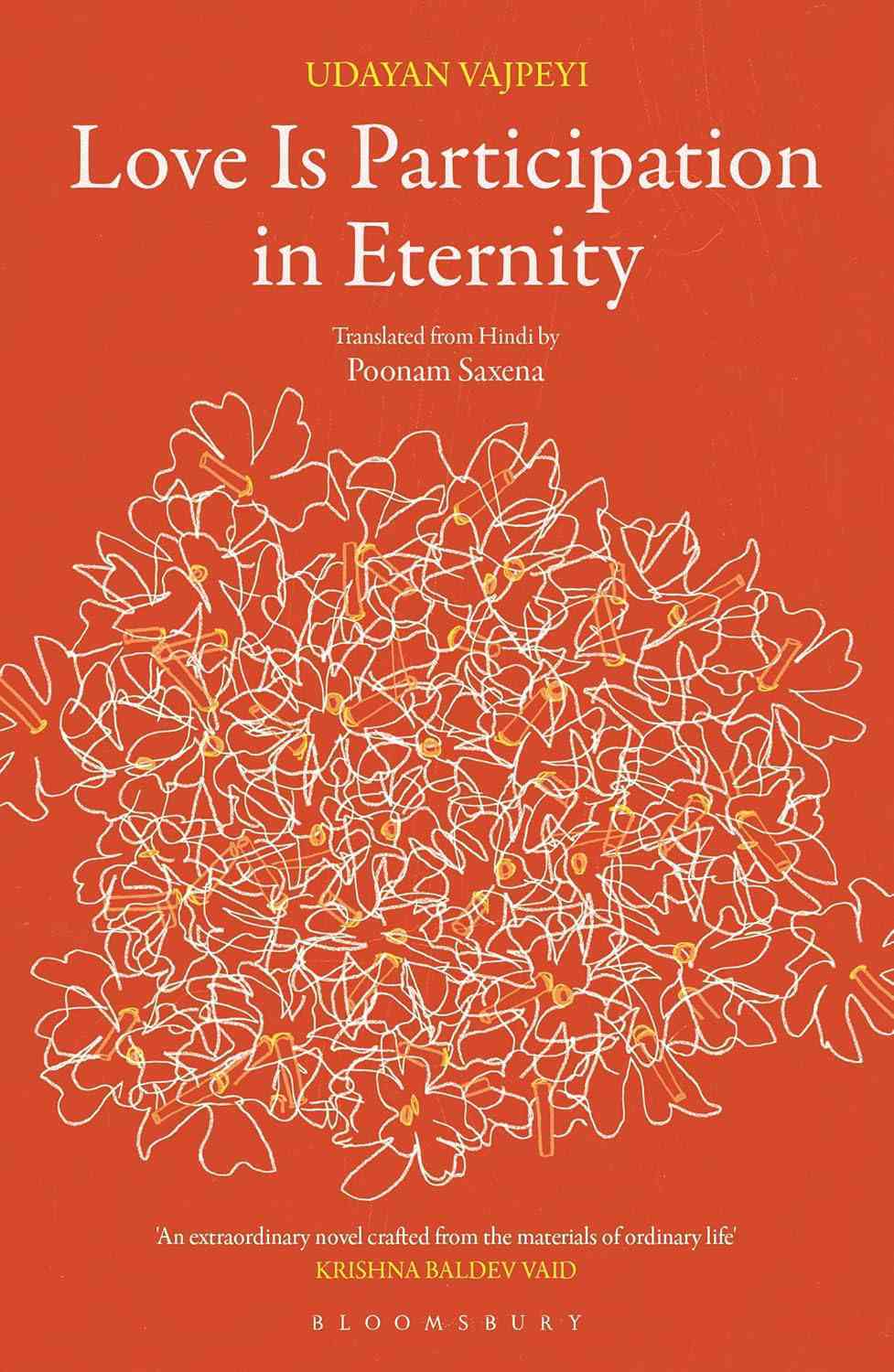
Love Is Participation in Eternity, Udayan Vajpeyi, translated from the Hindi by Poonam Saxena, Bloomsbury India.
