







In 1982, Rajesh Joshi wrote an evocative Hindi short story titled Somvar (Monday) capturing the changing dynamics of a middle-class household with the arrival of liquefied petroleum gas.
As if narrating our current predicament, the story depicts how an entire global regime of petroleum and rising oil prices subtly translates into mounting tensions in one home.
“The world was fighting over oil,” Joshi wrote. “The nation was watching the flow of oil. And our home was heating up from the gas that came from that flow of oil.”
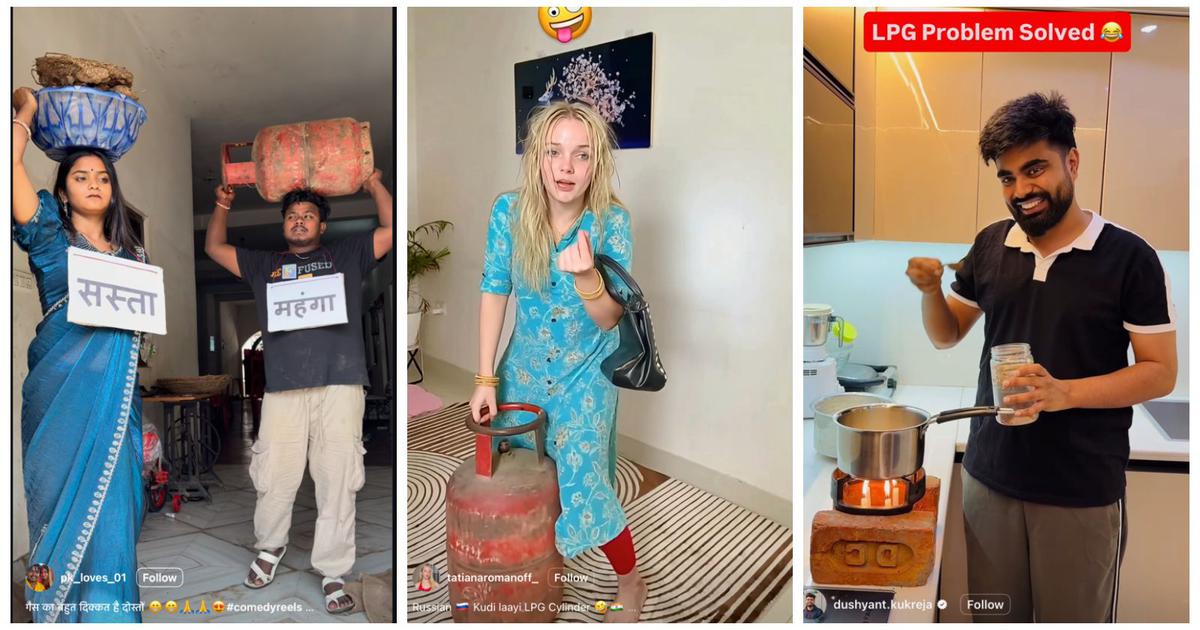
Somvar is a reminder that crises around oil and gas are not new. What is different, though, is the manner in which the spectacle of crisis is circulating – as social media images, posts and reels.
The current anxiety around liquefied petroleum gas in India – rising prices, delayed cylinder deliveries – evokes a historical moment when energy shortages became prominent in public consciousness: the oil shocks of the 1970s.
The modern cultural script of energy scarcity was forged during the 1973 oil crisis, when an embargo by members of the Organization of the Petroleum Exporting Countries led to a significant reduction in oil supplies and caused prices to soar.
A second shock followed in 1979 after the Iranian Revolution. These crises were economic events, but they quickly became cultural ones.
The #LPGgasShortage bas become a meme fest. Half the country is standing in #LPG lines for refill, the other half is busy making funny reels trolling the Modi govt.#LPGcylinder nahi ho gaya, Shahrukh Khan ho gaya. #IranWar #Lpgcrisis #LPG_gas #Gassupply pic.twitter.com/gtstX6OpGx
— Vinay Kumar Dokania (@VinayDokania) March 15, 2026
As is evident from Somvar, uneven access to public goods, like LPG, shaped the thematic preoccupations of the short story. Shortages and interruptions, long part of everyday experience, registered not as an absolute lack of energy but as waiting and jugaad – informal arrangements to sort out the problem.
These are not spectacular events but slow, familiar negotiations with scarcity.
This year’s LPG crisis in India is unfolding in a radically different media landscape from its previous iterations. Instead of in cinema and print fiction, much of the public conversation now takes place through social media platforms such as Instagram and short-form video formats like YouTube Shorts.
Memes and short reels dramatise everyday frustrations around LPG cylinder prices and availability. As visibility and irony shape the experience of shortages, queues have turned into content.
These videos often use a comic tone. Many reels depict exaggerated scenes of domestic improvisation, joking about returning to cooking with firewood or dramatising the moment when the cylinder is finally obtained by the household. The format is brief and performative. It translates economic strain into familiar domestic situations.
"Foreigner girl trolls Modi govt." 🔥
— Mission Ambedkar (@MissionAmbedkar) March 18, 2026
She made a reel on the viral Bhojpuri song "Dhokhebaaz Rajau" and highlighted how LPG prices are increasing in Indian market.
"Vishwa me Modi ji ka danka baj rha hai." pic.twitter.com/95J1uac21q
The authorities, however, are not amused. On March 14, a government school teacher in Madhya Pradesh’s Shivpuri district was suspended after a video surfaced of him making satirical remarks about LPG cylinder prices and mimicking Prime Minister Narendra Modi.
There is a quiet irony in this story. The teacher was also tasked with running a local Anand Bhavan (Happiness Centre). While the state prescribes positivity, it is far less tolerant of humour that registers discomfort or dissent.
India’s energy narrative in the last two decades has been about self-reliance, progress, digital transparency and a clean energy transition. Though middle-class India bought this line, the crisis has underscored its weaknesses, making it evident that the nation still relies enormously on fossil fuels.
These LPG reels are circulating an image of the crisis – but they redistribute visibility without acknowledging the dominant experience. Though reels tend to focus on the discomfort of middle-class India, the burden of scarcity has fallen disproportionately on small entrepreneurs and workers.
If digital media has made the shortage visible, it has also made it strangely weightless – circulating inconvenience as comedy. Beneath the comedy lies the harsher truth that our reliance on fossil fuels will ensure that disruption keeps returning to Indian homes – much like in Joshi’s short story.
"Cylinder Maharaj ki jay ho." 🔥
— Mission Ambedkar (@MissionAmbedkar) March 12, 2026
Content creators are making reels showing how much struggle people face just to get a gas cylinder. It now feels less like a basic need and more like a blessing of God. pic.twitter.com/EFti8cIxvL
Joya John teaches literature at Krea University.
