






Nearly half of Singapore is now designated as green space. It aspires to be a “City in Nature”, with a focus on sustainability within the urban context, using cleaner energy resources, investing in “green economy” and planning for climate-resilient coastlines. With one of the highest per capita incomes in the world, the city-state is also a “garden city”. But it did not wait to become rich before it became green. Singapore has invested in green spaces since the 1960s to create an environment that would attract further investment, create jobs and build thriving communities of the future. It has preserved, rather reclaimed, 78 square kilometres of green space and aims to add another 10 square kilometres over the next decade. Public housing sites now have 4.5 times more leaf area than site area. Green roofs are designed to capture stormwater runoff. Parks double up as flood control infrastructure. From botanical gardens to reservoirs to vertical gardens that generate energy, Singapore has used green spaces to preserve and recharge green water – and in the process, created one of the most vibrant and liveable cities in the world.
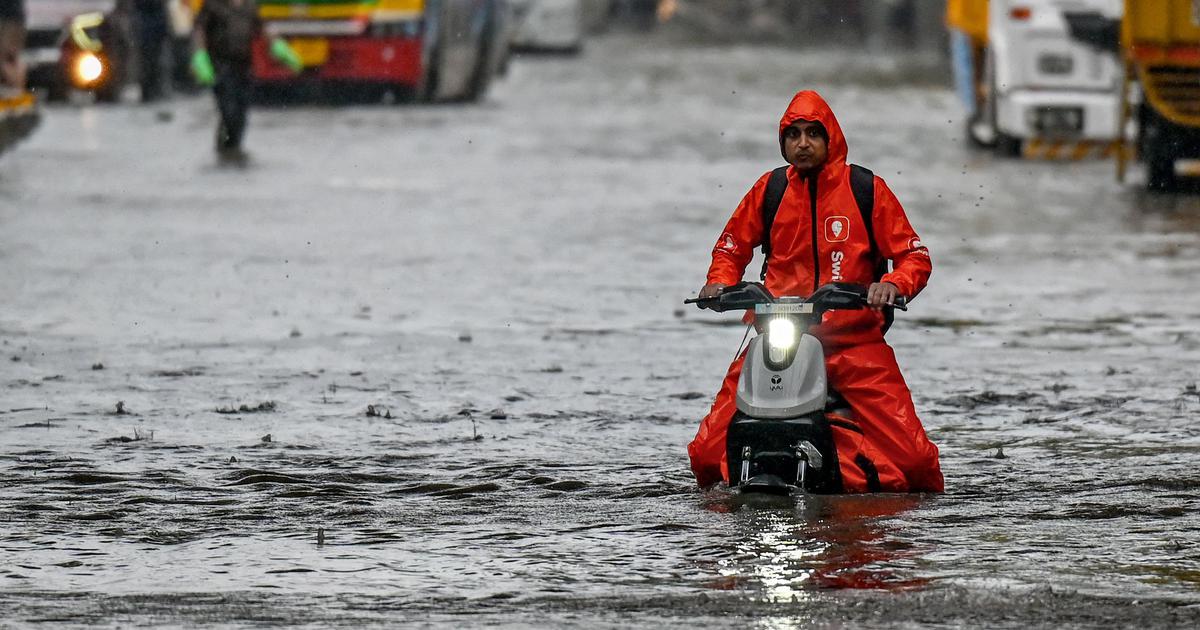
Contrast this with India’s urban cities, townships, suburbs and neighbourhoods. Regular news of urban flooding, disrupted services, damaged infrastructure, and lost livelihoods has frustrated residents and driven them to hopeless despair. Is a different way possible?
Cities are growth engines – and Indian cities are no exception. They are currently experiencing high rates of urbanisation, population growth and rising commercial activities. City administrative limits are being stretched, putting pressure on natural resources – air, water and forests – that can sustain healthy and prosperous urban centres.
The climate crisis is compounding these stresses with increased frequency of extreme weather events ranging from urban flooding in one year to drought-like conditions in the next.
Unplanned development, poor compliance with regulations, irregular waste collection and under-investment in water supply and sewerage infrastructure make a bad situation worse. In older quarters, infrastructure is so dated that inadequacy and inefficiency have made the delivery of basic services a luxury.6 In areas witnessing newer development and urban sprawl, lack of planning or compliance has resulted in concrete jungles, loss of green cover, dried up water bodies, reduced groundwater recharge, higher surface runoff, unsanitary solid and liquid waste disposal, and contaminated natural sources. Each of these imposes economic costs. Contrary to popular assumptions, tackling challenges in urban water management is not a luxury and we cannot wait for India’s transition to high-income status before we prioritise them. In fact, investing in sustainable and green urban development without delay is core to India’s goals of attracting investment, talent, economic vibrancy and sustainable urban development.
When it comes to water availability, big urban centres are unable to cope with climate-induced – and arguably self-inflicted – challenges. Cities such as Delhi, Pune, Hyderabad, and Bengaluru are increasingly relying on water supply from distant sources. When rainfall is lower than normal or in the dry summer months, even these distant sources are unable to meet demand. Transboundary water disputes within and between states, and rival claims of upper and lower riparian settlements, have become a social and political problem. When rainfall is in excess, overbuilt city infrastructure gets inundated. Floods damage property, and polluted water creates public health risks. Many megacities are unable to cope with even near-average low-intensity rainfall, and their flooding reflects starkly insufficient institutional capacities to deal with climate shocks. All of these points to public apathy towards natural green and blue infrastructure in urban areas.
For informal settlements in urban centres, water is both a lifeline and a life threat. Too little water means residents spend working hours waiting for water tankers instead of heading to their workplaces. Too much water, and either their few possessions get washed away, or they are burdened with water-borne diseases.
This chapter is a reflection about the kind of cities in which we wish to live. If cities must drive India’s economy, they need to be liveable, sustainable and affordable. Cities must recognise, internalise, and prepare for cascading climate risks. At the same time, the provision of basic services of water and sanitation (along with clean air) must be a prerequisite for urban expansion.
India’s cities can be designed to be economically and ecologically vibrant. They can be designed as sponge cities to absorb green water in soil and vegetation, to make blue water bodies – like lakes – attractive public spaces and, with increased tree cover, help to combat climate challenges such as heat stress.
The carrying capacity of any administrative unit is its ability to sustain life without having a major adverse impact on its natural resources. In the context of urban conglomerations and their watersheds, this translates into sustainable use of green and blue resources while providing basic municipal services and ensuring economic growth.
However, many cities in India have already breached their carrying capacity. Cities have not optimised for population density and have not appropriately planned to lower their resource footprint, while meeting basic needs and creating vibrant environments that attract investment and talent. Unplanned urbanisation and growth have led to land-use changes and the deterioration of many water bodies, green areas and air.
This is particularly important at a time when climate change is threatening India’s cities with extreme weather disasters. Three-quarters of Indian districts, including 95% of coastal districts, are extreme-event hotspots. On the one hand, densely populated districts – including all major metros – face the highest heat exposure due to both climate change and rapid urban growth. Nearly 70% of urban districts, including major cities like Mumbai, Delhi, Bengaluru, Bhopal, Jaipur and Chennai, saw at least five additional “very warm nights per summer” during 2012–2022, as compared to 1982–2011 averages. On the other hand, cities like Delhi, Mumbai and Bengaluru regularly experience 50–100 mm of rainfall in a single day, overwhelming the drainage infrastructure and inundating streets. Delhi, Chennai, Surat and Lucknow are among the cities with acute risks combining flood and urban heat exposure.
India’s southern and western regions are most vulnerable to extreme dry spells and are affected year on year by agricultural droughts. But these regions are also industrial powerhouses and have major cities, so the shocks compound to adversely impact urban and industrial water availability as well.
India’s coastal regions – and their urban centres – are increasingly susceptible to cyclones across 59% of eastern districts and 41% of the western. For western districts, vulnerability to cyclones has gone up more in recent years (from 2010 to 2019).
It is important to note that climate risks are not linear. What was once a high-impact, low-probability event of the past, becomes more highly probable as temperatures rise. Therefore, urban planning must account for the changing shapes of risk curves, to build resilience in infrastructure that’s expected to last for decades. In 2024, Thane in Maharashtra developed an Action Plan for Flood Risk Management. It offered a framework for the city administration to prepare for and respond to urban floods and to reduce long-term risks by boosting its adaptive capacity. This framework can serve as a template for other tier-1 and tier-2 cities to develop flood management plans in line with non-linear climate risks.
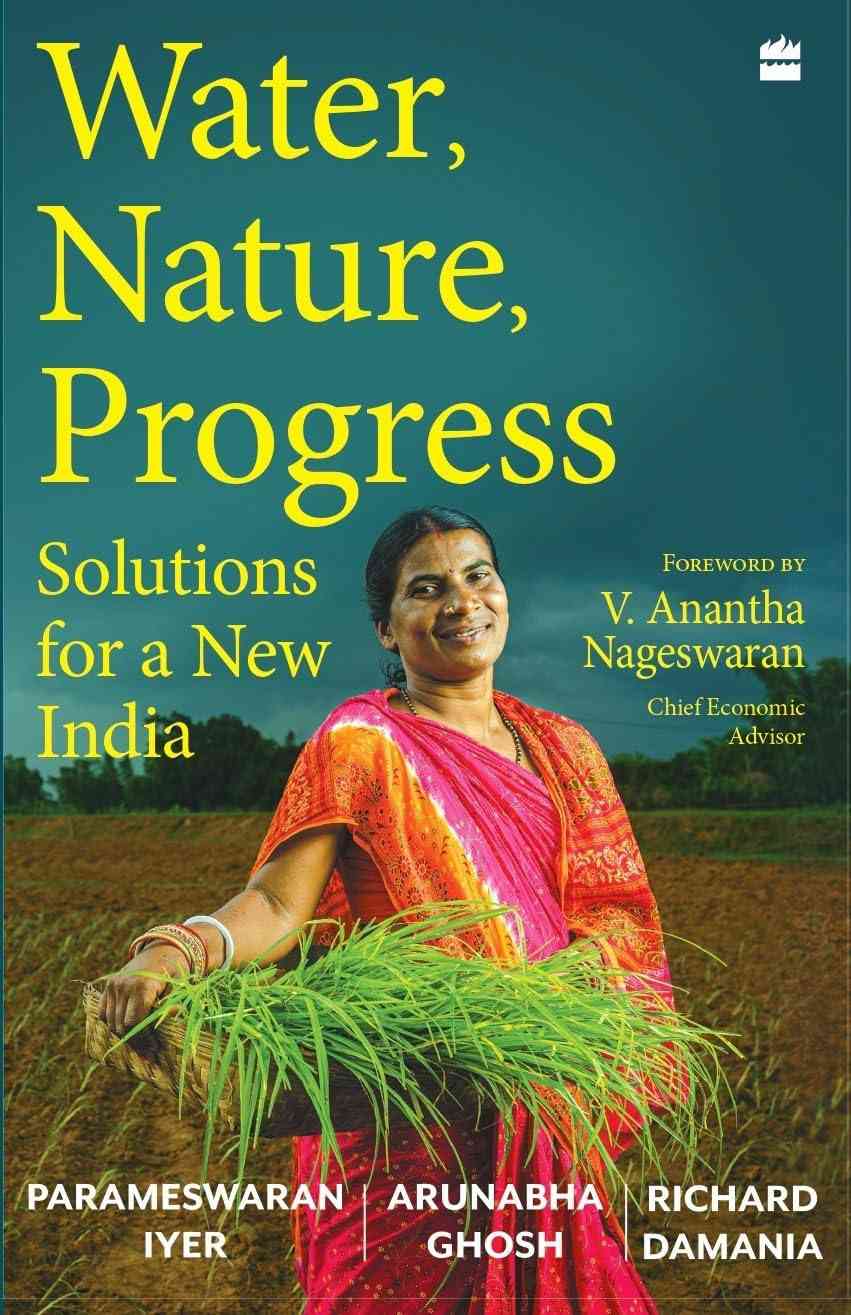
Excerpted with permission from Water, Nature, Progress: Solutions for a New India, Arunabha Ghosh, Richard Damania, Parameswaran Iyer, HarperCollins India.
