




There are two ways to read A Kind of Meat and Other Stories by Catherine Thankamma. One is through the lens of a traditional, conservative reality that continues to shape much of Indian society. The other is as a collection of everyday stories about ordinary lives that often go unnoticed. These are stories of the small tremors that govern our lives, similar to the ones millennials like me grew up witnessing, often unaware of the hurt that people rarely talked about.
There are no grand environmental crusades, global wars, or dystopian visions in these stories. They feel as real and routine as our daily habits. But at times, the quotidian becomes unsettling. In the title story, a young girl stirs up trouble without meaning to, simply by telling her landlord’s wife she ate beef to sound cool. Or how another young girl is mocked and dismissed when she tells her mother and aunt that a relative’s son grabbed her breast while she was at their house looking for the bathroom. Through such scenes, Thankamma points to a pattern where women, whether young or old, educated or uneducated, are brushed aside when they try to speak of what they have experienced, especially when it disturbs the comfort of others, even other women.
An unvarnished look at ordinary people
In this collection, Thankamma draws from her background as a lifelong educator. Many of the stories are set within academic spaces and reflect the lessons and tensions that come with them, including the careful manoeuvring required to navigate institutional politics.
In “Tara,” the young protagonist’s struggle with a neurological condition that prevented her from writing coherently in kindergarten, and her school’s apathetic response to her learning disability, are articulated in a deeply moving way. Her mother, a professor, questions an education system that measures every child’s progress on the same scale, leaving little room for difference. In “Standpoint,” a young scholar is gripped by panic while defending her doctoral dissertation when she faces hostility from a member of the committee over her research. In “Devyani,” the invisible tussle between two English professors over a coveted post at a prestigious government college carries the familiar smell of power and politics.
Each of these stories lays bare the fragile egos that shape academic spaces and the small strategies and compromises people adopt to survive within them.
In “Manufactured Destiny,” a young boy’s birth and life were carefully shaped by his staunchly orthodox parents. Every decision around him felt controlled, from the routines that defined his days to the expectations that narrowed his choices. Even his name, Aadhar C Reddy, carries traces of numerological intervention along with a more practical national identity. His life had been carefully planned for him, with the goal of securing a seat at one of the famed IITs, a pursuit that eventually takes a tragic turn. This story reminded me of a passage from Saikat Majumdar’s book College: Pathways of Possibilities, where he recounts an article from Quartz.com where an IIT aspirant wrote an essay titled “ I sacrificed my health and teenage to study at the IITs – but was it worth it?” Thankamma’s story reads like an answer to that question, placing a human face on the cost of such relentless ambition.
Uneasy and unsettling
I was struck by Thankamma’s sincerity. The language is plain and unadorned, which makes the experiences feel immediate and real. These straightforward accounts are, at times, deeply distressing to read.
The physical and emotional cruelty a woman endures inside her own home as the second wife of a widowed man who is ruled by his physical urges in “Orphaned” completely unsettled me. The stark denial and silencing of the wife’s agency left me shaken, especially the moment when she suddenly goes into labour after toiling over household chores and is forced to deliver her baby by herself, without any help whatsoever.
Driven by negligence and apathy, her youngest daughter witnesses the traumatic birth and, as a result, does not speak for a long time, later seeking asylum in a convent. It is the kind of story that sits with you in discomfort and forces you to recognise that it is far easier to read about such suffering than to bear it. It also reveals how deeply patriarchy and rigid, orthodox attitudes continue to shape and confine women’s lives within their own homes.
It has been a long time since I came across a short story collection with epigraphs at the beginning of each piece. I was especially struck by the epigraph by Dietrich Bonhoeffer: “The test of the morality of a society is what it does for its children.” It feels particularly relevant to the times we are living in.
A Kind of Meat and Other Stories is not easy to evaluate in conventional terms, for it gathers within it the hurt and disappointments of many ordinary people in this country, irrespective of their language, customs, or traditions. These are not distant or imagined sorrows. They feel immediate and recognisable, like stories overheard in passing or experiences lived through without ever fully naming them. The familiarity of these lives lingers, even when it unsettles.
A handful of stories in this collection felt slightly dense, with too many characters jostling for space, and I had to go back and forth to keep track of who they were. Smoother editing in those sections might have allowed the characters to leave a stronger impact on the reader. Despite its minor flaws, this is a book that deserves to be read slowly and with attention, because the lives it holds are too real to ignore.
Diya Sengupta is a strategy and consulting leader. She is the founder and co-curator of Juhu Reads and the co-curator of Pint of View Mumbai.
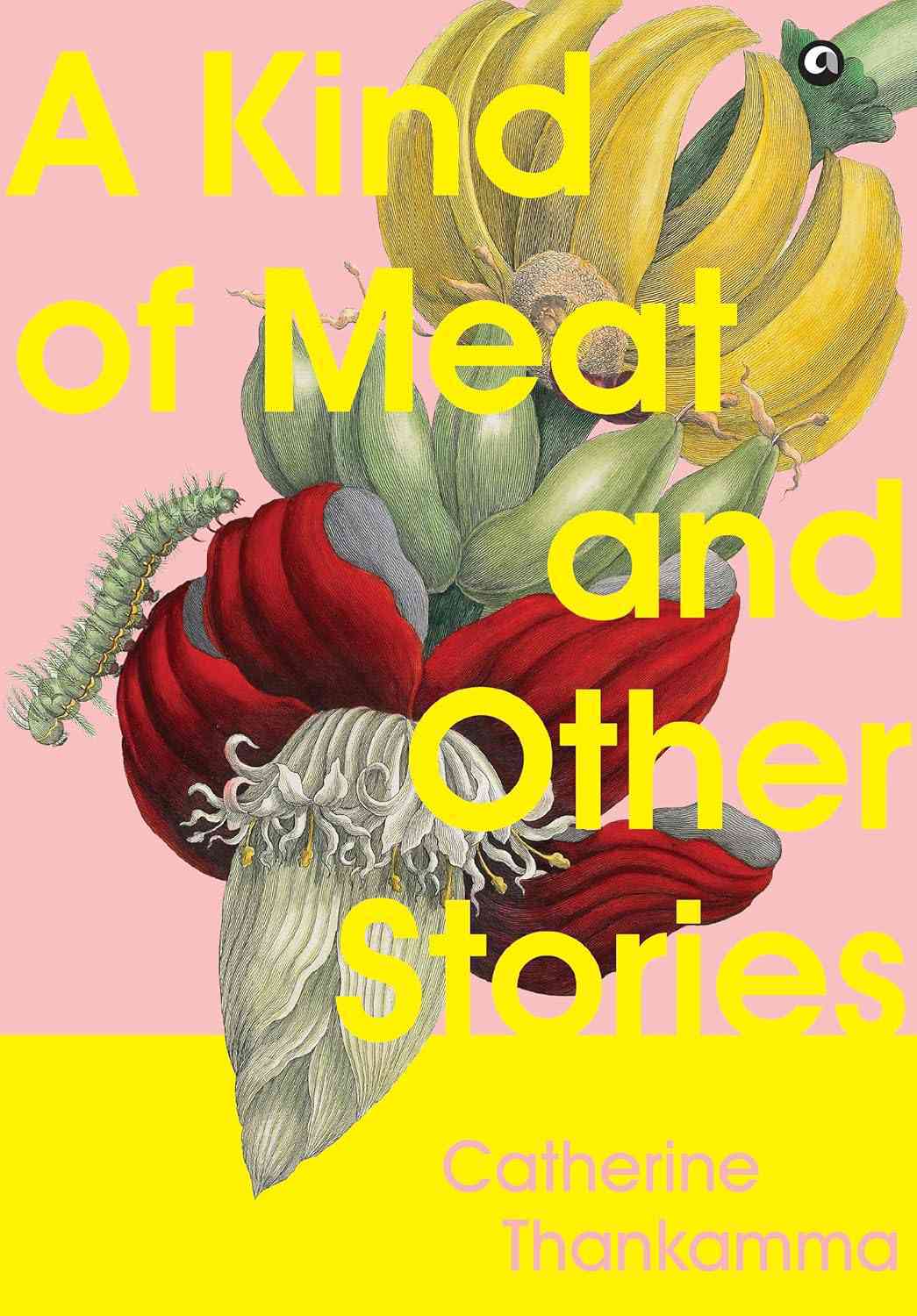
A Kind of Meat and Other Stories, Catherine Thankamma, Aleph Book Company.
