








Shiladitya’s daughter arrived in the world on a freezing night in London. Freezing nights in London were not something he was overtly fond of.
“People appreciate winter when they have enjoyed a full run of summer,” he would often say to the other homesick Indians in his neighbourhood at their monthly get-togethers. Dull evenings overloaded with Jameson whiskey and masala peanuts; everyone looking to get drunk quickly so that they could begin to forget and remember. “How can we look forward to winter here when it’s not been hot enough?”
How indeed! Before a chilly dusk could fall early, with an indefinable, smoky mist in the air, before they could gather around a small fire to eat moongphalis, making a veritable mound of brown shells at their feet, before they could warm their feet beneath the razai listening to Tai’s stories about deadly chudails and covetous dayans, before they could rub their hands together to tease out some warmth, before all of this, something else had to come first: an endless summer.
A summer which would come blazing with unrelenting, oppressive heat, hot gusts of loo winds, power cuts, and scorched earth, but also gujhiyas, gulaal and thandai at Holi, the mango journey from Dussehri to Langda to Chausa, and nights spent sleeping under the night skies, a net massehri the only thing between them and the stars. This summer made it impossible to hurry for anything, forcing certain languorousness upon everyone, slowing everything down to a drowsy, laid-back pace.
“Bhai, we like our seasons four in number and well defined,” Shila would laugh, as he had done all these years.
Like back home, though that always remained unsaid.
Not once had he been back, not once.
All these years had passed and yet, the dream had remained unchanged. Bade Papa playing his harmonium and singing in his deep, sweet voice, “Mera joota hai Japani, yeh patloon Englishtaani, sar pe laal topi roosi, phir bhi dil hai Hindustani.” Sometimes, he would wake with a jolt in the middle of the night, the strains of the song still in the air, having made their way from his dreams to the place where he tried to forget things.
Sometimes, he would sit at the table to eat and find himself suddenly and brutally ravenous for something that only Badi Mummy could make, aloo ka halwa perhaps, something that couldn’t be bought, the memory of the flavours burning on his parched tongue. Sometimes, unexpectedly, he would think of Rajni Mausi sitting at her sewing machine and churning out blouse after blouse to put her three royal princes through school as they struggled to move their academic careers beyond eighth class. Sometimes, he would find himself sitting on a charpai in Bibi’s courtyard, listening to all the gossip of the mohalla he called home. Whenever this happened, Shila tried to think of it as a wave of nausea. He just needed to sit still for some time, take a few deep breaths, and with time, it would pass. All of this, people, songs, home, was left behind in another space-time. And now he, like the man in the song, was only Hindustani at heart.
All this for Api. No regrets there, not ever. In which world did someone like Aparajita Dugar notice Shila, the “scholarship boy”? That was all he had going for him back then, his college scholarship, established by a wealthy seth, in the memory of his young son, hard-fought and hard-won through years and years of swotting and slogging, in his room next to the terrace. The terrace itself was always boiling hot, always smelling of the pigeons that Natwar tamed and kept nearby. To get out, to leave, to get away from that small town, that was Shila’s rosary. To not get trapped in the house-townlife of his father.
Though on that winter night, the night when his child arrived, he forgot all about the home he had left behind. Here she was, his flesh and blood, his firstborn, his only born. The cold, impersonal hospital and the interminable wait that he had spent pacing the hallways while his wife went through the pain of childbirth melted away as he held his child. He peered at her tiny, scrunched-up, perfect face, awed and delighted by her newfound presence in the way only new parents can be.
“Sukanya,” he said, a smile lighting up his own even features, the features that the little girl would assume before too long. “Beautiful girl. Isn’t that a perfect name for her, Api? She is pretty at birth, surely a rarity? Look at her, perfect as a rose. Someone has spent a lot of time on her, don’t you think?”
Aparajita did not reply. Tired and overwhelmed, her desperation gave way to tears, making their way out quietly from the corners of her large eyes. Everything hurt.
“What is this, Api?” Shiladitya hastily handed over the baby to the six-foot tall maternity ward nurse who had been watching the new father inexpertly handle the newborn. The nurse discreetly made her way outside, taking the infant with her.
“Why are you crying, darling? Are you in pain? What happened?” Shiladitya asked again, gently pushing away the black strands from her forehead that had escaped the blue hospital cap, and sat on the steel stool next to her bed.
In response, Aparajita shook her head and said nothing. Shiladitya didn’t probe any further. He knew Api’s thoughts mirrored his own. On a day like this, they didn’t know what they were supposed to do with all the unfinished business they were left holding. Who were they supposed to call? Who was supposed to come looking for them? What was to happen next?
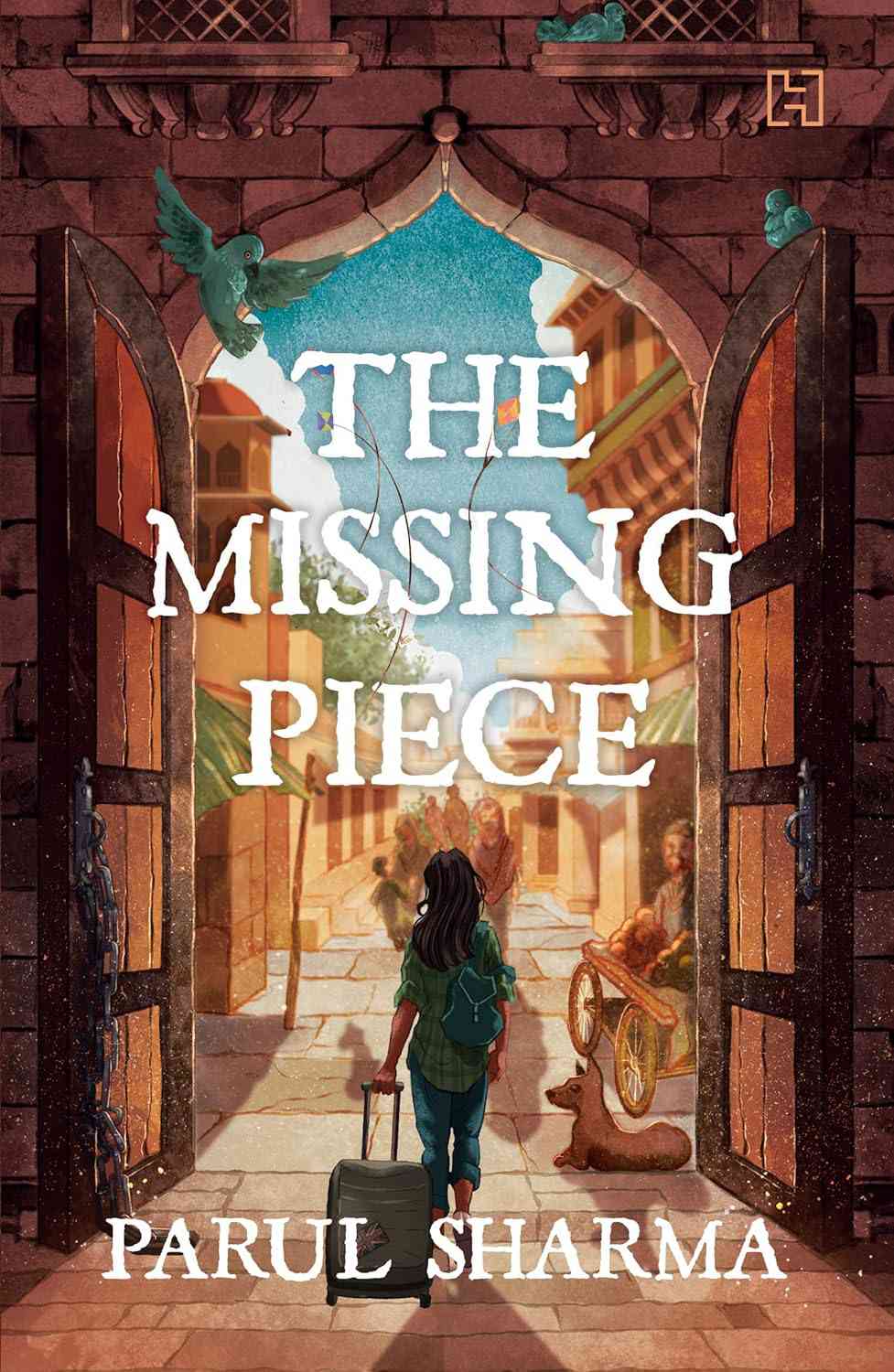
Excerpted with permission from The Missing Piece, Parul Sharma, Hachette India.
