






In early April, a series of unseasonal rain damaged crops in several parts of the country. When I spoke to Charanpreet Singh, a farmer from Rajasthan, about his losses, he ended the conversation by expressing hope for a better kharif season.
One question in particular was weighing on his mind – would he be able to purchase urea and diammonium phosphate in time to use it optimally? He was worried because the supply of liquified natural gas from West Asia had dwindled after Iran closed the Strait of Hormuz in March, in response to attacks by the United States and Israel.
Since the gas is a crucial raw material for fertilisers, domestic production is likely to remain vulnerable and supply will be limited.
It took me a few moments to switch my focus from the question of extreme weather to that of the Iran war.
At Scroll, we had been covering various dimensions of the war in West Asia, including its impacts on India’s energy security and the fate of migrant workers. But as I moved from one story to another, with the news cycle, I had unconsciously bucketed the war and climate change as separate subjects. Singh’s livelihood, however, did not allow him that – clearly, his crops were going to be affected by both.
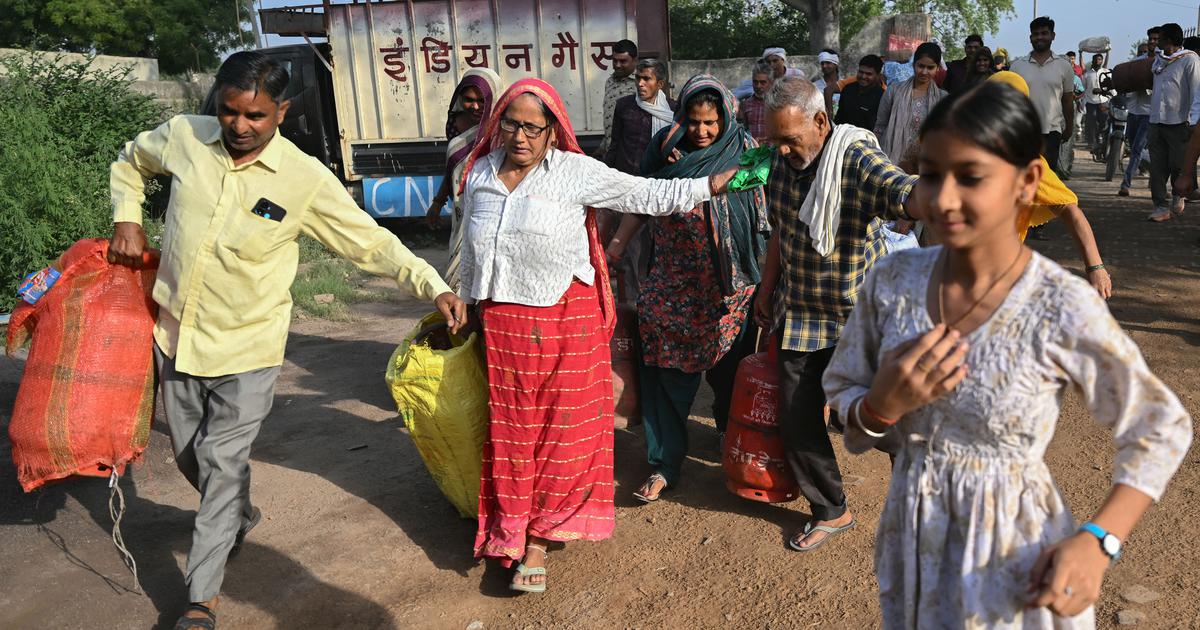
Indeed, even while Indian media has covered the struggles of citizens to obtain liquified petroleum gas cylinders, and the widespread return of migrant labourers to their villages, there has not been less coverage and analysis of the deeper impact of the war on the economy and livelihoods.
The first livelihoods to be hit, of course, were those directly dependent on raw materials coming in from West Asian countries.
Within a few weeks of the Strait of Hormuz being closed, for instance, many workers in the ceramic industry in Gujarat’s Morbi, which produces almost 80% of India’s ceramic tiles and sanitaryware, were without jobs – the industry’s high-temperature kilns are fired by liquified natural gas from Qatar, the United Arab Emirates and Oman.
In other cities, such as Panipat in Haryana and Surat in Gujarat, textile workers found themselves unemployed because there was no liquified petroleum gas, which is used to boil and steam cloth as part of the process of dyeing.
The production of plastic, a by-product of crude oil refining, also suffered. In early April in Surat, I met Amit Badiani, the founder of a small plastic manufacturing unit that used plastic nodules to make hollow tubes around which cotton thread is wound.
Since the availability of plastic nodules had gone down, the unit could only run at 50% of its capacity. “We focused on completing orders that were already placed and did not take on new ones,” Badiani said.
His business was also hit by the restrictions on shipping – in mid April for instance, he had said he had orders in storage that he had not been able to dispatch to West Asia.
Also feeling the heat are diamond workers in Surat. Before 2022, rough diamonds used to be imported from Belgium and Russia. But since the Ukraine-Russia war, and the introduction of tariffs by the United States on the import of polished diamonds from India, the United Arab Emirates became the dominant supplier of rough diamond imports to India, as well as an export market for polished diamonds.
Now, the conflict in West Asia has threatened this trade. “On one hand, there were no raw diamonds in the market to polish, and on the other, what we were making was not getting sold,” a diamond worker had told me in Surat. Across the city, diamond workers struggled to find polishing jobs. Some even shifted to other lines of work.
Perhaps the problem that the Indian media has examined the least is that more than two months in, the war has also begun hurting livelihoods that are not directly dependent on raw material imports from West Asia.
For instance, fishing communities on the coast of Gujarat have suddenly found that nets made from nylon – a type of plastic – are becoming more expensive.
“Now we are worried about the nylon nets suffering wear and tear, and so we have reduced our fishing trips to the deep sea,” a fisherman from Mundra told me over the phone.
He was also worried because the price of thermocol boxes, in which they stored fresh catch, had increased from Rs 300 to around Rs 450 per box. Thermocol is also a variety of plastic.
Even as Iran and the United States seem to be moving closer to an agreement to end the war, it is likely that the Strait of Hormuz will resume functioning at its usual capacity only gradually. Some after-effects of the war will be felt for years – for instance, the world’s largest liquefied natural gas plant in Qatar has been severely damaged and could take up to five years to repair.
Even as the volatile situation plays out, in Rajasthan, Charanpreet Singh is already bracing for another problem that could hurt his hopes for the kharif crop: the India Meteorological Department has predicted a below average monsoon this year, with more heat-wave days than usual.
Here is a summary of last week’s top stories.
Neighbourhood watch. India said that it expects Dhaka to expedite the process of verifying the citizenship of people it claims are undocumented Bangladesh migrants so that they can be repatriated “in a smooth manner”. More than 2,860 cases of nationality verification are pending with Bangladesh, “some for over five years”, said the Ministry of External Affairs.
The remarks came against the backdrop of Bangladeshi Foreign Minister Khalilur Rahman saying that Dhaka would take “whatever measures are necessary on that issue”, while responding to a question about reports of Indian border guards “pushing in” individuals into Bangladesh.
Jaiswal said that the comments must be “seen in the context of the core issue of the repatriation of illegal Bangladeshis” from India, which “obviously requires cooperation from Bangladesh”.
Mehebub Sheikh was forced into Bangladesh – but still made it to the Bengal SIR voter list, writes Anant Gupta.
Sohrabuddin Sheikh case. The Bombay High Court upheld the acquittal of 22 persons in the alleged staged “encounter” killings of Sohrabuddin Sheikh and his aide Tulsiram Prajapati, and the alleged murder of Sheikh’s wife Kauser Bi in Gujarat in 2005. A Central Bureau of Investigation court had in 2018 acquitted all persons, including 21 police officers, in the matter, saying that the prosecution had failed to prove a conspiracy.
BJP leader Amit Shah, who is now the Union home minister, was among the persons acquitted earlier in the case.
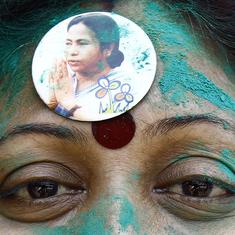
Political shifts. Bharatiya Janata Party leader Suvendu Adhikari took oath as the chief minister of West Bengal after the Hindutva party defeated the Mamata Banerjee-led Trinamool Congress in the Assembly elections. After the poll results were declared on Monday, widespread political violence, and instances of alleged communal intimidation and vandalism were reported in West Bengal.
In neighbouring Assam, the BJP retained power and secured a third consecutive term.
In Tamil Nadu, the governor insisted that actor-politician Vijay’s Tamilaga Vettri Kazhagam prove that it has the support of enough MLAs to form the government. The TVK emerged as the single-largest party on its electoral debut, but fell short of the majority mark of 118 seats in the 234-member Assembly. The Congress and two Left parties agreed to support the TVK. As of Saturday morning, it was unclear if the Viduthalai Chiruthaigal Katchi had also extended its support, which would pave the way for Vijay to form the government.
In Kerala, the Congress-led United Democratic Front will form the government after defeating the Left Democratic Front. In Puducherry, the All India NR Congress-led National Democratic Alliance retained power.
Watch Scroll’s Shoaib Daniyal and Sanjay Kumar, professor at the Centre for the Study of Developing Societies, discuss whether the Assembly election results signal the end game for Opposition.
Also on Scroll last week
- ‘Voted for change but this feels same’: Kolkata reels under political violence after BJP victory
- How delimitation gave a boost to BJP and allies in Assam
- In half the seats BJP won in Bengal, total SIR deletions outnumber victory margin
- Tamil Nadu: After defeat in the Assembly polls, Dravidian parties face unprecedented crisis
- Money, ID, only link to family: Noida Police hold on to phones despite workers being released
- Anand Patwardhan: The taming of the Mumbai Press Club
- Rejoinder: The retroflex, like the Marathi ‘na’, has little do with caste
- How British paranoia cast Afghans as criminals in colonial India
- ‘Dug Dug’ review: A visually striking satire about holy motors and blind faith
- ‘Daadi Ki Shaadi’ review: A granny diary that abandons humour for preachiness
Follow the Scroll channel on WhatsApp for a curated selection of the news that matters throughout the day, and a round-up of major developments in India and around the world every evening. What you won’t get: spam.
And, if you haven’t already, sign up for our Daily Brief newsletter.
