



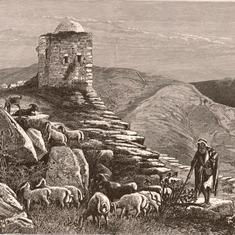
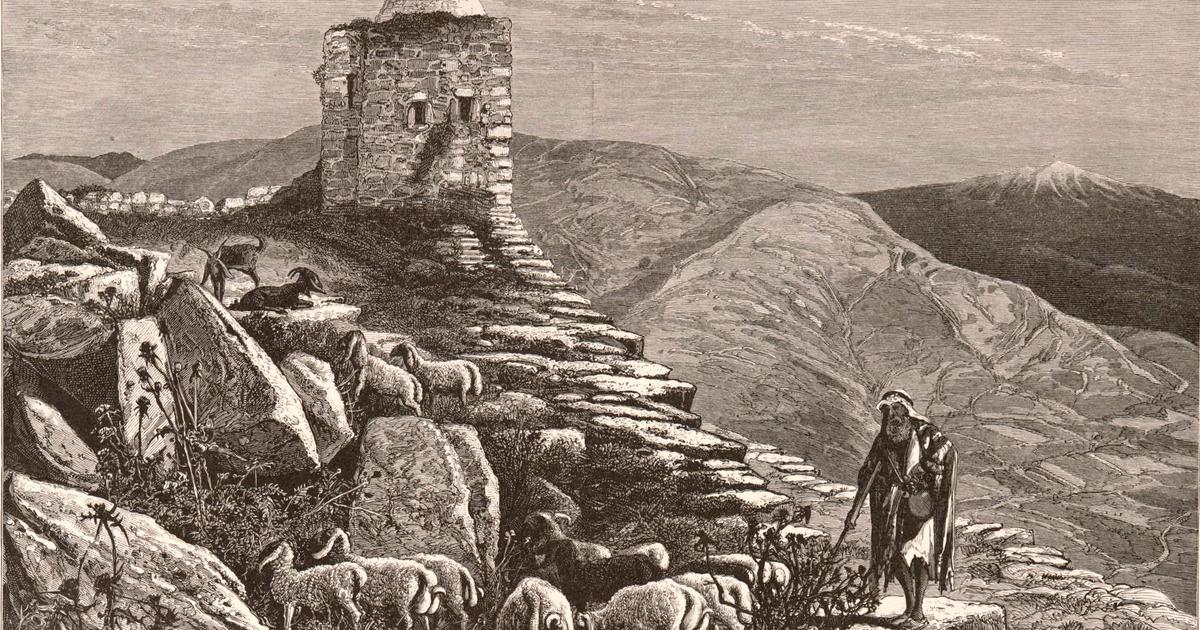
The road from Jerusalem to Jericho in ancient Judea twisted like a long, stubborn snake between cliffs and dusty hills. There were hardly any trees; just dry bushes that looked like they’d given up on their dreams years ago. Even the wind felt tired there.
But every day, many people used that road – farmers, merchants, shepherds, even the occasional storytellers. And on this particular day, one lone traveller stepped onto that road hoping to reach Jericho before sunset.
He checked his sandals twice to make sure they wouldn’t give him blisters. He carried a cloak, a small bag of food, and a water bottle that he had already sipped from twice before he’d walked even ten steps. It was a hot morning.
He hummed as he walked, a cheerful tune, mostly to keep his courage up. Everyone knew this road had robbers.
His friends had told him, “Travel with others.” But he said, “I’ll be fine.” because he was in a hurry.
He was halfway down a narrow stretch when he heard something – a rustle of stones behind him. He turned, but too late! Hands grabbed him. A whole gang of men leapt out from behind the rocks.
“Oh no!” he exclaimed. “My friends had warned me, but I was hoping to be spared.”
The robbers didn’t care for conversation. They pulled off his cloak, snatched his bag, while one of them demanded, “Give us everything!”
The traveller tried to wriggle free, but they shoved him hard. Blows fell, quick and painful. He felt the ground hit him before he realised he’d fallen. The world spun. He heard laughter fading as the robbers ran off, leaving him bruised, bleeding, and alone.
The sun climbed higher. The heat pressed down like a heavy blanket. Dust stuck to his wounds, and every breath hurt. He tried calling out once, but it came out like a weak croak.
“Help…”
But the road stayed silent.
Time passed. Minutes or maybe hours, he couldn’t tell. Then, footsteps. Faint at first, then clearer. Someone was coming! He forced his eyes open just enough to see a man in clean white robes. A priest, heading home from the temple in Jerusalem.
“Help me…” the traveller whispered.
The priest stopped. His eyes widened. He looked up and down the road nervously.
“If I go near him,” the priest muttered to himself, “and he is dead, I will become unclean… And what if the robbers are still around? No, no, better to hurry!”
The priest stepped carefully around the injured man, and hurried down the road, his sandals clicking faster and faster.
“Wait…” the traveller tried to call out, but the priest was gone.
The road fell silent again.
After some time, more footsteps came. This time, firm and confident. A Levite, a man who also served as a religious functionary, arrived walking briskly with a staff. He saw the wounded man and paused. His eyebrows shot up. “Oh dear,” he muttered. “Could be a trap. This road is full of tricks. What if robbers planted him here to catch me?”
He glanced around nervously. The traveller raised a trembling hand.
“Please…” he whispered.
But the Levite shook his head quickly. “I have no time. Someone else will help him, I’m sure.” He mumbled and off he went, faster than he’d been walking before.
The injured man shut his eyes. His hope, already tiny, shrank even smaller.
By afternoon, the light turned golden, stretching long shadows across the rocks. That was when the next traveller appeared. His clothes were dusty and old from the many journeys he had made in them. His sandals looked like they had been repaired at least three times.
He led a small donkey, who walked with the slow patience of someone who had seen enough of desert roads and wasn’t impressed anymore. The moment the man saw the heap of injured limbs on the ground, he stopped so suddenly that his donkey nearly bumped into him.
“Easy there,” he whispered to the donkey, then hurried forward.
He knelt beside the traveller. “Friend, can you hear me?” he asked.
The wounded man blinked weakly. He could barely speak by now.
The traveller’s eyes softened. The eyes were kind, the sort that can’t bear to see the suffering of others. This man was a Samaritan.
Now, in those days, Jews and Samaritans avoided each other. They argued over everything: religion, worship, tradition. People whispered that they should not mix. Some refused to greet each other. Children were told stories that made the other side sound like monsters.
But none of that mattered now.
The Samaritan carefully lifted the man’s head. “It’s alright. I’m here,” he said. He opened his bag, pulling out a little flask of wine and one of oil. “This will sting. I’m sorry,” he murmured, gently cleaning the wounds with wine. The injured man winced, but the Samaritan spoke softly, “I know. I know. Just a little more.”
Then he poured soothing oil on the cuts, tearing strips from his own cloth to wrap the wounds. He worked slowly, patiently, like he had all the time in the world. Then he tried to lift the traveller. “Oof. You’re heavier than you look, friend,” he muttered with a puff, half smiling as he adjusted his grip.
Anyway, with much effort, he managed to hoist the man onto the donkey’s back, holding him steady as they moved down the road. “Just hold on,” the Samaritan said. “There is an inn not far from here. We’ll get you help.”
The donkey walked carefully, sensing the fragile load. The Samaritan walked beside, shielding the man from the harsh sun with his own body whenever he could.
At last, they reached a small inn at the edge of a village. Its roof was crooked, its walls a little cracked, but it meant shelter…and hope.
The Samaritan shouted, “Innkeeper! We need help!”
The innkeeper came out running. “What happened?”
‘Robbers!’ the Samaritan said. “He needs rest, food, water. Please.”
The innkeeper hesitated. He recognised the wounded man as a Jew, and the helper as a Samaritan.
“You…you are helping him!” he exclaimed.
“Yes,” the Samaritan replied simply. “He is hurt. He needs help.”
They carried the traveller to a bed. The Samaritan stayed by his side through the evening, checking his breathing, wiping his forehead, spooning broth into his mouth. When the man finally woke late in the night, his first sight was the Samaritan’s tired face.
“Why…why did you help me?” he whispered. “We…are not…friends…”
The Samaritan smiled faintly. “Tonight we are. Now rest.”
By dawn, the man was better, though still weak. The Samaritan needed to continue his journey. He told the innkeeper, “Take care of him. Here, this should cover the cost.”
He handed him silver coins, more than enough for days of care.
“If he needs more, I will repay you when I return.”
The innkeeper nodded slowly, with a newfound respect. “You are a man of mercy,” he said. The Samaritan shook his head. “I am only doing what anyone should.”
And with that, he walked away, his donkey trotting beside him, leaving no name behind, only kindness.
In the days that followed, as the injured man healed, he thought often about what had happened. The priest had avoided him. The Levite had hurried past. But the Samaritan, the man he had been taught to distrust, had stopped without hesitation. He realised something, deeply – kindness sees no boundary.
And even long after his wounds healed, he never forgot the stranger who had treated him like a brother on that lonely road.
Excerpted with permission from ‘The Good Samaritan’ in A Heart Full of Kindness: Stories of Courage and Compassion, Sunita Pant Bansal, illustrated by Shubham Lakhera, Talking Cub Books.
