





We are living through profoundly troubled times. So much that is good and precious is badly broken – kindness, justice, love, courage, caring, compassion and empathy. There sometimes seems little hope that we can ever mend.
Look around us. An unarmed man is lynched to death by a crowd, screaming piteously for hours, yet we look away. Young couples who dare to cross the borders of religion and caste risk being slaughtered by mobs or even men of their own families in the name of family and community honour. A young girl is gang-raped, a schoolboy beaten to death by his schoolmaster, a bridegroom pulled off his wedding horse and killed for the supposed transgression of their caste.
In our land, it has become customary for the rest of us to look away as people of Muslim religious identity are being disenfranchised, their houses bulldozed, their worship criminalised, their citizenship rights trampled. Or when targeted people are pushed at gunpoint across international borders or tossed from naval boats into the deep sea.
Not just India. Look at the world today. A trillion dollars is the wealth of one single man. If he spends a million dollars every single day, it would take 2,700 years for his wealth to get exhausted. Yet one in 12 people in the world sleep hungry every night, one in two are denied affordable healthcare, and one in five children are malnourished.
The most powerful countries in the world support the genocidal slaughter of children, aid workers, doctors and press persons in Gaza. The most powerful leader in the world speaks nonchalantly of expelling the people of Gaza – people who have lived in that land for thousands of years – to build, in place of the ruins of their devastated homeland, an upmarket riviera.
Each day there are new stories, sombre stories of our fraught and pitiless times. Stories of surging hate, fear and inequality signal nothing short of a civilisational crisis.
We must bear public witness to all of this, to burden our public conscience, and call to resist. We must battle hate violence and state injustice in every way that we can; we must fight in the courts, on the streets, and in hearts and minds.
Courage and kindness
But despair is not an option. Hope is a public duty. Therefore, we must also realise that this is not enough.
We must be mindful that there are other stories as well, all around us. Stories of stouthearted courage, of aching compassion, of heroic solidarity, of tender forgiveness.
Stories that we forget to tell.
We must pay heed when historian Howard Zinn reminds us that human history is not just a history of cruelty and oppression. It is also the story of kindness and courage. And what we emphasise in this complex history of ours will in the end determine what we become.
We must realise, therefore, that while it is imperative to bear witness to the hate and injustice that crushes us, it is profoundly important also to recognise and celebrate acts of courage and kindness.
These acts are what I call radical love, a love so robust that I am prepared to go to prison, even to endanger my life to protect and defend the other who is persecuted.
We most often don’t notice these acts of courage and kindness. We rarely celebrate them.
The idea grew among us for a series of local celebrations of acts of kindness and courage, of radical love. Of crowd-sourcing such stories. Of building maybe even a movement of love.
It is this that will give us hope, it will heal, it will mend, it will illuminate the path ahead.
Rehmat festivals
The name we coined for these celebrations of radical love and courageous kindness is Rehmat, which in Urdu means compassion, kindness, caring. The core idea of the Rehmat initiative is to identify and publicly honour people who stand tall against hate violence. People who demonstrate courageous kindness and radical love.
These are people who bravely act to prevent communal, caste and gender violence, people who rescue and shelter persecuted persons, people who save lives. People who fight great odds (like mob hate, fury, state persecution or their own deprivations) to defend, protect and care for individuals who are in danger, who are oppressed, who are suffering.
In brief, individuals who stand up against the forces of hate.
We agreed that this should not be one event but an ongoing series in many parts of the country and that we should try to crowdsource also the identifying of such acts of courageous kindness. We hope the idea can grow incrementally.
Starting in Hyderabad
We needed to start somewhere. A wonderful group of friends in Hyderabad offered to host the first Rehmat festival in the country, one we hope would be only one of ever more stories, ever more festivals to honour people who have demonstrated courageous kindness. Humera Ahmed and Ashhar Farhan offered the beautiful space they created 16 years ago called Lamakaan for the festival. They were joined by Elahe Hiptoola, Saleema Razvi, Azam Khan, Asiya Ahmed Khan and Amir Ullah Khan. This band of seven friends joined hands to create our first luminously beautiful celebration of courageous kindness.
Our task in the Karwan e Mohabbat was to identify the (s)heroes who we would honour. For this we reached the mountains of Kashmir, the lacerated combat zones of Manipur, and the bitterly divided lands of Muzaffarnagar in Uttar Pradesh, Mustafabad in north-east Delhi and coastal Karnataka. My colleagues spoke with each of the protagonists of courageous kindness over many days, explained to them what we were trying to do and why, and invited them for the Rehmat celebration in Hyderabad.
There was hesitation, some shyness, then they agreed. Tickets were bought, and the programme was fixed for June 13 and 14 at Lamakaan, Hyderabad. Some adventures ensued in their journeys to Hyderabad. Haider Shah – the father of Adil Hussain Shah, the heroic pony operator in Pahalgam who had given his life to defend the tourists targeted by terrorists in Pahalgam in Kashmir in April 2025 – had not all his life stepped out of Kashmir or entered an aeroplane or train. My colleague Mohd Aamir Khan was with him on the phone at every step, gently guiding him through puzzling procedures like the airport security and check-in.
Ngaineikim Lunkim, the Kuki peace worker from Manipur, could not take the one-hour road journey to Imphal to catch her flight because it is unsafe for Kukis to enter Imphal. Instead, she had to take a ten-hour mountainous road journey to Aizwal to take the plane to Hyderabad.
At Hyderabad, a team of young volunteers received each of the guests and took them to see the city. My Hyderabad friends invited them by turns to their homes. On Sunday, Ngaineikim went to pray at a church, Iman Rashidi and Haider Shah at a mosque and Mohinder Singh at a gurudwara. Over the few days, this unusual collection of (s)heroes built bonds with each other. While parting, there were tears. They formed a WhatsApp group to remain in contact with each other.
Haider Shah
The first evening at Lamakaan began with Haider Shah, the father of Syed Adil Hussain Shah, the 28-year-old pony operator in Pahalgam who was shot dead while trying to save the lives of the innocent tourists last April by grappling with a terrorist and trying to snatch his rifle.
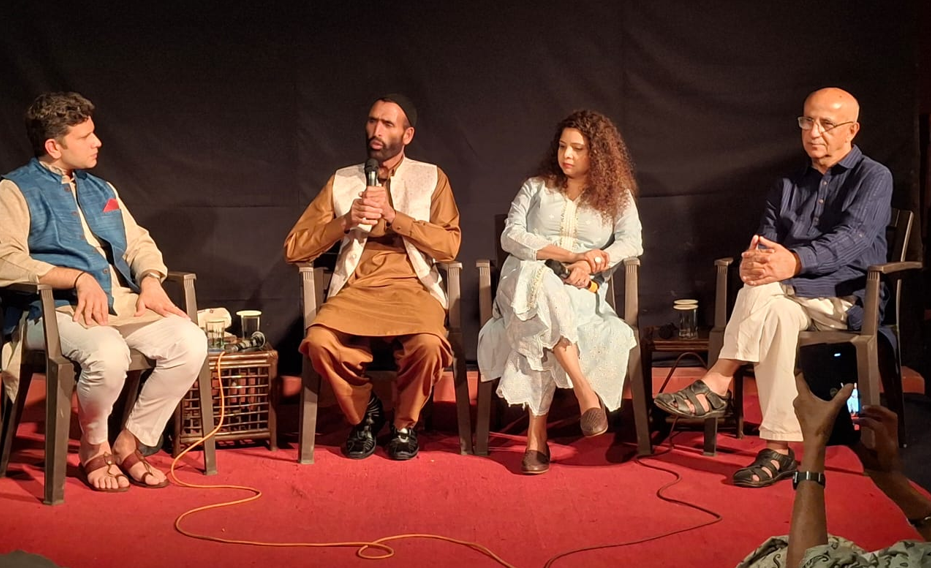
His father spoke to us with great dignity and conviction in simple words. He spoke of how much he loved and missed his eldest son, who was also the principal breadwinner of the family, but that he was happy that his son did what he did. He did this for humanity. This is what his culture, religion and love for his country had taught him. He misses his son each day but is proud of him.
Himanshi Narwal
Next, Lalita Ramdas accepted the award for Himanshi Narwal, the extraordinary young woman who lost her naval officer husband to the bullets of a terrorist during their honeymoon in Pahalgam, and made a passionate call against hate, violence and revenge.
Lalita Ramdas is the daughter of India’s first naval chief and wife of the 13th naval chief. She read out a letter she had written after as a personal tribute “from possibly one of the oldest Navy daughters/wives alive to the newest and youngest among the special fraternity of Naval Wives”.
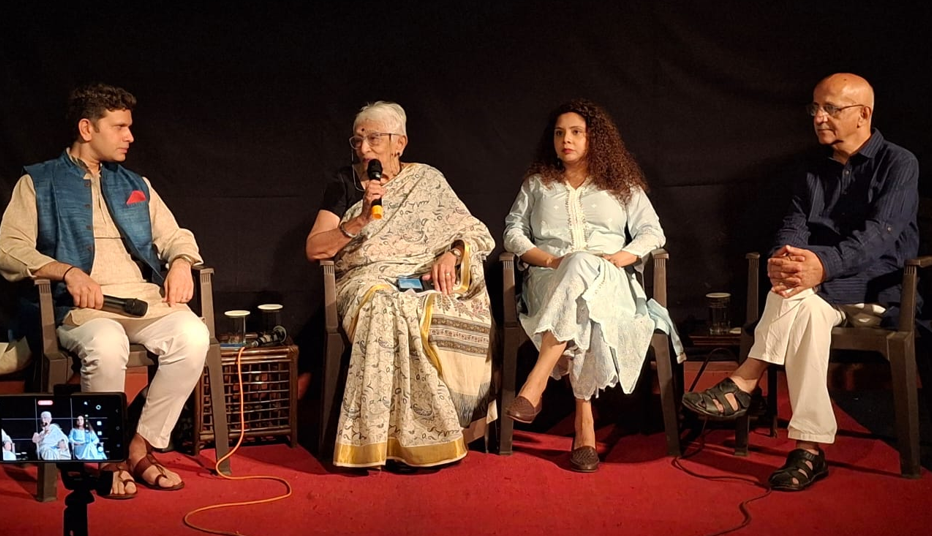
She wrote, “I am so proud of you as I watch the clip of your words to the press, over and over again. Your extraordinary strength, composure and conviction when you speak out against hate and targeting of Muslims and Kashmiris after the horrific killing of so many innocent men in Pahalgam on the 22nd is truly remarkable!” She added, “You have echoed the thoughts and feelings of every thinking citizen of this country…And we should all take your message of love and compassion far and wide”.
Imam Rashidi
Next came Imam Rashidi. I recalled for the gathering how in 2018, after a communal skirmish had broken out in Asansol in West Bengal, two Hindu children were trapped in the Muslim dominant segment of the city and one Muslim child was caught in the Hindu area. Negotiations began for an exchange of the trapped children. But Imam Rashidi intervened and insisted that the Hindu children be safely returned to their parents with no conditionalities. After the Hindu children were restored, they waited for the Muslim child. This Muslim child was the Imam’s own son.
Near midnight, the police reported to the Imam that the boy had been tortured and killed. Had the Imam not intervened, the city would have burnt in a frenzy of revenge. But the Imam appealed to the Muslims saying, “The death of my son is a great tragedy for me, but it would be an even greater tragedy if a single Hindu was harmed in revenge”.
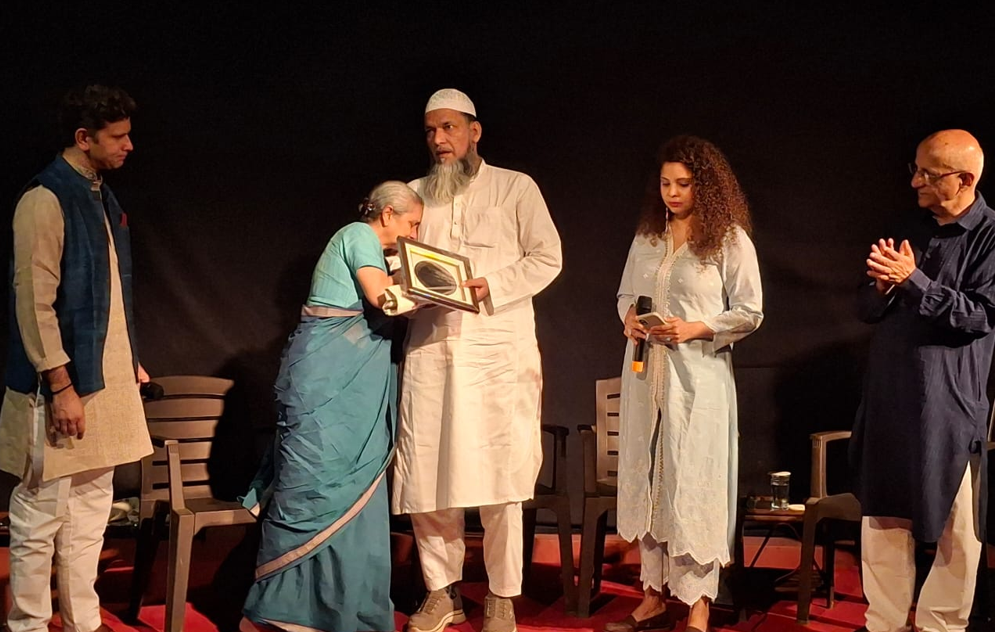
I recalled going to Asansol just days later with a Karwan e Mohabbat team. Young Muslim men told me that instead of the retributive violence that they would have unleashed, they formed groups to protect the Hindus in their part of the city. There were more Hindus than Muslims at the boy’s funeral, and peace returned to the city.
As I spoke, the Imam’s eyes welled up with tears. He said this was the first time after five years that he had broken down in public. He spoke of why he had chosen this path of peace after he cruelly lost his son. “This is what my religion, Islam, has taught me,” he quietly affirmed.
Ngaineikim
Next came Ngaineikim, the president of the Kuki women’s human rights association. The day when violence broke out on May 3, 2023, she was at her daughter’s clinic. Some Meitei men ran a gunshop just across the road from the clinic. When a mob of Kuki men descended on the shop to kill the Meitei men and loot the guns, she stood between the mob and the men and helped them escape to the police station. She returned to the clinic to find that two terrified Meitei men had hidden themselves there, and they begged her to save their lives. She locked them inside the clinic, and at 3 in the morning she drove to the clinic on her scooter and transported them to the police station.
The next day she called upon all the members of the Kuki women’s group to save their Meitei members. The women formed a human chain between the armed Kuki mobsters and the Meitei men to ensure their passage to safety.
Ngaineikim also spoke of calls that she got from her Kuki relatives who were similarly trapped in the Imphal Valley. She advised them to try to run to the safety of the police station. But they were caught by the mob and killed. She spoke of the great wound this had created in her heart, because no one had rescued the Kuki men in the valley in the way she and other women members had saved Meitei men in the hills.
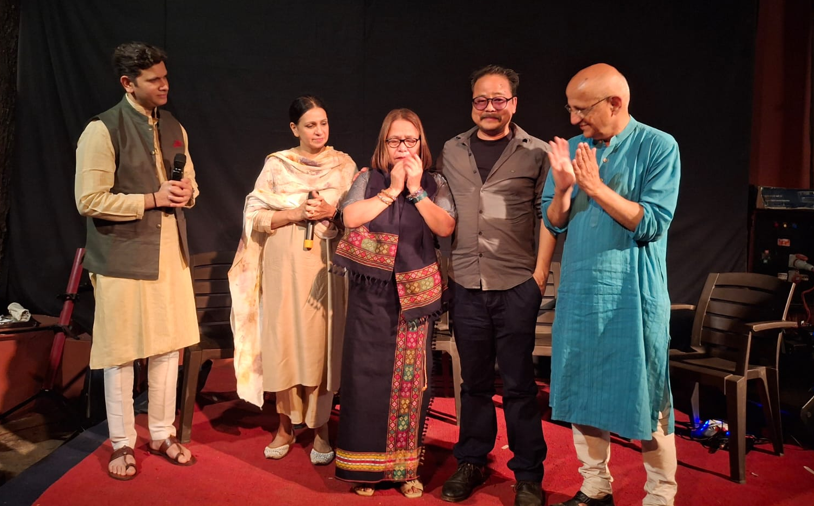
But in Hyderabad she met Kshetrimayum Onil, the Meitei peace worker who had saved many Kuki people, and she said that this meeting had healed 70% of the wound that she carried in her heart. Both Ngaineikim and Onil spoke of how it would have been impossible for them to meet in the violently divided Manipur. But in Hyderabad it was as though Ngaineikim had found a brother in Onil. They both wept as they sat together on the dais.
Kshetrimayum Onil
The next evening began with listening to the story of Kshetrimayum Onil. Onil is a prominent human rights and peace worker of Manipur, who worked in the past with Amnesty, Oxfam and Greenpeace. He recalled working in relief camps with victim survivors of the Gujarat communal carnage in 2002-’03.
It took a lot of courage to do what Onil did after combat broke out in Manipur in 2023. Even as heavily armed militant groups of his own Meitei community roamed the streets with light machine guns, killing, looting and burning Kuki-Zo people, properties and churches, he rescued and evacuated Kuki-Zo children, women and men to the Manipur Rifles Station. He continued to supply them food, clothes and provisions in the temporary camp that was set up at Manipur Rifles before they were taken to the Kuki-Zo regions of the hills.
Despite threats by the militant groups, he persists in calling for dialogue and peace in Manipur. He spoke to us of the need to build a Manipur that is safe for people of every ethnicity and religion.
Sunny Sharma
Sunny Sharma owns a mobile phone shop in his village Lisadh in Shamli district (formerly part of Muzaffarnagar district) and is an influential member of the local khap panchayat. He recalled how in 2013, when communal violence broke out, he rescued his shop assistant, a young Muslim worker Nadeem and his mother and sister by hiding them in his home.
He ferried many others to safety as well on his motorcycle, defying the violent mobs of armed young men who tried to block his path. His friend, Babloo, joined him by transporting many people on his tractor to his poultry farm where they stood guard with local country pistols, until they could take them to the safety of government relief camps.
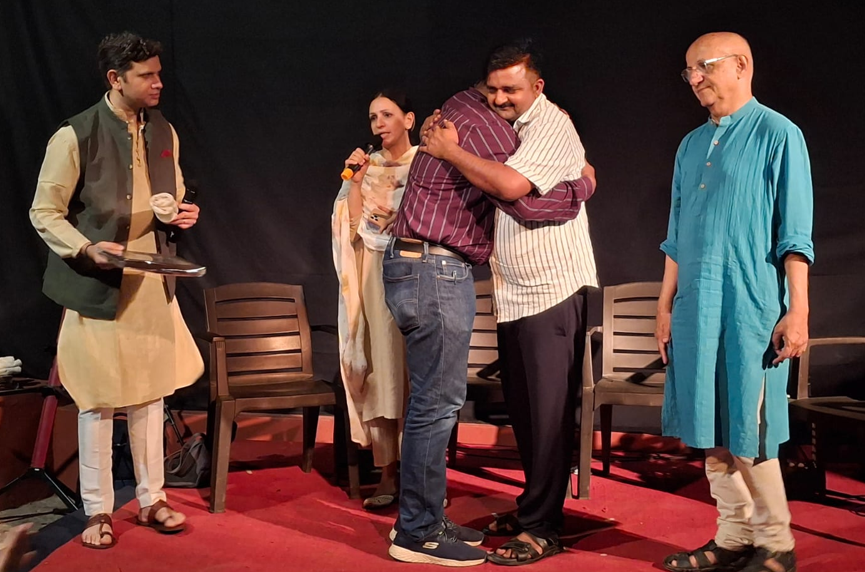
In the camps, Sunny Sharma would supply food rations and clothes to Muslim people of his village. He persuaded many terrified former residents to return to their village, and he helped them rebuild their homes and livelihoods.
In the meeting in Hyderabad, he spoke caustically about the Rashtriya Swayamsevak Sangh, the parent organisation of the ruling Bharatiya Janata Party, and its role in dividing their society with hate. “There are 36 communities in Western Uttar Pradesh. Muslims are one among them. We have always lived together with peace. We will not allow the RSS to tear us apart”.
Abdul Basheer
Naushad, Abdul Basheer’s brother, was honoured on behalf of the family of Abdul Basheer. In 2018, a young Bajrang Dal activist Deepak Rao was brutally killed in Mangalore. In retribution, local Hindutva activists chose to kill Abdul Basheer, a 48-year-old who had returned after working for 25 years in the Gulf and now ran a fast-food outlet.
It was around 10 at night when he was pulling down the shutters that four men assaulted him and ran away. It was a dark and isolated part of the city and he lay bleeding when 15 minutes later, an ambulance driver found him and rushed him to a local hospital, where he died.
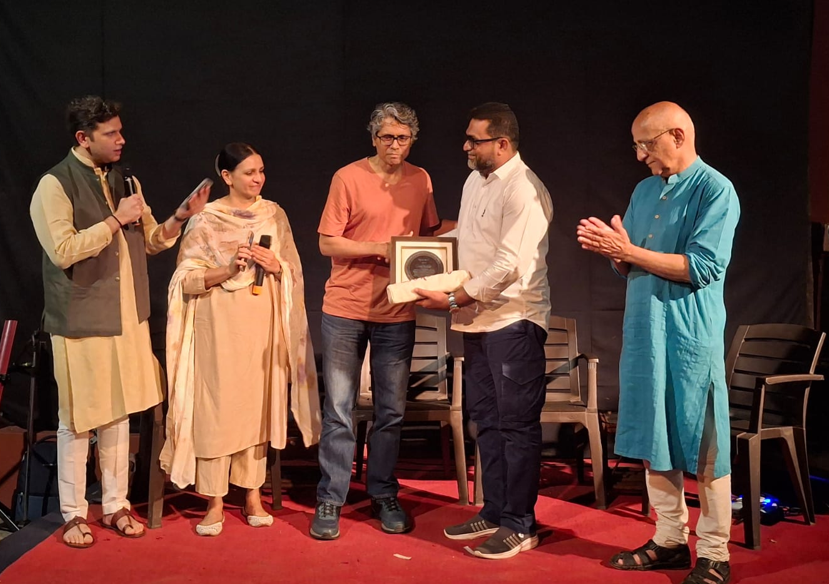
A large restive crowd gathered outside the hospital, and the city was on edge fearing another retaliatory killing. Activists wanted to take his body in a procession through the city and organise a grand funeral. But Abdul Basheer’s family firmly declined. They spoke through the media that Basheer would never have wanted his killing to spark more violence.
They quietly shifted the body to a mosque near their home and the funeral was restricted to the family. But large numbers of people – Hindus and Christians outnumbering Muslim residents – lined up to pay homage to his body. The family in this way halted the cycle of retaliatory violence.
Mohinder Singh
The Rehmat festival in Hyderabad concluded with honouring Mohinder Singh, a Sikh local leader who – with his son Inderjeet Singh – rescued around 70 to 80 Muslim women, children and men during the 2020 communal carnage in Delhi.
A mob gathered to destroy a mosque close to their home – the Jannati Masjid. When they learned that Muslims had hidden in the mosque, they went into the mosque through a back door and smuggled them to their home, at great risk to their own lives.
Mohinder Singh kept speaking of how supportive his wife and daughter-in-law were of their rescue efforts. They tied turbans on the heads of the Muslim men, disguising them as Sikhs. Inderjeet Singh also sheltered around 30 Muslims in his home.
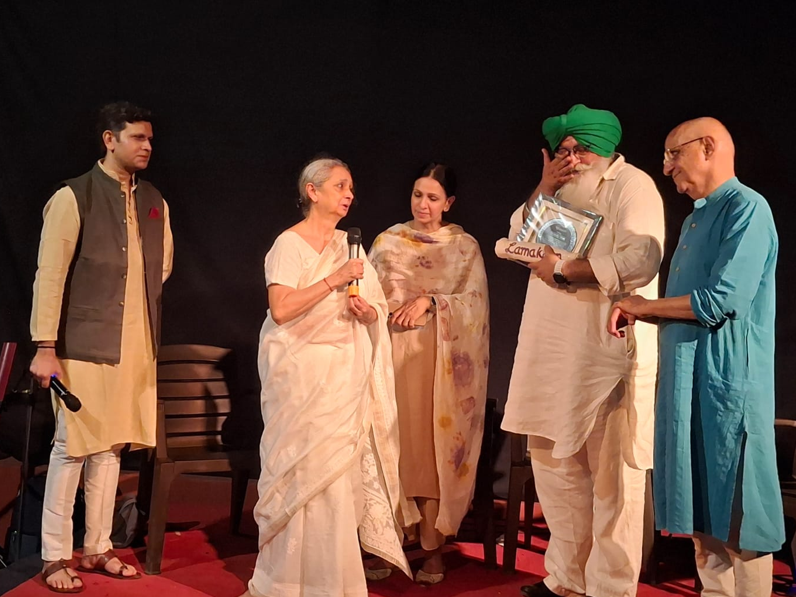
When the violence began to ebb, both father and son made around 20 trips on their three-wheelers to transport the people they had sheltered to the relative safety of Kardampuri, a Muslim-majority neighbourhood about a kilometre away.
Like Haider Shah and Imam Rashidi, he too spoke of being inspired by the teachings of his faith to risk his life to save people who were victims of hate violence. They said if you truly followed your religious faith, you could never endure the harm to another in the name of religion.
More Rehmat
The Rehmat event was luminous, beautiful beyond imagination. Our friends in Hyderabad and our moderators Kunal Purohit and Rana Ayyub steered the two evenings with feeling and caring, with love, sensitivity, respect and grace. Singer Anuj Gurwara and his band rounded off the festival with some old Hindi songs. They sang the lyrics of the Sahir Ludhianvi classic – Tu Hindu banega na Musalman banega; Insaan ki aulad hai, insaan banega.
As our (s)heroes spoke during the festival, I could see that there was not an eye that was not moist in the audience, not a heart that was not full. Our guests inspired every one of us. Their words assured us that there is still goodness in our society, that we are not yet fully broken as a people and that we can rebuild our humanity again.
I hope that this is only the first of many Rehmat celebrations.
By affirming our capacities for kindness and courage in the midst of tempests of hate, I see in these the potential to become essential to our robust resistance to the politics of hate, to the ways our country and world are being radicalised, coarsened and diminished with hate and fear. These are forms of citizen resistance for taking back our country and world of love, justice, fraternity and equality.
Harsh Mander is a peace and justice worker and writer. He leads Karwan e Mohabbat, a people’s campaign for solidarity and justice for the survivors of lynching and hate violence. He is visiting faculty in the South Asia Institute of Heidelberg University. His latest book, Under Grey Smoggy Skies: Living Homeless on the Streets of Delhi Cities, is in the bookstores.
