







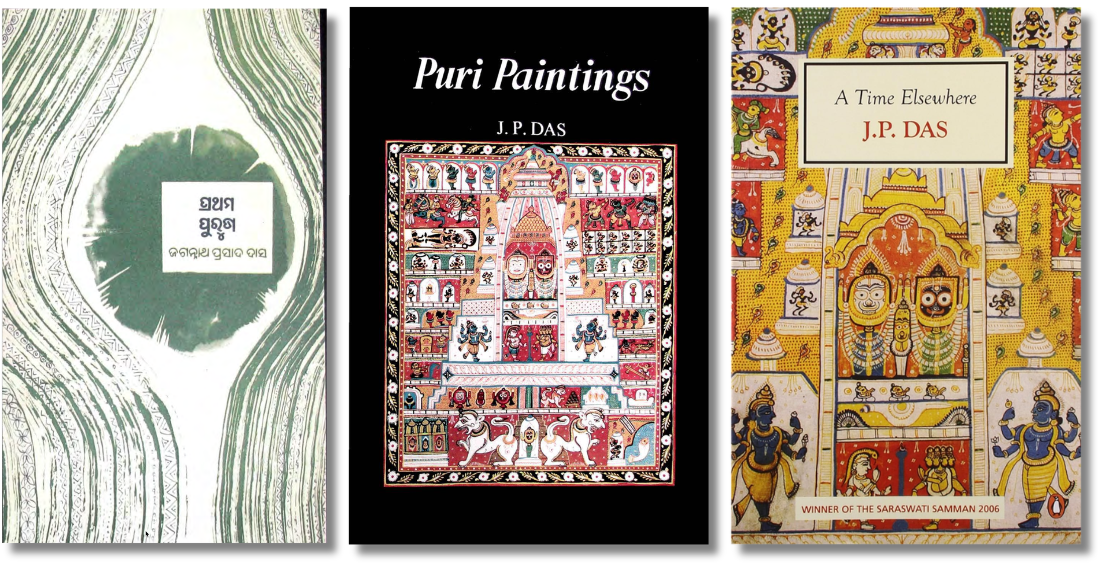
In 1982, I was strongly advised by Girija Bhusan Patnaik, a social activist from Odisha, to meet Jagannath Prasad Das (popularly known as JP) before leaving for Oxford to pursue higher studies. Around this time, JP had established his reputation as a major poet and at Ravenshaw College, among students like us, the cover of his first collection of poems, Pratham Purush, designed by Satyajit Ray, was a popular topic of conversation. JP was then Resident Commissioner, Orissa Bhawan, New Delhi. When I met him at his office, he appeared polite but distant and aloof. He was mildly amused when I told him that I was going to work on Walter Scott there, and he said that life at Oxford would be exciting. On the whole, my first meeting with JP was an underwhelming experience.
The beginning of a friendship
Later, in 1992, at Sambalpur University, I went through JP’s Desh Kaal Patra (1992) and found the book unputdownable. It was a delightfully unique reading experience for which I was not at all prepared. Nearly all the characters in the novel and the incidents taking place in it were drawn from recorded history. Every chapter title introduced the reader to a specific location and a particular date. And the chapters featured excerpts from letters, diaries, official reports and newspaper articles, diligently sourced from several archives. Here, facts collated imaginatively constitute a compelling narrative exploring ways in which a traditional society is dramatically transformed under the impact of complex negotiations between the old and the new.
Although the events unfolding in the novel were often depressing and painful, the narrator’s deadpan humour rescued it from morbidity. Shortly afterwards, the editor of Book Review, at the instance of Meenakshi Mukherji, asked me to write a review of the novel. After the review was published in 1994, I received a letter from JP in which he said that my assessment of the novel was balanced and thoughtful. He added that until then, the novel had been “systematically panned” by critics and scholars in Odisha. Thus began my three-decade-long close association with JP. After that, no trip to Delhi seemed complete without a visit to JP’s flat in Hauz Khas, and whenever JP came to Bhubaneswar, he would insist on my spending some time with him.
Since I was convinced of the splendid innovativeness of Desh Kaal Patra and its distinctive mode of fictionalising the past, I undertook the task of translating the novel into English. In due course, I started sending drafts of translated chapters to JP, and he would promptly send them back with numerous suggestions, revisions and comments. In most cases, the changes he suggested were for the better. However, he never insisted on his suggestions being incorporated into the text of the translation. JP, thus, to me was a translator’s delight.
While translating his novel, I once asked JP if he was influenced by Eduardo Galeano’s Memory of Fire trilogy. He answered in the negative and indicated that he was inspired to some extent by EL Doctorow’s Ragtime. Later, when he travelled to America to spend a few months at his daughter’s place, he purchased a copy of Galeano’s trilogy and presented it to me when he returned to India.
Eventually, Desh Kaal Patra was published by Penguin India in 2009 as A Time Elsewhere. At a discussion on the book held at IIC, S Nihal Singh astutely compared the novel with a pointillist painting, in which the disparate dots blend to form beautifully evocative images and patterns of great significance. A mass of apparently unconnected and trivial details presented in the book reveals deeper processes of transformation in late 19th-century Odisha. Unlike other historical novels, the passage of time itself, and no extraordinary individual, emerges as the real protagonist in the narrative.
JP’s strong archival instinct is reflected in his last play titled Sundardas, which was published a year after Desh Kaal Patra. The play is set in a period when Odisha was under the East India Company rule and missionaries were hard at work to convert natives to Christianity. Sundardas, an unusual hermit, rejected many customs and practices of Hinduism and felt drawn towards some ideas associated with Christianity. However, he did not approve of the missionaries’ ways of inducing Hindus to convert. As Nirmal Kanti Bhattacharjee perceptively remarks in his introduction to JP’s Complete Plays, “the playwright’s sympathetic outlook enables him to understand in considerable depth the throes of a great sociological transformation that was taking place.”
Art historian extraordinaire
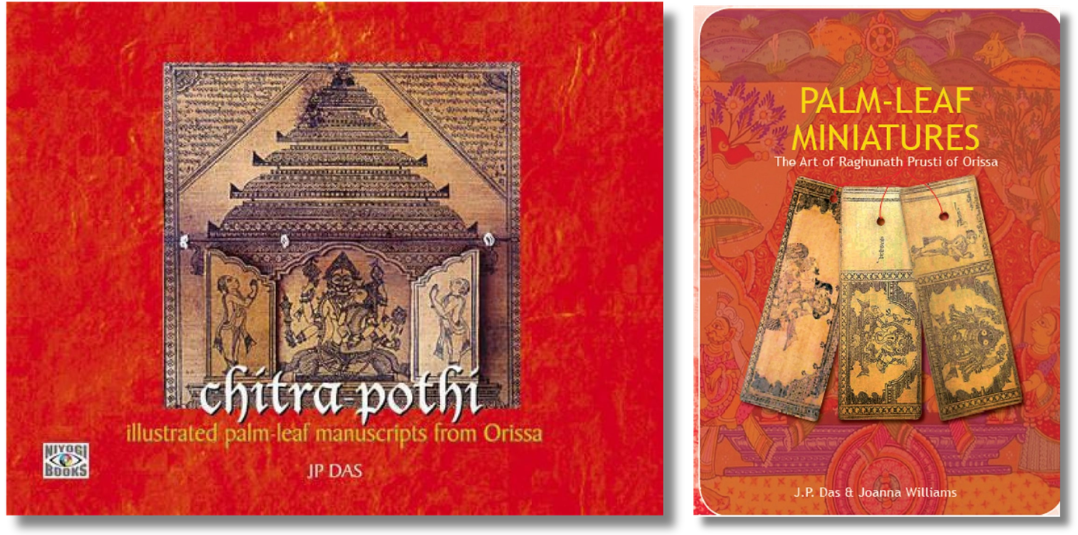
Another notable outcome of JP’s abiding preoccupation with scrupulously documenting the past manifests itself in his outstanding work as an art historian. His Puri Paintings (1982), Chitra-pothi: Illustrated Palm-leaf Manuscripts from Orissa (1985) and (with Joanna Williams) Palm-leaf Miniatures: The Art of Raghunath Prusti of Orissa (1991) revived interest in these vitally important but utterly neglected forms of visual art. A talented painter himself, JP brought the sensibility of an artist to enrich a scholar’s perspective on the subject. I find particularly enlightening JP’s deeply researched account of how Halina Zealy, a Polish-American social activist, almost single-handedly stimulated national and international interest in pata painting, which was then facing a crisis of survival.
The above discussion should not create the impression that JP was interested primarily in the past and turned his face away from the human condition in the modern age. In fact, as a poet, short story writer and playwright, he compellingly portrayed the conflicted inner lives of alienated individuals, the angst and dilemmas experienced by men and women adrift in anonymous urban spaces, and characters groping for meaning and coherence in a fragmented world. Since his achievement as a poet has received considerable critical attention, I have chosen here to focus upon his lifelong, impassioned pursuit of knowledge and his fervent desire to share it with everyone associated with him.
If one expression could sum up JP’s multi-faceted personality, it would be “only connect.” It seemed as if, to him, the world was an ever-expanding circle of friends, whom he cherished and who loved and adored him. I remember how once he made me accompany him to the house of an old friend of his, a nonagenarian freedom fighter and political leader. It took us quite a while to locate his house, but this did not dishearten or worry JP. When they met, the years quickly fell away, and they started talking like two young men. I have seen this happen time and again whenever JP met his old friends, and they would cheerfully exchange affectionate banter.
He was equally accessible to the young, whom he mentored but never patronised. He would never allow differences of opinion to affect his relationship with people and took these in his stride. For instance, we held diametrically opposite views on the proposal to rename Ravenshaw College, but this never diminished his affection for me and my respect for him. We had grown so used to JP being with us that we could not imagine a world from which he could ever be absent. We have no option but to get reconciled to the fact that he is no more, but we feel that a world without JP is bereft and deeply impoverished.
Jatindra Kumar Nayak is a former Professor of English, Utkal University, Bhubaneswar, Odisha.
