



Khichdi
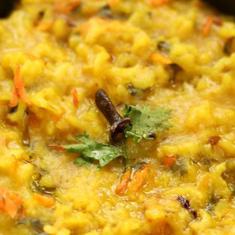
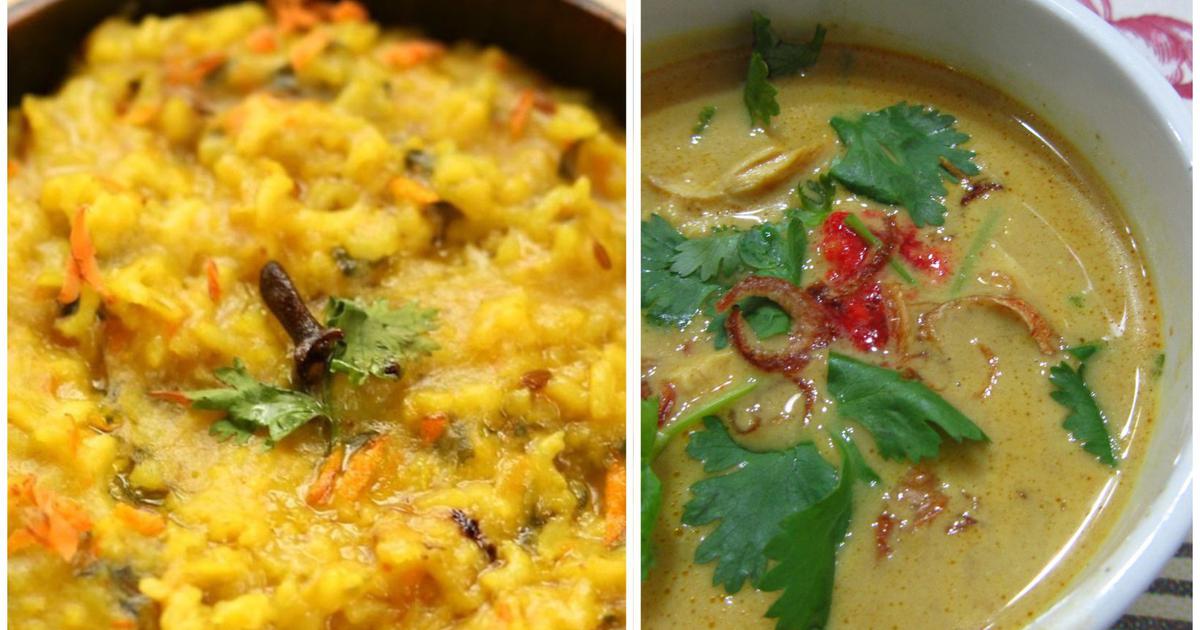
When your body needs comfort, it’s time to feed it some khichdi. Not the kind made in Emperor Akbar’s royal kitchen with equal amounts of rice, lentils and ghee but the one prescribed by Ayurveda, with rice, lentils and just a dash of ghee and spices. We’re talking about that melt-in-the-mouth, ghee-topped, warm food that you can spoon into your mouth on a cold day, or when you have a cold or are unwell. It is easy on the palate, easy on the stomach and totally healthy. Chanakya, the author of Arthashastra, suggested a very precise recipe: 1 prastha rice, 1/4 prastha lentil, 1/62 prastha salt and 1/6 prastha ghee. Cook it to a mush with water (oh no, he forgot to mention how many prastha of that!). Called khicca in Sanskrit, it has been eaten in India at least from the time Ayurveda has been practised. That’s at least for 3,000 years now.
Many travellers to India have been smitten by the humble khichdi. Moroccan traveller Ibn Battuta wrote in the 14th century that in India, people ate kishri. The basic dish involves dry roasting moong dal and cooking it with rice, with just a bit of cumin and black pepper. Each part of the country and each family has its own variation to this mix, adding different things to the pot. Bengal has its bhoger khichuri, rich with seasonal vegetables. Tamil Nadu has its pongal, which is also the ceremonial dish made with newly harvested rice and lentils for the festival of Pongal. Both savoury and sweet pongals are made.
One of the earliest Europeans to travel to India after Italy’s Niccolò de’ Conti was the Russian Afanasy Nikitin. He visited India around 1470 and wrote in his book A Journey Beyond the Three Seas (can you name these three seas?) how precious horses were in India, and how they were fed khichdi, made with sugar and ghee. Francisco Pelsaert, a Dutch businessman, made detailed notes about the food of India when he lived in Agra between 1620 and 1627. He too wrote in great detail about India’s trade, rulers, religions and way of life in his book Remonstrantie (published as Jahangir’s India in English). In the chapter “The Manner of Life”, he wrote about the monotonous food that the common people ate, sometimes “nothing but a little ‘khichri’ made of ‘green pulse’ mixed with rice”. The ruler of Agra at that time, Jahangir, is believed to have elevated that common dish to something rich called lazeezan – by adding dry fruits and more spices.
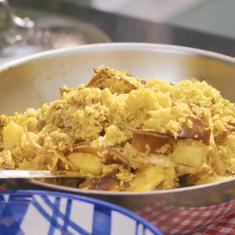
The British recognised the goodness of khichdi and tried a variation. Back in England, they substituted the lentils with boiled eggs and a fish of their region, haddock. Voilà, the khichdi was now the porridge called kedgeree.
Indian khichdi is a dish that is now available all over the world. The Ayurvedic khicca may have had just three main ingredients, but an Indian restaurant in Dubai has become popular for serving a khichdi made with 20 ingredients procured from 20 different states and served on an India-shaped plate.
Mulligatawny soup
What does Charles Dickens have to do with a spicy hot soup born in India? He owned and edited a magazine called All the Year Round in which his own story A Tale of Two Cities was serialised. The August 1868 issue of the magazine carried a recipe for mulligatawny soup. “Take two quarts of water, my lord, and boil a fowl; then add to it a whole white onion…”
Mulligatawny soup gets its name from the humble milagu thanneer, Tamil for pepper water. In South India, rasam is an everyday dish, made by boiling tamarind and other ingredients in thanneer, also called thanni. One of them is the basic pepper rasam made with tamarind, tomatoes, salt and pepper, and garnished with mustard, asafoetida and curry leaves. Best served hot with freshly made rice and a dollop of ghee, this is comfort food that is good for the digestive system and for the days when you have a cold, a cough or a sore throat.
The British used this hot soup as a digestive before or after a meal. But since the local way of having it was too fiery for their palate, they adapted it with additions of their own. They added “onions browned gently in some butter”. Soon, other things went into the pot; one recipe suggested “young rabbit” while others recommended adding ham, beef, bacon or specific parts like a head, a knee or a heel. The first recorded mention of the word “mulligatawny” was in 1784, according to Hobson-Jobson: A Glossary of Colloquial Anglo-Indian Words and Phrases.
One of the earliest recipes may have been that of Scottish woman Stephana Malcolm. Her beautifully handwritten book of 1791 is still preserved in a digital archive of the National Library of Scotland. She learnt the intricacies of Indian recipes from her brothers who worked for the East India Company in India. When the members of the East India Company went back to England from Madras, they spread the word about this easy and nourishing soup. By the 1850s, mulligatawny sauce was available in tins, and the merchants carried them all the way to Africa. After some years, mulligatawny was also available as a soup mix.
Mulligatawny was so popular in the Madras Presidency that a Britisher who served there earned the nickname Mull. (By the way, a Britisher serving in Bengal was called Qui-hi from the Hindustani phrase “koi hai?”, and his contemporary in Bombay [now Mumbai] was called a Duck, after the fish Bombay Duck.) The humble milagu thanni went through many alterations and was even served in high and mighty dinners as “Potage de Madras” or “Consommé à l’indienne”. It made it to many parts of the world, including popular TV shows in America.
Excerpted with permission from Travelling Treasures 2.0: 75 Incredible Tales of Things India Gave to the World, Mala Kumar, Hachette India.
