







On the afternoon of May 4, Bharatiya Janata Party leader Suvendu Adhikari stood in Kolkata to claim his victory. His party had won West Bengal in a landslide. Adhikari described this as a triumph of Hindutva.
Five states and territories were counting votes that day – West Bengal, Kerala, and Tamil Nadu among them, all classified by a government index as “fiscally” failing. Assam, the fourth, governed by the BJP, is not.
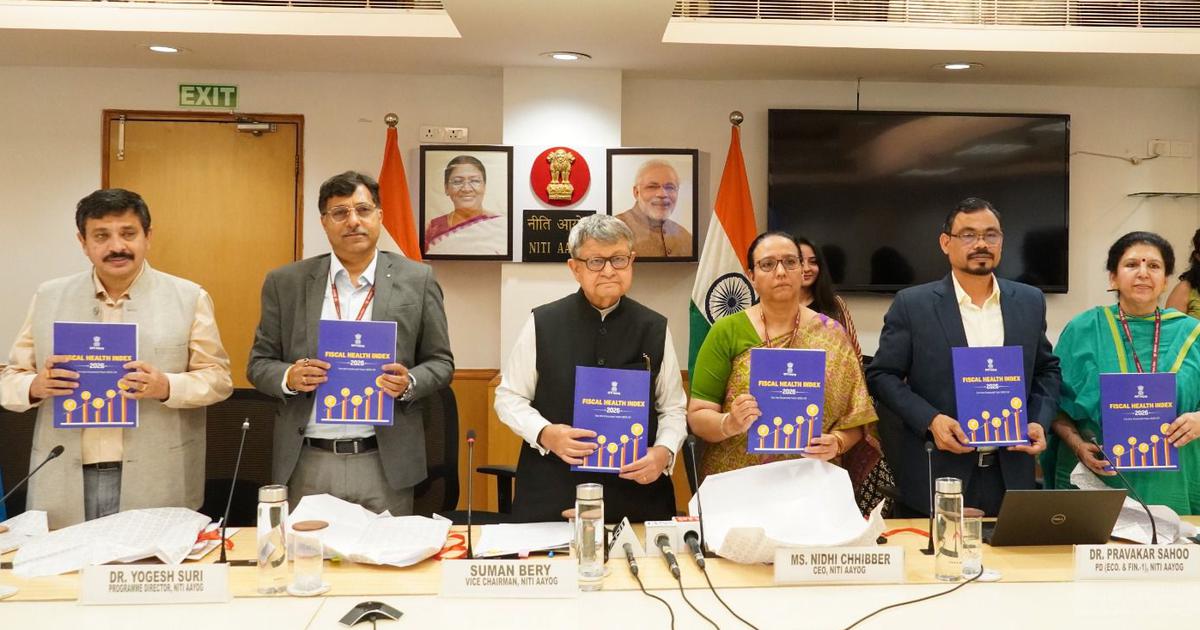
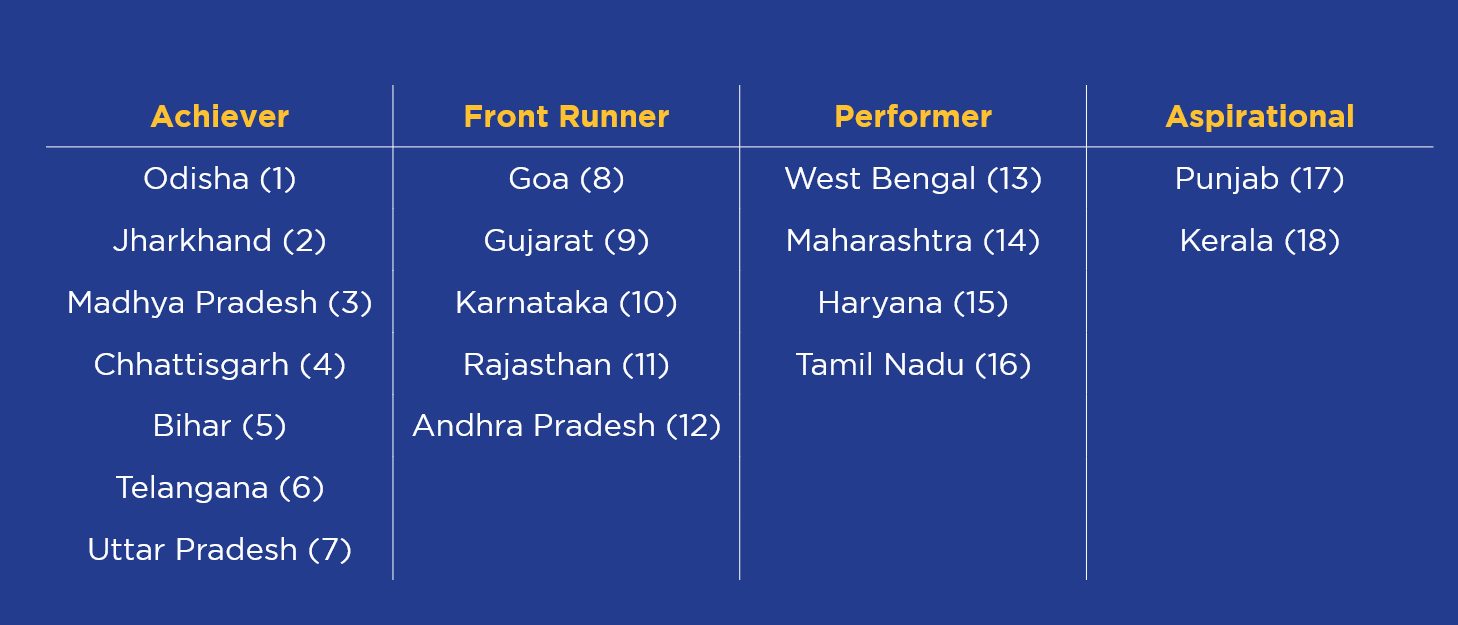
The Fiscal Health Index is published by NITI Aayog – the government’s principal policy body – in January 2025 and updated in March 2026. It grades 18 major states on fiscal discipline and classifies them into four tiers: achiever, front runner, performer and, at the bottom, aspirational.
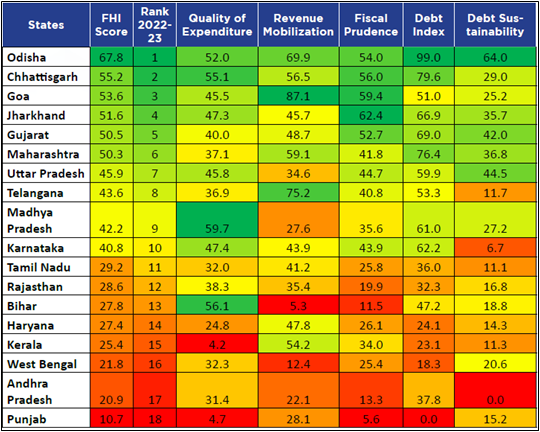
West Bengal is aspirational. Kerala is aspirational in both editions. Tamil Nadu has been declining, with the index’s 2026 executive summary describing the state as having “slipped further to the Aspirational group” – even though the rankings table in the same document contradicts that claim.
In March, an editorial in the Economic and Political Weekly, India’s principal social science journal, noted that the states ranked lowest are disproportionately those not governed by the BJP.
Odisha ranks first. The state was governed by the Biju Janata Dal from 2000-2024, and now has a BJP government.
The fiscal health index was introduced when the rights-based architecture that had governed welfare in India – the legal right to food, to employment, to education – had been steadily reworked for a decade. Central welfare schemes were restructured so that states paid more and controlled less.
Coverage under the national food security law was frozen to 2011 population figures, excluding tens of millions added since. The Fiscal Health Index records the fiscal position of states after a decade of these changes and presents that position as evidence of how well state governments managed public money.
The ranking has become the frame within which the national conversation about public spending now takes place.
What the index measures and rewards
The Fiscal Health Index measures what states spend, earn from their own taxes, borrow and owe – and presents these as evidence of fiscal discipline or its absence. But there is no way for it to measure why these positions came to be or whether that matters for what the ranking means.
Odisha’s strong fiscal position rests substantially on mining royalties – iron ore, coal, bauxite – insulating it from pressures other states face. In 2014, a study of Odisha by the Finance Commission – the constitutional body that determines how Central tax revenues flow to states – noted that Odisha’s fiscal surplus was driven by mining royalties and that its own tax effort was “poor compared to other non-special category states”.
But NITI-Aayog’s Fiscal Health Index gives Odisha a near-perfect score on its debt ranking.
Kerala is at the other end. The state has spent decades building systems its population depends on: a food distribution network that covers nearly double the number of households the Central government’s scheme allows, a pension system for the elderly and disabled, public health infrastructure that ranks among India’s best.
To fund welfare pensions without breaching borrowing limits set by the Finance Commission, Kerala created a state-owned company, the Kerala Social Security Pension Limited, that borrows on the state’s behalf, off the official books. The Comptroller and Auditor General, the Centre’s auditor, classifies this as a transparency failure.
The index uses that classification to mark Kerala down. What neither acknowledges is that the company exists because meeting the Finance Commission’s borrowing limit while funding welfare obligations was otherwise impossible. Kerala is penalised for finding a way to do both.
Tamil Nadu has operated near-universal food distribution since the 1960s, decades before the Centre made food security a legal right in 2013. Its midday-meal programme is entirely state-funded. But the index records this as committed expenditure that crowds out more productive investment. Tamil Nadu scores 32 out of 100 on expenditure quality; Odisha scores 52.
However, Tamil Nadu’s human development record – among India’s strongest on health, education, and food security – suggests that welfare investment and productive investment are the same thing, measured differently.
The building of an index
To understand why the index measures what it measures, it is necessary to go back to 2014.
In August that year, within weeks of a sweeping parliamentary election victory, the new BJP-led National Democratic Alliance government dissolved the Planning Commission, the body that had coordinated welfare spending between Centre and states for 60 years.
For the next five months, the Finance Commission was the only Central body with authority over allocations to states. Appointed in 2013, yet operating without the Planning Commission as a counterpart when it submitted its final report in December 2014, the Fourteenth Finance Commission recommended raising states’ share of Central tax revenues from 32% to 42%, the largest such increase in India's federal history.
Part-time Commission member, economist Abhijit Sen, filed a formal dissent note on December 4, 2014. He warned that the increase would “disrupt existing plan transfers, with likely very serious effects” and that the Commission had shown “reluctance to analyse the transition”.
The majority’s reply, dated December 5, was immediate: the transition path would be determined by “the authorities”.
Seventeen days after the report’s submission, NITI Aayog was established. It replaced the Planning Commission but lacked its authority to allocate resources or hold the line between fiscal discipline and welfare obligation.
The authorities moved quickly. On March 9, 2015, ten weeks after the establishment of NITI Aayog, a sub-group of 11 chief ministers was constituted by a prime ministerial order to restructure the welfare schemes whose Central funding had just been cut.
The sub-group’s terms of reference were explicit: because the Finance Commission had increased the tax share of states, the Centre’s contribution to welfare schemes would be reduced accordingly. States would now pay 40% of the cost of health, nutrition, education, and rural livelihood programmes – schemes whose design, coverage, and beneficiary definitions they had no authority to change.
The sub-group declared broad agreement among states not represented on it, on the basis of consultations its coordinator conducted with state officials in four cities. It met four times, submitted its report in October 2015, and has never reconvened.
The number of welfare schemes that states were now required to co-finance at 40% increased: rationalised into 28 broad categories, they proliferated to over 200 sub-schemes, each carrying Central instructions that states could not modify.
Block grants that had given states untied funds for their own priorities were discontinued. The Fiscal Health Index, published 10 years after the sub-group’s report, measures the fiscal positions that the decade produced – and classifies them as evidence of poor fiscal management.
The panel and what it produced
On May 4, the day election results were declared for the five states, at a New Delhi think tank, a panel of senior government officials sat down to discuss the Fiscal Health Index.
Chief Economic Adviser V Anantha Nageswaran gave the opening address. A member of the Sixteenth Finance Commission was on the panel. So was an adviser to the Comptroller and Auditor General. The panel had been scheduled weeks in advance. Nobody mentioned the election results being declared across the country.
At the panel, the adviser to the government’s auditor raised off-budget borrowing by states as a significant and underappreciated concern. He did not mention that Kerala’s off-budget borrowing arrangement exists because the Finance Commission's borrowing limits made on-budget welfare financing impossible.
The policy brief published after the meeting acknowledged that fiscal stress is “largely structural”. It listed structural causes that are entirely state-level: weak tax capacity, high committed liabilities. What did not appear are causes that originate in Central decisions – the welfare co-financing mandates imposed after 2015 and the reorganisation of state taxes through the Goods and Services Tax in 2017.
The panel’s host had opened by invoking fiscal federalism as a constitutional framework for inclusive growth. The brief’s conclusions sat some distance from that opening.
After the panel, conversations were different from those recorded in the policy brief. Before making a formal presentation, a senior figure, who had served on two Finance Commissions, said from the dais that they had hesitated before accepting the invitation to participate as they felt distanced from the role the event cast him in.
In conversation afterwards, they said the proposal now in the Sixteenth Finance Commission’s report – to formally separate State Finance Commissions from the Finance Commission's own deliberations – had been wrong when first attempted after the 1992 constitutional amendment that created State Finance Commissions, and remains wrong.
A colleague present, recently appointed to a Central advisory body, had not encountered this history before. They asked to read further. The brief contained none of this.
The Fiscal Health Index carries no legal authority. NITI Aayog has no constitutional role in deciding how Central funds flow to states. The four-tier ranking is not formally a grant condition.
But the Sixteenth Finance Commission’s report, submitted to Parliament in February, abolishes the grants that had compensated states for revenue shortfalls – on the grounds that states should raise their own revenues. The index’s rankings supply exactly that justification.
Within weeks of the index’s first publication in 2025, a Union minister told Kerala that if it wanted more Central funds, it should declare itself backward in education, infrastructure, and social welfare. The instruction was to choose between its developmental record and its fiscal transfers.
In West Bengal, the chief minister-elect had campaigned on the argument that the previous government’s welfare spending – monthly cash transfers, social pensions – had been fiscally reckless, debt-producing, an obstacle to real development.
At the panel in New Delhi, meeting on the afternoon his victory was confirmed, the representatives of four Central government bodies presented the same argument as expert consensus, in the language of measurement.
One was a victory speech. The other was a policy brief. Delivered on the same afternoon, in the same political moment, both will have consequences well beyond Bengal.
Veena Naregal is Professor of Sociology at the Institute of Economic Growth, Delhi.
