






In the 18th century, the colonial kitchens of Madras became an unlikely meeting ground for two groups from different social worlds.
Imperialism brought Europeans to Madras, many of them civil and military officials of the East India Company, soldiers, traders, sailors, lower-level bureaucrats and planters.
In India, some of these Europeans were categorised as “beef-eating” untouchables, like those at the lower end of India’s caste order. This inadvertently fostered close contact between Europeans, the agents of imperialism, and lower-caste domestic workers, the victims of the caste system.
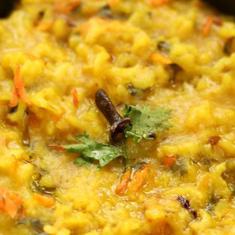
The “Madras curry” took shape in the exchange of culinary knowledge in this colonial paradox. Initially, Europeans tried imported tinned food. But as this proved impractical, they gradually adopted a hybrid food culture that combined European and local taste.
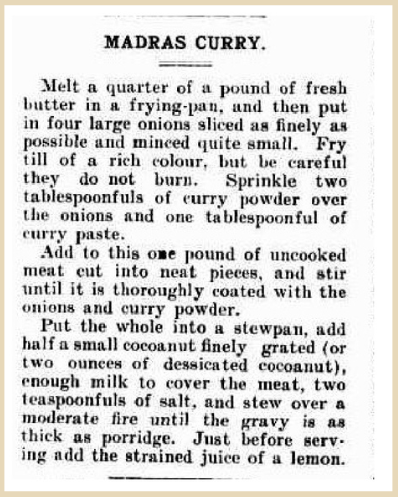
Colonial recipe notes provide a long list of ingredients, including various spices, coconut, curry leaves and mango. Other commonly recommended ingredients included turmeric, coriander, cumin, poppy seeds, dried ginger, black pepper and dried chillies. To these, memsahibs were instructed to add their desired meat. During the later period, they used curry powder or paste.
The transnational journey of Madras Curry reveals several intertwined histories, especially the complex interaction between colonialism and caste.
The European and the ‘outcastes’
Before the opening of the Suez Canal in 1869, many Europeans in India were single men, bereft of a domestic life. But once the Suez Canal cut down the travel time between London and Madras from nearly six months to one, European men could bring their families along to the subcontinent. This familial migration gave rise to new demands and challenges, foremost among them the need for in-house domestic workers.
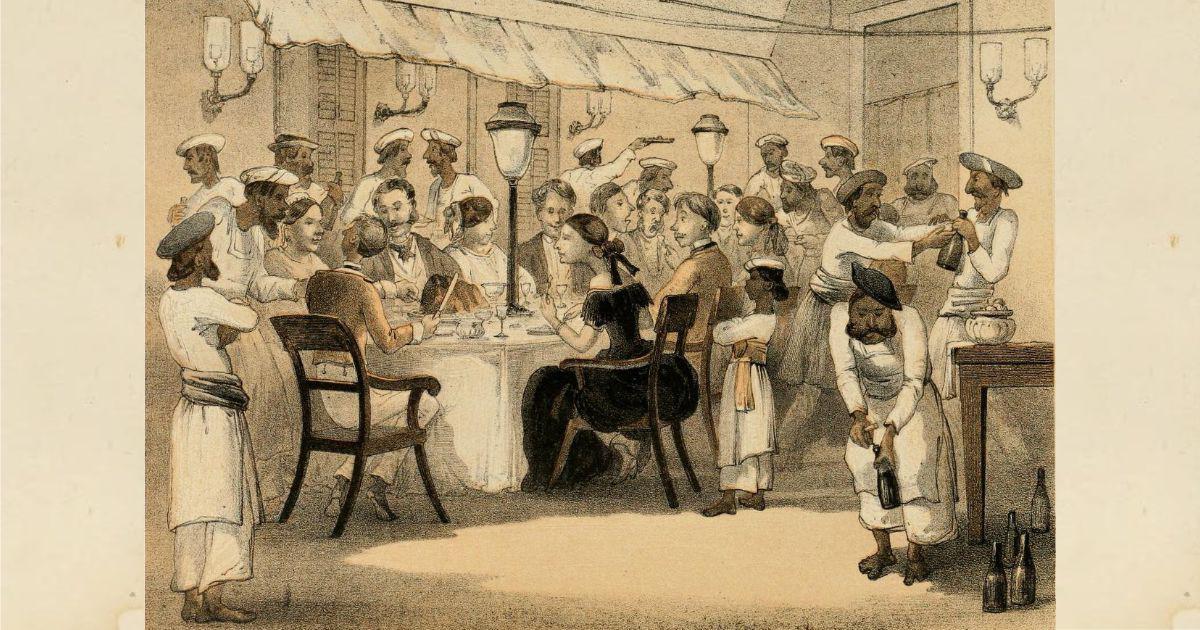
Upon settling in Madras, Europeans encountered an unusual form of exclusion from caste Hindus, who regarded them as “white pariahs”, below the position of untouchable outcastes, and refusing social or cultural interaction. This humiliating treatment was a recurring theme in colonial accounts. It included the refusal to exchange food or shake hands, breaking glasses touched by Europeans, and dismissing their meals as “Pariah food”.
Such attitudes also limited access to workers. A willingness to handle beef and wine was essential for employment in European households. Caste Hindus were reluctant to take up such work for fear of losing caste status, while Muslims were averse to handling alcohol for religious considerations.
Non-caste people, unbound by such restrictions, became domestic workers and cooks for European households.
The colonial kitchen
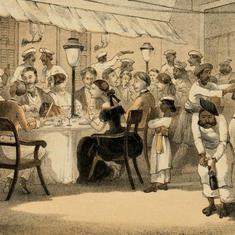
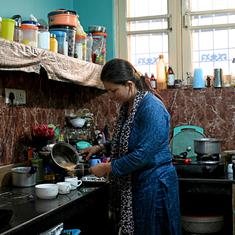
The colonial kitchen became a site of culinary experimentation and an exchange of knowledge, where Europeans developed a taste for Indian food.
Historians tend to view colonial homes in India in two ways: as places where white racial supremacy and Western imperial authority were asserted, and as sites where such unequal arrangements often frayed in everyday domestic life.
The wives of European men managed the household and kitchen. Some of their personal accounts of domestic servants often reveal not authority but a relationship of mutual dependence.
Colonel Kenney Herbert, who after his retirement from Madras, wrote many cookbooks and recipe columns under the pen-name “Wyvern”, noted that “unless amicable relations exist between the cook and mistress or master, the work will never be carried out satisfactorily”.
He added that “for all we know that Ramasamy’s domestic curry often gains, whilst we lose” and “the moment you betray irritation and hastiness in your manner towards Ramasamy, he ceases to follow you”. Ramasamy and Muthusamy were among the names English writers commonly used for their cooks.
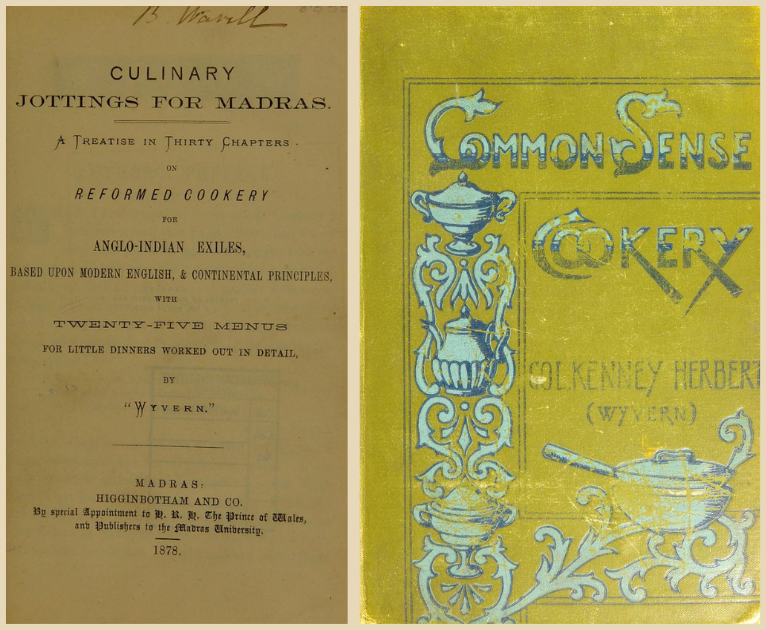
Wyvern observed that “good curries, from our standpoint, are the result of a blend between European and Asiatic cookery, and whenever you get an especially nice one, depend upon it, the credit is more due to the mistress of the house than to the cook.”
Yet there were also occasions when cooks overruled the decisions of memsahibs in matters of food.
Colonial writings refer to dishes such as Bengal curry and Malay curry. But Madras curry, in terms of popularity and acceptance, outshone them all. The memsahibs received local knowledge of curry-making from the cooks and, in turn, seasoned, refined and made it palatable to the European tongue.
Alongside Madras curry, another Madras dish that won over European taste buds was mulligatawny, derived from the Tamil phrase milaguthannir, meaning “pepper water”.
When the prince tasted Madras curry
Anecdotes about Madras curry are plentiful, each testifying to the esteemed place it came to occupy in global culinary culture. Its popularity extended far beyond those who had lived in the Madras Presidency and their European relatives.
Its appeal also cut across social ranks – from ordinary soldiers craving Madras curry during long sea voyages to the Prince of Wales himself, who went out of his way to taste it during his visit to India.
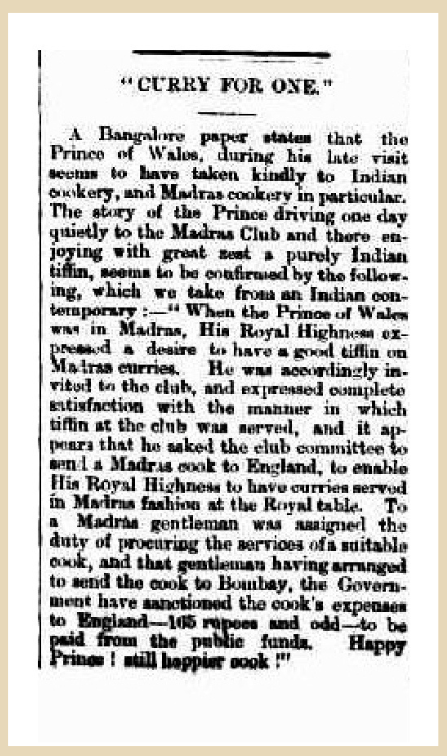
In June 1876, newspapers in India and England reported the following: “When the Prince of Wales was in Madras, His Royal Highness expressed a desire to have a good tiffin of Madras curries. He was accordingly invited to the club, and expressed complete satisfaction with the manner in which tiffin at the club was served, and it appears that he asked the club committee to send a Madras cook to England, to enable His Royal Highness to have curries served in Madras fashion at the Royal table…”
Colonial authorities in Madras managed to send a cook to England at the cost of Rs 105. The news report concluded, “Happy Prince! still happier cook!”
‘Madras curry’ goes global
Madras curry was often promoted as a secret of the East. For many Westerners, especially those who returned to Europe or Australia after years in Madras, preparing curry paste with the proper texture remained a challenge. Yet they remained hopeful.
One writer in the Examiner newspaper observed, “I see no reason why the ingredients could not be obtained in England, with the exception of the fenugreek and green leaves”, adding that “Indian dishes are not beyond the power of the average cook.”
As Europeans developed a taste for Indian food, the trade in ready-made Madras curry powder and paste flourished in the 19th century. An advertisement in Allen’s Indian Mail in 1857 promoted “true Madras curry and Mulligatawney paste and Chutnies”, offering former residents of India a regular supply of these condiments.
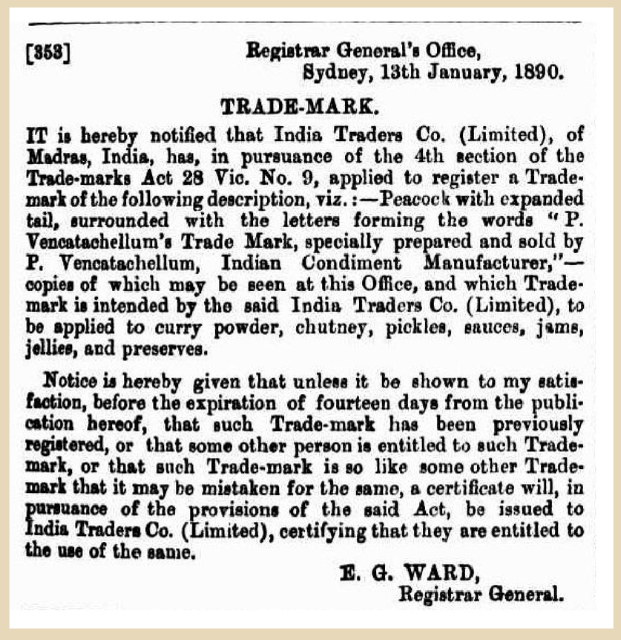
Another brand, Vencatachellum Madras Curry Powder, was especially popular in Australia. At the Melbourne International Exhibition of 1880, Vencatachellum traders showcased nearly 30 products, including Madras curry powder.
Although curry appeared in English coffee houses as early as 1733, it became widespread only in the mid-19th century. The taste for “Oriental” food reflected a growing Western cosmopolitanism, initially confined to elite circles but later spreading more widely.
Historian Nupur Chaudhuri notes that memsahibs “were a major force in nurturing this newly acquired culinary taste.” But the culinary knowledge that sustained it came largely from lower-caste cooks, whose contribution has largely faded from view. Colonialism, however, helped global communities acquire a taste for what had once been dismissed as “pariah food”.
S Gunasekaran teaches history at Centre for Historical Studies, Jawaharlal Nehru University, New Delhi.
