






Mumbai is reclaiming the sea again. This time so that cars can exit a tunnel faster.
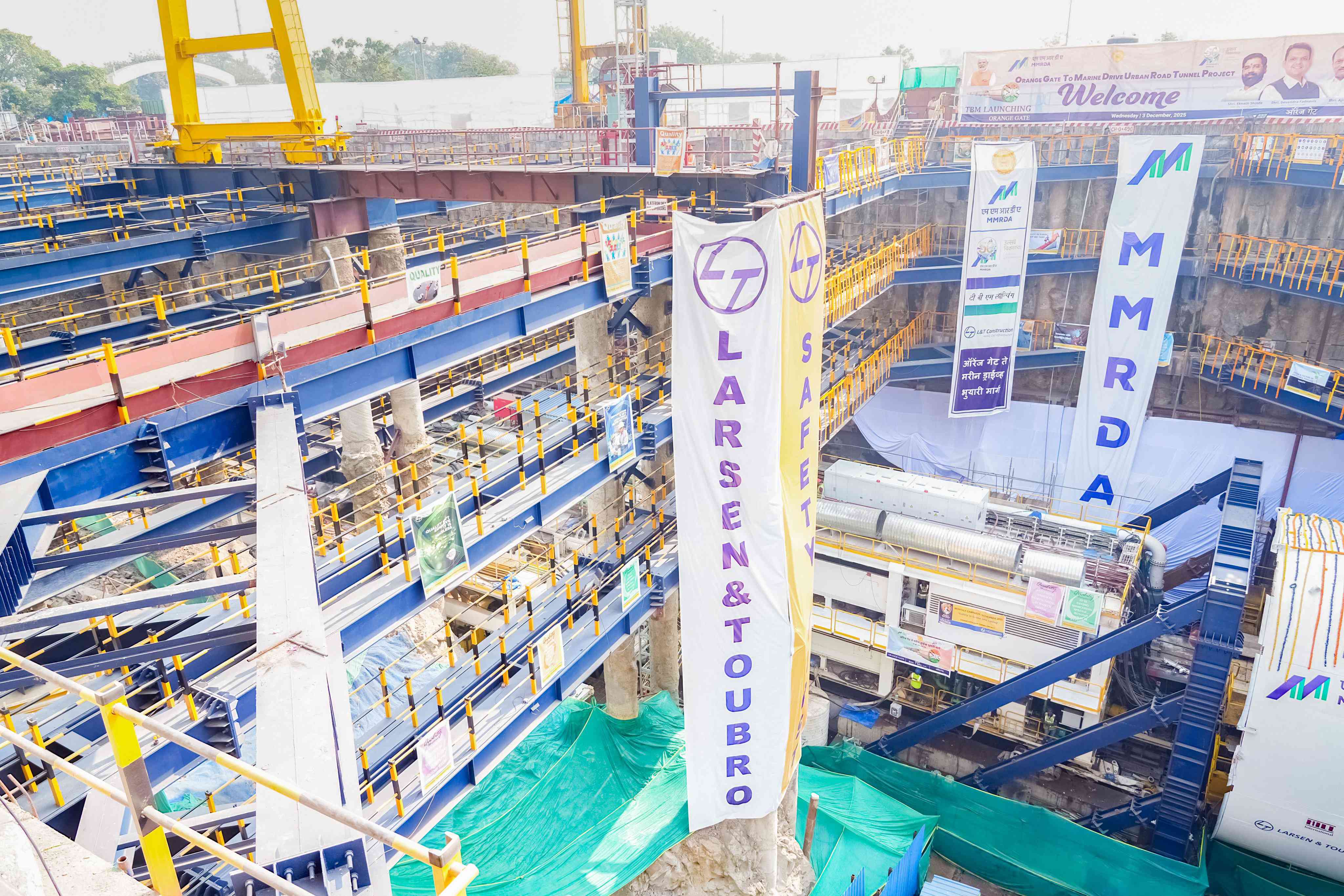
Near Girgaum Chowpatty, where Marine Drive curves into the sea, the Mumbai Metropolitan Region Development Authority proposes to reclaim about 2,200 square metres of the Arabian Sea and widen the road from eight lanes to 13, absorbing traffic from the Orange Gate tunnel that will connect the Eastern Freeway to the Coastal Road.
The Maharashtra Coastal Zone Management Authority has cleared the lane reconfiguration. Final approval now rests with the Union environment ministry. All this in a city where fewer than one in 10 trips is made by car.
How Mumbai moves
Mumbai’s suburban railway network carries about 80 lakh passengers every day, according to 2025-’26 figures. The metro network adds around nine lakh riders across its lines. BEST buses, even in their diminished state, carry close to 30 lakh passengers.
Autorickshaws and taxis move millions across the metropolitan region, but no reliable data is available for the total number.
Against this, roughly 15 lakh people commute by car daily. Public transport moves nearly eight times as many people as cars do. Yet, the car has a majority claim on road space, public capital and political attention. In a city of an estimated 1.2 crore daily public transport commuters, the imbalance is absurd.
Investments in road expansion
The scale of the current road-building investments is unprecedented.
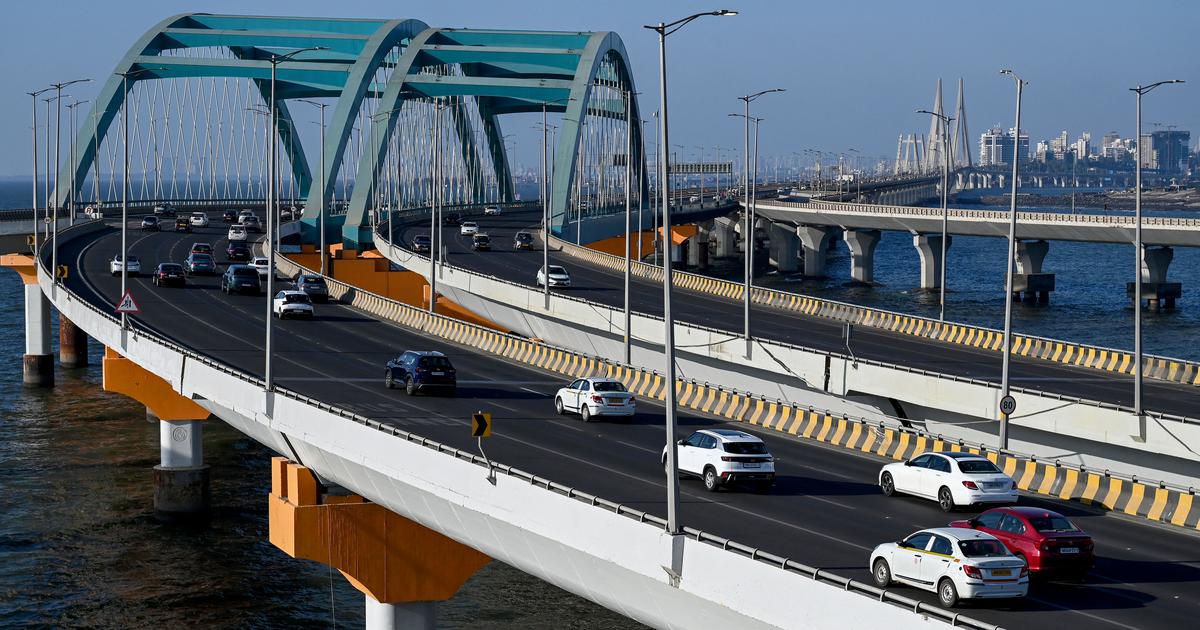

The Coastal Road’s southern phase alone – 10.58 km from Marine Lines to the Worli end of the Bandra-Worli Sea Link – has cost Rs 14,977 crore. There have been seven price escalations from its 2018 estimate.
The remaining 19 km of the corridor to Kandivali is still under construction.
The Goregaon-Mulund Link Road, at Rs 14,000 crore, includes twin 4.7-km tunnels bored beneath Sanjay Gandhi National Park, for which 19.43 hectares of forest land inside a protected area have been diverted.
Now, the plan to widen the Orange Gate tunnel and the Marine Drive extend the same logic southward.
The Coastal Road bans two-wheelers, autorickshaws and heavy vehicles. Two-wheeler users outnumber car users on Mumbai’s roads, while autorickshaws are crucial connectors for the suburbs. The city’s largest transport investment is engineered to exclude the majority of its own vehicle users, apart from every transit user.
The congestion will return
The promise attached to this spending deserves scrutiny. The Coastal Road is projected to carry 1.3 lakh vehicles a day and to cut the journey from South Mumbai to the western suburbs from two hours to 40 minutes. At Mumbai’s car occupancies, 1.3 lakh vehicles is roughly two lakh people – about one-fiftieth of the city’s daily public transport ridership.
“Reducing travel time for cars” is the old dictum of mid-20th-century traffic engineering, and it fails on its own terms. Added road capacity fills with induced traffic within a few years and the congestion returns, at a higher volume of cars.
The evidence runs across cities and for decades.
In 2008, Houston widened its Katy Freeway to 26 lanes at a cost of $2.8 billion dollars. Within three years, peak commutes were 30% to 55% longer. Los Angeles has expanded its freeways for seventy years and remains a byword for gridlock. Seoul went the other way and demolished an elevated expressway through its centre to showcase a river.
No city in the world has built its way out of congestion, though many have disfigured themselves trying. Road expansion in a dense city without road pricing, transit investments, parking restraints and land-use policy is an expensive way of purchasing the inevitable congestion a few years later, with more cars in it.
Prioritise public transport
The first claim on Mumbai's transport budget should be its public transport commuters. Nearly 66,500 people died on the suburban railway between 2004 and 2024 – around nine deaths a day. A toll of this magnitude, sustained over two decades, is a public health crisis. Spending on capacity and comfort is spending on safety and sustainability.
The Rs 14,977 crore sunk into the Coastal Road’s first 10.58 km would have bought more than 180 new air-conditioned 12-car local trains. The railways’ entire 238-train fleet-modernisation programme is sanctioned at Rs 19,293 crore. That money could also have bought more than 8,000 electric buses, three times the fleet the BEST currently runs.
The buses need that investment most urgently. The BEST ran 4,700 buses in 2011 and carried over 42 lakh passengers a day. By January, the fleet had shrunk to 2,744, of which only 249 are owned by the undertaking. Ridership has fallen below 30 lakh. The wet-leased buses that now dominate the fleet break down at three times the rate of the BEST's own vehicles.
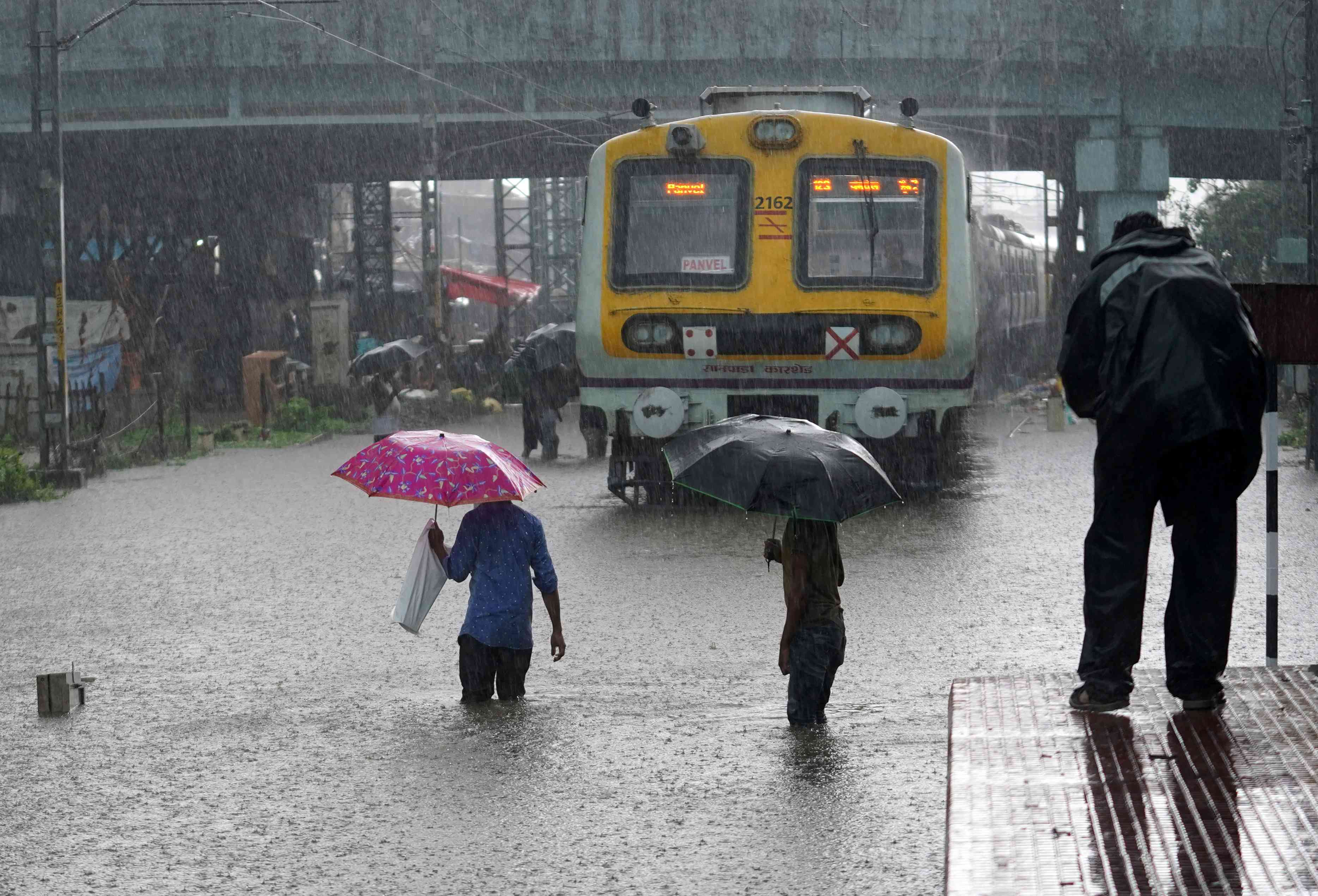
Alongside expansion, the city’s various modes of transit must be stitched into one system. The new metro lines, built under separate contracts and institutional arrangements, are poorly integrated with one another. They do not meld in – in ticketing, fares, interchange or information - with the railway and buses that carry seven times their ridership. The platform navigation between two public modes is confusing and cumbersome.
London shows that fragmented contracting is no excuse. Its buses are run by private operators, its rail lines by different concessionaires but the passenger never sees any of it, because Transport for London is one authority with one fare system and one map.
Mumbai has achieved the inversion with many agencies and a fragmented system, after spending crores of public money. A single integrated network should also reach the places like the northern areas of Nalasopara and the Vasai-Virar belt, where formal public transport is thin to absent and lakhs of commuters depend on autorickshaws alone.
These “transit deserts” hold the city's fastest-growing working population. They appear nowhere in the urban transport policy blueprint.
Surrendering the city to cars
There is also an honest accounting to be made of what road expansion has already taken from the city. Reclamation has altered the shoreline, access to the sea and the intertidal ecology, forest land under a national park has been diverted for a vehicular tunnel. Now, the sea vistas and public spaces of Marine Drive are on the table. Crossing 13 lanes at Girgaum Chowpatty on foot will be hostile.
The city will have engineered its own separation from the seafront it reclaimed the road from. There is also going to be a behavioural shift. People who once thought twice before driving to South Mumbai are already bringing their cars, and the Coastal Road and Orange Gate tunnel will pour that induced traffic into the narrow streets around Churchgate and Mantralaya, which cannot be widened. When a city plans for more traffic, it will get more traffic.
The National Urban Transport Policy of 2006 committed India to planning for the movement of people rather than vehicles, and to prioritising public transport and pedestrians in the allocation of road space. Twenty years on, Mumbai is executing the opposite of our own national policy.
The explanation is political: decision-makers travel by car, road contracts are lucrative in ways that bus procurement never will, and a fatality on an overcrowded train has less political weight than a traffic jam at Peddar Road.
A Look-East policy for urban transport
The alternative blueprint is visible to Mumbai’s East, not its West. Tokyo manages an agglomeration of nearly four crore people with railways carrying the overwhelming share of motorised trips, built through decades of relentless investment in rail capacity, seamless interchange and integrated fares.
Mumbai already has what most cities like Bangalore would like to develop: crores of daily riders and a culture of commuting. It is a pedestrian and commuter city.
Its administrators must fix the trains so commuters stop dying on them. Rebuild the bus fleet. Stitch the metro, the railway and the buses into one system that reaches every locality in the region. Invest in moving people, not vehicles alone.
They must read the evening queue outside every suburban station for what it is. It is not an accidental growth in an accommodative city but a policy choice of spending public money into expanding a lane instead of a bus. Mumbai’s commuters have stood in that queue long enough.
Rutul Joshi is a Professor and Chair of urban planning program at CEPT University, Ahmedabad.
