






The Supreme Court’s judgment on 18 July, 2016 directing the Board of Cricket Control in India and the various state cricket associations to implement the recommendations of the Justice RM Lodha Committee was an exercise in unparalleled judicial overreach. Here, for the first time, we had a privately constituted body being taken apart and put together in the interests of the game of cricket. Whether the Supreme Court should have done so is a matter for much debate. That the BCCI needed this remedy was without doubt.
At every stage of this case, the BCCI has, in one way or the other, managed to make matters worse for itself. It has behaved as though it believes itself to be beyond the purview of law, justice or good sense. It has stymied or obstinately refused any good faith efforts or suggestions at reforming itself. The deep rot which began these proceedings – the shenanigans over Gurunath Meiyappan, N Srinivasan, the Indian Premier League and more – was simply sought to be brushed aside with the overconfidence of a body of men who believe they serve none but themselves, and that they have the government in their pockets.
The BCCI behaved like a bad faith litigant
Having lost in Court (after having approached the Supreme Court in appealing in the first place), the BCCI behaved like a bad faith litigant, trying every possible tactic to delay, obfuscate, and defy the implementation of the final decree of the Court. It started with the BCCI’s appointment of Justice Markandey Katju to head a panel, ostensibly to liaise with the Lodha panel, but more likely to browbeat and intimidate the court in public with outrageous statements and unfounded accusations.
That did not end well for anyone concerned.
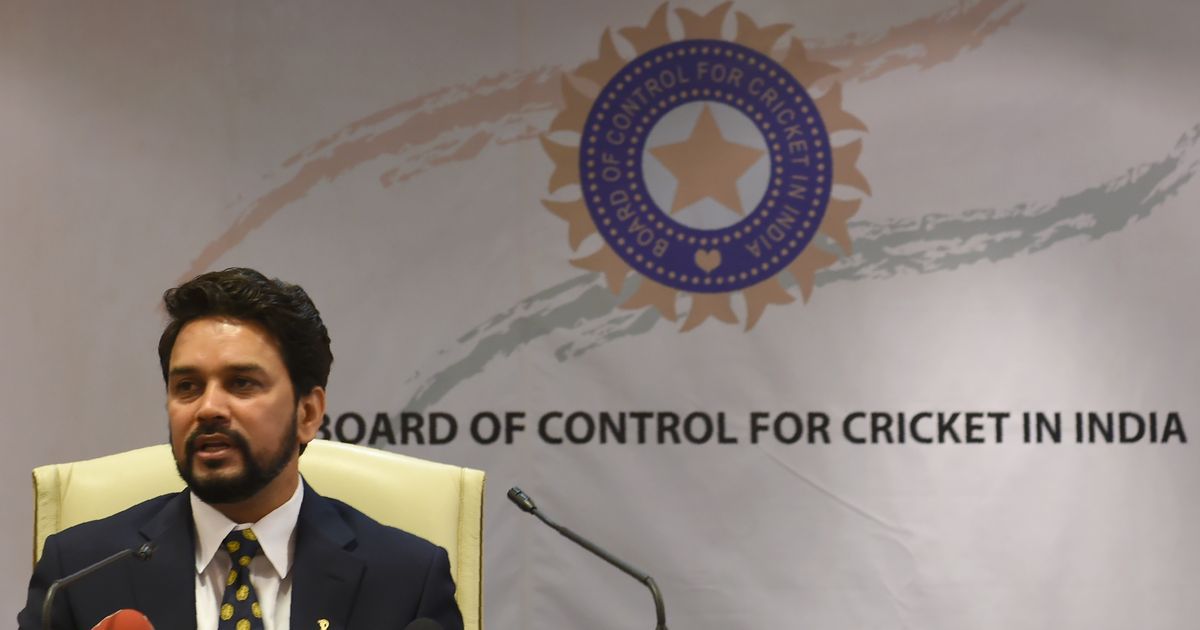
Next, was the ham-fisted attempt at raising the entirely frivolous and unfounded claim that implementing the Lodha recommendations would get the BCCI kicked out of the International Cricket Council. This argument, heard and dismissed by the Court in its July order, was served up again, this time with the garnish of possible perjury committed by the BCCI President, Anurag Thakur.
Amid this, the BCCI did implement some of the reforms suggested by the Lodha Committee but refused to carry out the rest, hoping to take one more shot at trying to convince the Court of the correctness of its own path. This was bound to be futile as, at this point, the case was not just a matter about fixing the BCCI, but re-establishing the Court’s credibility as an institution to be taken seriously. From there on, the matter was only going to end in one way.
Undermining and questioning the SC’s credibility
If the BCCI wanted a case study on what happens when a litigant tries to undermine and question the Supreme Court’s credibility, it only needed to have spoken to one of its former sponsors and benefactors, Subrata Roy Sahara. Having spent the two years in Tihar jail over his refusal to comply with court orders, now watching as the Securities Exchange Board of India and the Supreme Court liquidate his business empire, he would have advised that making a litigation a battle of wills between the litigant and the court rarely ends well for the litigant in question. The BCCI’s litigation strategy following the order of July 2016 should have been “don’t do anything that Sahara tried to do”. Instead they did exactly what Sahara did.
Once the order of the Supreme Court was passed in July, the office bearers of the BCCI had two options: either full compliance or a resignation and fresh elections, calling for the incoming office bearers to take the burden of compliance. Having exhausted their legal avenues by way of a review petition and curative petition, it was not open to BCCI’s office bearers to decide how, and to what extent, they would comply with the Court’s orders, at their convenience. By taking this rather unwise “neither here nor there” approach, the BCCI’s office bearers, to paraphrase Cell Block Tango, had it coming and they have only themselves to blame.
Great performances on the field, poor governance off it
Ironically, the two years that this case has been ongoing has seen the Indian cricket team in rude health. Overseas defeats notwithstanding, the Indian men’s cricket team climbed to the top of the Test charts, and made it to the semi-finals of the 50-over World Cup in Australia in 2015 and the World Twenty20 in 2016, the latter of which it hosted. The women’s team beat England in a Test for the first time (away from home) and the Under-19 team made it to the World Cup finals. Seen from a purely consequentialist view, perhaps the Supreme Court’s intervention has already been good for Indian cricket’s performance on the field!
But all is not well with Indian cricket. The performances on the field cannot distract from the poor governance off it. Misappropriation of funds and conflicts of interest plague the administration of the game at the lower levels. The performance of the players is despite, and not because of, the quality of administration of the game. Far from attracting the attention of those in government with a view to reform, it has only attracted those in government with a view to feed from the same trough.
Will the Supreme Court’s reforms succeed in changing the way the game is run in India? It remains to be seen. Will it successfully remove political influence and make administrators care about the game rather the business opportunities it presents to them? A big step has been taken towards this end. Were the many hours of judicial time spent on this case worth it? We will only know for sure in perhaps ten years’ time.
The BCCI case and its fallout raises one uncomfortable question that we have to confront someday – which is worse: A private body which operates as though it is above the law or a Supreme Court which steps outside its authority to bring such a private body to heel?
Alok Prasanna Kumar is an advocate based in Bengaluru and Senior Resident Fellow at Vidhi Centre for Legal Policy. Views expressed here are purely personal.
