





Plea filed in SC against UP, Uttarakhand’s orders to display names on shops along Kanwar Yatra route
The governments’ directives were a digital workaround to continue the identity disclosure practice that was stayed by the court in 2024, argues the petition.
A plea was filed before the Supreme Court on Thursday challenging the Uttar Pradesh and Uttarakhand governments’ directives requiring eateries along the Kanwar Yatra pilgrimage route to display quick response codes with the names and identities of their owners.
The petition, filed by Delhi University Professor Apoorvanand, argues that the mandate violates an 2024 interim order of court that prohibited forcing vendors to disclose their identities.
However, the QR codes, now being made mandatory for all food stalls and eateries along the pilgrimage route, would enable pilgrims and others to access personal details of business owners.
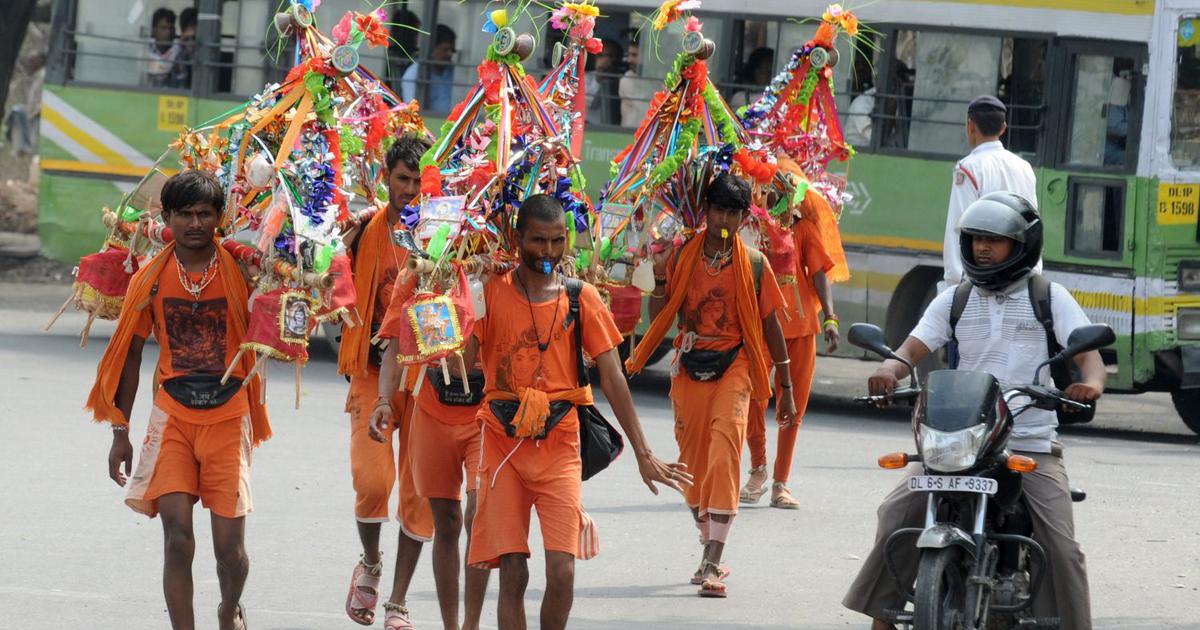
During the Kanwar Yatra, devotees, called Kanwariyas, walk hundreds of kilometres to collect water from the Ganga near Haridwar and carry it back to their home states to offer at temples.
The devotees mainly come from Uttar Pradesh, Haryana, Rajasthan, Delhi and Madhya Pradesh.
This year’s Kanwar Yatra started on Saturday and will conclude on August 9.
The petition contends that this not only undermines the spirit of the Supreme Court’s stay but also risks discriminatory profiling, particularly of vendors from minority communities, under the guise of public safety and licensing requirements.
The plea claims that the governments’ orders were a digital workaround to continue the identity-disclosure practice that had been stayed by the court. It warns that the orders could heighten the risk of “communal profiling and intimidation” and violate the fundamental right to privacy and dignity.
The plea points out that while vendors are legally required to display licenses, those are meant to be posted inside their premises, not put up prominently outside or through public QR codes.
The “vague and overbroad directives deliberately mix up the licensing requirements with the other unlawful demand to display religious identity, and leave scope for violent enforcement of such a manifestly arbitrary demand both by vigilante groups and by authorities on the ground,” the plea further adds.
The petitioner urged the court to direct Uttar Pradesh and Uttarakhand to immediately withdraw the orders and restrain authorities from implementing any further measures that could lead to religious profiling.
“There is a grave and imminent risk of irreparable injury to the fundamental rights of affected vendors, particularly from minority communities,” the plea said.
The petitioner also requested that the court should ask the respondents to submit affidavits explaining how the new mandates do not breach the court’s earlier stay or constitutional protections.
The matter will be heard by the court on July 15.
Also read: Kanwar yatra food directive is unconstitutional – and the police know this
