










First photographic evidence recorded in Arunachal Pradesh of rare Pallas’s cat
The presence of five other wild cats was also recorded during a survey conducted by the World Wide Fund for Nature India.
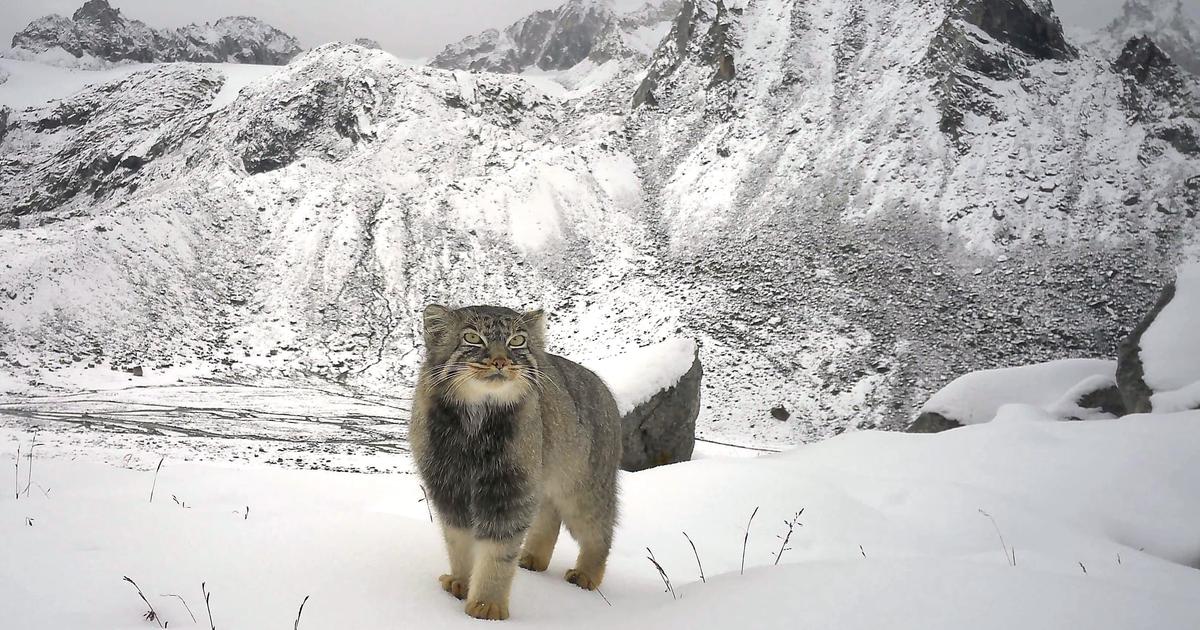
A wildlife survey conducted in Arunachal Pradesh has recorded the first-ever photographic evidence of the rare Pallas’s cat in the state.
The survey, conducted by the World Wide Fund for Nature India in association with the state forest department, also recorded the presence of five other wild cats – snow leopard, common leopard, clouded leopard, leopard cat and marbled cat – at more than 4,200 metres above sea level.
The Pallas’s cat being spotted in Arunachal Pradesh has significantly extended the known distribution of the species in the eastern Himalaya, adding to earlier confirmed records from Sikkim, Bhutan and eastern Nepal.
“Globally listed as Least Concern on the IUCN [International Union for Conservation of Nature] Red List, this cold-adapted wild cat is one of the most elusive, rarely photographed and therefore remains one of the least studied feline species,” the release added.
As part of it, WWF-India deployed 136 camera traps in 83 locations across 2,000 km of rugged high-altitude rangelands in the state’s West Kameng and Tawang districts between July 2024 and September 2024. The camera traps were kept active for more than eight months.
The Pallas’s cat was spotted at a slightly lower height than the absolute global maximum of 5,050 metres above sea level, according to a press release by the organisation.
The International Union for Conservation of Nature Red List of Threatened Species, also known as the IUCN Red List or Red Data Book, is an inventory of the global conservation status and extinction risk of biological species. As per the list, a “Least Concern” status signifies a species that is stable, widespread and not currently at a high risk of extinction.
The survey also documented the highest elevation records for the common leopard at 4,600 metres above sea level, the clouded leopard at 4,650, the marbled cat at 4,326, the Himalayan wood owl at 4,194 and the grey-headed flying squirrel at 4,506.
“The elevation records documented for the common leopard, clouded leopard, marbled cat, Himalayan wood owl, and grey-headed flying squirrel were the highest in India to date and may exceed previously known global elevation limits,” stated the release.
Rishi Kumar Sharma, head of science and conservation at WWF-India’s Himalayas Programme, said that the discovery of Pallas’s cat “at nearly 5,000 metres is a powerful reminder of how little we still know about life in the high Himalayas”.
A landscape that “can support snow leopards, clouded leopards, marbled cats, and now Pallas’s cat alongside vibrant pastoral traditions speaks to its extraordinary richness and resilience”, he added.
These findings highlight why community-led conservation, grounded in science and local knowledge, is indispensable for securing the future of our fragile rangelands, according to Sharma.
Ngilyang Tam, principal chief conservator of forests for wildlife and the chief wildlife warden at the state’s forest department, said that the discovery of Pallas’s cat was a milestone for wildlife research in the eastern Himalayas.
“These findings reaffirm the state's importance as a global biodiversity hotspot and highlight the need for continued investment in scientific monitoring and conservation,” Tam said. “The active participation of herders and villagers demonstrates that conservation, traditional knowledge, and their livelihoods can go hand in hand in protecting our fragile mountain ecosystems.”
