








Centre says it is ‘reworking procedures’ to resume MGNREGS in West Bengal
The Union government had suspended the Mahatma Gandhi National Rural Employment Guarantee Scheme in the state in 2022 citing alleged irregularities.
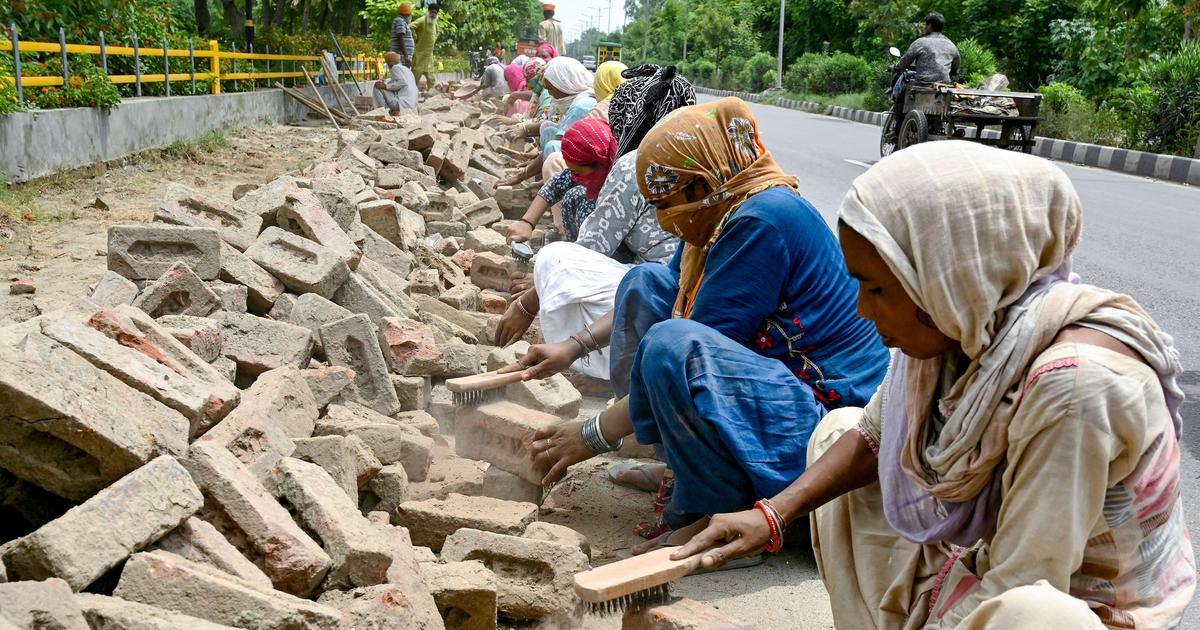
The Union Ministry of Rural Development on Friday told Parliament that it is in the “process of reworking and refining the necessary modalities and procedures” to resume the Mahatma Gandhi National Rural Employment Guarantee Scheme in West Bengal.
The MNREGS was introduced in 2005 by the Congress-led United Progressive Alliance and is aimed at enhancing the livelihood security of households in rural areas. The scheme guarantees 100 days of unskilled work annually for every rural household that wants it, covering all districts in the country.
Funds for the scheme are contributed by the Union and the state governments.
In March 2022, the Union government suspended MNREGS funding to West Bengal, citing widespread irregularities and alleged violations of the scheme’s implementation rules by the state government.
West Bengal received Rs 7,507 crore in the financial year 2021-’22 under MNREGS but has received no funds in the following three financial years.
On Friday, Trinamool Congress MPs held a protest in the Parliament complex over the dues from the Union government for West Bengal, accusing a “vindictive regime” of starving an entire state to settle political scores, The Hindu reported.
The Union government owes the state government more than Rs 3,000 crore under MNREGS, of which over Rs 1,400 crore is the wages due for completed work by registered workers, the newspaper reported.
Trinamool Congress MP Derek O’ Brien told The Hindu that West Bengal was one of the top-performing states under the scheme before the funds were stopped in March 2022.
The Rajya Sabha member added that the workers under the scheme had earned their wages honestly. “For over three years, they have waited silently, invisibly,” the newspaper quoted the Rajya Sabha MP as saying.
O’Brien added: “After over three years of freezing funds, does the [Union] government accept that it has effectively converted a legal right-to-work into a political weapon against Bengal’s rural people?”
In June, the Calcutta High Court directed the Centre to resume implementation of the scheme, stating that the Union and state governments may impose special conditions to prevent irregularities.
The Union government challenged this in the Supreme Court, which on October 27, dismissed the petition and upheld the High Court’s directive. The implementation did not begin, prompting further petitions.
On November 7, the High Court directed the Union government to immediately resume work under MNREGS in the state.
