





Punjab bans sale of meat, alcohol in three ‘holy cities’
The state Assembly had in November accorded the status to the walled city of Amritsar, as well as Talwandi Sabo and Anandpur Sahib.

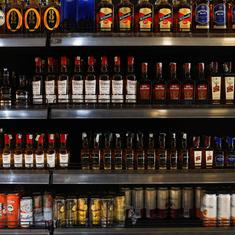
The Punjab government on Sunday banned the sale of meat, tobacco, alcohol and other intoxicants in the walled city of Amritsar, as well as in Talwandi Sabo and Anandpur Sahib.
On November 24, the state Assembly unanimously passed a resolution to grant the status of “holy cities” to the three places.
A notification in this regard was issued on December 15.
In a social media post on Sunday, Chief Minister Bhagwant Mann said the decision to accord the places the “holy cities” status had come into effect.
“These cities are not only religious centres, but also important symbols of our cultural heritage,” said Mann. “I extend my heartfelt congratulations to the entire Sikh sangat.”
He added that along with the ban on meat and intoxicants, the Punjab government would undertake “appropriate development” in the three cities so that devotees visiting from other places “do not face any inconvenience”.
Facilities such as e-rickshaws, mini-buses, shuttle buses and other public transport services will be provided, said the chief minister.
In November, Mann had said that the holistic development of these cities would accelerate religious tourism, reported The Indian Express.
After the resolution in November, reports noted that several restaurants selling non-vegetarian food had been operating in Amritsar’s walled city for decades.
Apart from Punjab, Odisha and Madhya Pradesh have also enforced bans on the sale of alcohol and meat in their holy cities.
In July, the Bharatiya Janata Party-led government in Odisha banned the sale of liquor within a 2-km radius of the Jagannath temple in Puri.
The government also planned to ban the sale of meat along the 2.5-km Grand Road, or Bada Danda, where the idols of four deities are placed on chariots and pulled during the annual Rath Yatra.
The road, which connects the Jagannath temple to Gundicha temple, is lined with hundreds of hotels.
It was unclear when the ban would come into force.
In Madhya Pradesh, a ban on liquor took effect in 19 cities and gram panchayat areas of religious significance in April.
Chief Minister Mohan Yadav had described the ban as a “historic step towards de-addiction” and said it was motivated by “public faith and religious reverence” associated with the places.
