










US says it is ‘not ready’ to escort oil tankers through Strait of Hormuz
The US Navy would begin the task ‘relatively soon’, likely by the end of the month, the energy secretary said.
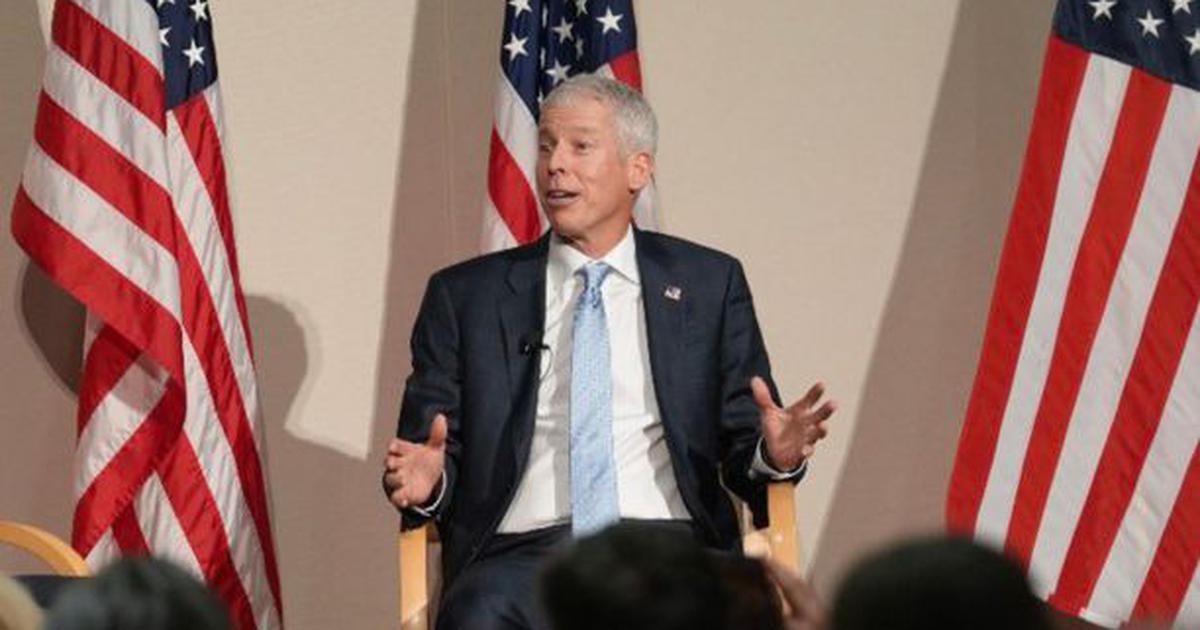
The United States military is “not ready” to escort oil tankers through the Strait of Hormuz as its resources are focused on the operations against Iran, US Energy Secretary Chris Wright told CNBC on Thursday.
Speaking to the TV channel, Wright said that the US Navy would begin escorting tankers through the strategic waterway “relatively soon”, likely by the end of the month.
“All of our military assets right now are focused on destroying Iran’s offensive capabilities and the manufacturing industry that supplies their offensive capabilities,” the official said.
Wright’s comments came two days after he incorrectly claimed on social media that the US Navy had escorted a tanker through the strait. While the post was later deleted, global oil prices briefly dropped following the claim, CNBC reported.
Hours after his statement, the White House said that the US military had not yet escorted any commercial ships through the strait.
Responding to the claim, a spokesperson for Iran’s Islamic Revolutionary Guard Corps denied that any oil tanker had been escorted through the strait. “Any movement of the US fleet and its allies will be stopped by our missiles and drones,” spokesperson Ali Mohammad Naini said in remarks carried by Iranian state media.
On March 3, US President Donald Trump said that Washington would provide protection for oil tankers passing through the Strait of Hormuz.
The escalating tensions in West Asia have raised concerns about disruption to shipments through the Strait of Hormuz. The narrow waterbody connecting the Gulf to the Arabian Sea. About 20% of the global petroleum supply passes through the maritime chokepoint.
The conflict has caused the “largest supply disruption in the history of the global oil market”, the International Energy Agency said on Thursday.
Global oil prices have surged since Israel and the United States launched attacks on Iran on February 28. Tehran has retaliated by striking Israel and US military bases in the region, and targeting major cities in Gulf countries and some ships.
The benchmark Brent crude oil price briefly touched the $100-per-barrel mark on Thursday, before easing marginally. Following Wright’s comments, the price had increased to $100.4 per barrel as of 8 pm Indian time.
The price of Brent was about $72.8 per barrel on February 27, a day before the conflict began.
On Monday as well, oil prices had briefly crossed the $100-per-barrel mark, the highest since July 2022.
