







Top updates: US says report on peace talks with Iran at Islamabad is ‘speculative’
Pakistan is pitching Islamabad as a possible venue for the negotiations and the meeting could happen this week, the ‘Financial Times’ reported.
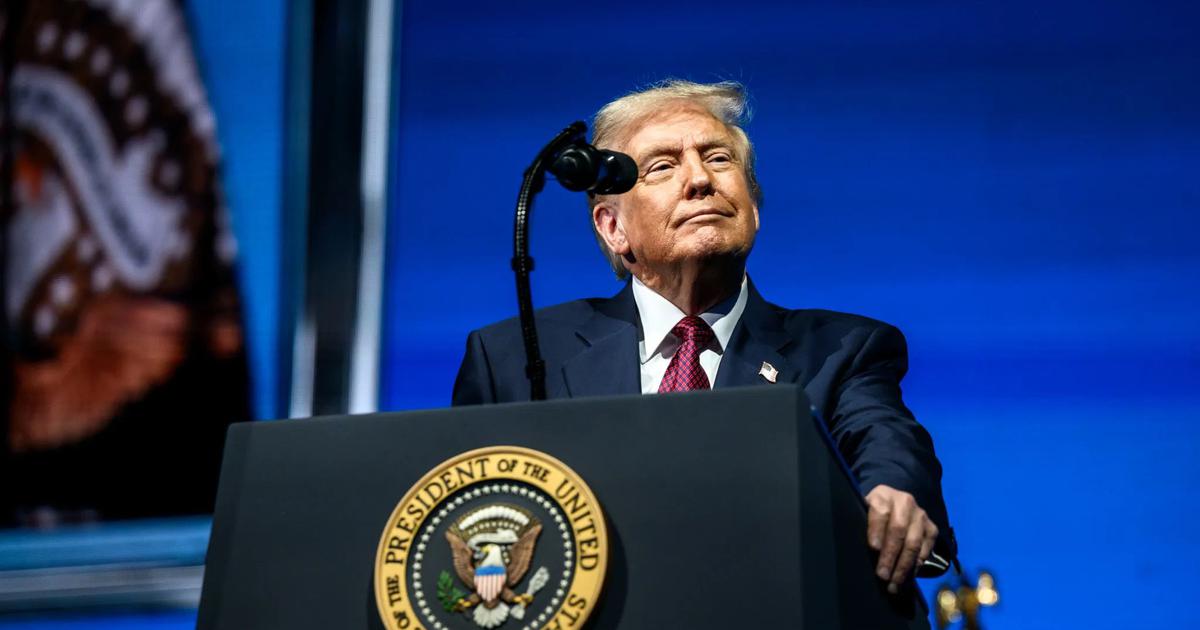
The White House on Monday said that it did not have concrete comments to make on reports that United States Vice President JD Vance and other officials will hold talks with Iran in Pakistan’s capital Islamabad later this week, ANI reported.
US Press Secretary Karoline Leavitt was quoted as saying that it was a “fluid situation” and that “speculation about meetings should not be deemed as final until they are formally announced” by the White House. “These are sensitive diplomatic discussions, and the US will not negotiate through the press,” Leavitt added.
The US delegation would include Special Envoy for Peace Missions Steve Witkoff and Senior Advisor to the President Jared Kushner.
Here are more top updates from the conflict in West Asia:
- The comments by the White House came after the Financial Times reported on Monday that Pakistan was pitching Islamabad as a possible venue for negotiations. The talks involving senior members of the Trump administration and Iran could happen this week, the newspaper reported.
- To this end, Pakistani military chief Asim Munir had spoken with Trump, the Financial Times reported. Pakistani Prime Minister Shehbaz Sharif said on Monday that he had spoken with Iranian President Masoud Pezeshkian, but did not mention whether they had discussed the proposed talks.
- Israeli Prime Minister Benjamin Netanyahu on Monday said that any deal to end the conflict would protect Tel Aviv’s “vital interests”. Netanyahu said in a video statement that he had spoken with Trump and had discussed the president’s desire to end the fighting with Iran through an agreement.
- This came hours after Trump claimed that Iran is “willing to make a deal”, which the US had agreed to. Talking with reporters, he added that the deal must be “good” and stated that there will be “no more wars or nuclear weapons”.
- Global oil prices remained high amid supply concerns, although there was a marginal drop in the rates. The benchmark Brent crude was trading at $103 per barrel on Tuesday. The price was $78 per barrel on February 27, a day before the conflict started. Iran has effectively blocked the strategic Strait of Hormuz for most international commercial vessels since the conflict began. About 20% of global petroleum supply passes through the maritime chokepoint.
- The price of Brent fell by about $10 per barrel on Monday after US President Donald Trump said that he had postponed military strikes against Iranian power plants and energy infrastructure for five days following “good and productive conversations” between Washington and Tehran. But Iran’s state-owned Fars news agency reported that there had been no direct or indirect conversation with Trump.
- Japan will release another tranche of its strategic oil reserves starting Thursday to curb the harm caused by the disruption in supply, Prime Minister Sanae Takaichi said Tuesday.
- The Indian stock market improved marginally on Tuesday after Trump indicated that US, Israel and Iran could negotiate an end to the conflict in West Asia. This came after several sessions of the indices falling amid concerns surrounding the conflict and surging energy prices. As of 11.05 am, the benchmark Sensex index had risen by more than 500 points or 0.7%. The Nifty had surged 0.6%, or by more than 150 points. The India VIX index, which measures volatility in the market, had dropped 4.3%.
- Major Asian stock indices also jumped on Tuesday. As of 11.05 am Indian time, Hong Kong’s Hang Seng index was up 1.4%, South Korea’s Kospi had risen 2%, Japan’s Nikkei 0.6% and China’s Shanghai Composite 0.6%.
- Israel on Tuesday struck the southern areas of Lebanese capital Beirut, AFP reported. The Israeli military said it targeted a member of the Iranian Revolutionary Guards’ foreign operations arm. Tel Aviv has been accusing Lebanese militant group Hezbollah, which is backed by Tehran, of assisting the Iranian forces in attacking Israel.
- At least two persons were killed in an Israeli strike in Bshamoun, a town south of Beirut, Al Jazeera quoted Lebanon’s health ministry as saying. At least 1,039 persons have been killed and more than 2,500 injured in Lebanon since the conflict started, Al Jazeera reported. In Iran, at least 1,500 persons have been killed and more than 18,550 injured.
- More than 4,800 persons have been injured in Israel since the conflict began, said the country’s health ministry on Tuesday. More than a dozen persons have been killed.
The conflict
The US and Israel launched an attack on Iran on February 28, claiming that Tehran’s action posed an existential threat to Israel. Washington acts as a guarantor of Israel’s security. Iran has retaliated by striking Israel and US military bases in the region, and targeting major cities in Gulf countries and some ships.
Israel has been claiming that Iran is close to obtaining a nuclear weapon, which could alter the regional security balance. Tehran has long maintained that its nuclear programme is for civilian purposes.
