





‘Colossal failure of diplomacy’: Congress after Centre says New Delhi ‘can’t broker’ Iran-US talks
External Affairs Minister S Jaishankar said that India does not view itself as a ‘dalaal’, or broker, like Pakistan amid the West Asia conflict.

With Islamabad mediating peace talks between the United States and Iran, the Congress on Thursday said that the “colossal failure” in India’s diplomacy, outreach and narrative management have made a “broken country” like Pakistan a “broker country”.
The statement came a day after External Affairs Minister S Jaishankar was quoted as saying that India does not view itself as a “dalaal”, or broker, like Pakistan. Jaishankar made the comments at an all-party meeting convened by the government on the West Asia conflict.
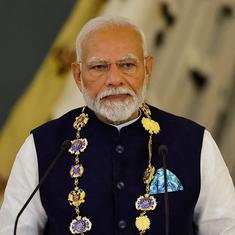
During the meeting, the Union government said that Prime Minister Narendra Modi had made it clear to US President Donald Trump that India “wants to see the war coming to an end” and that it is “affecting everyone”, the Deccan Herald reported.
Responding to Jaishankar’s comments, Congress leader Jairam Ramesh said on social media that the external affairs minister is “doing his best to cover up India’s extreme embarrassment and the setback to its regional diplomacy”.
For Pakistan to “even be…considered for a mediating role is a most damning indictment of both the substance and style of…Modi’s diplomacy”, said the MP.
“Even after the communally incendiary and poisonous statements of the Pakistan Army Chief General Asim Munir provided the oxygen for the terror attacks in Pahalgam…we have been unable to isolate Pakistan on the international stage,” Ramesh further said.
He added: “It has only emerged as a more relevant actor and after May 10, 2025, itself it has become clear that…Munir had become a favourite of President Trump and his team.”
Ramesh was referring to Trump hosting Munir at the White House amid heightened tensions between New Delhi and Islamabad.
The tensions between India and Pakistan escalated on May 7 when the Indian military carried out strikes – codenamed Operation Sindoor – on what it claimed were terrorist camps in Pakistan and Pakistan-occupied Kashmir.
The strikes were in response to the terror attack in Jammu and Kashmir’s Pahalgam, which killed 26 persons on April 22.
The Pakistan Army retaliated to Indian strikes by repeatedly shelling Indian villages along the Line of Control in Jammu and Kashmir. At least 22 Indian civilians and eight defence personnel were killed.
On May 10, India and Pakistan reached an “understanding” to halt firing following the four-day conflict.
‘Domestic LPG production increased’
The Union government also said at the all-party meeting on Wednesday that the domestic production of liquified petroleum gas has increased to 60%, which is up from 28% when the war started, the Deccan Herald reported.
Jaishankar said that till now, four India-bound ships had passed through the Strait of Hormuz and more are on the way.
Energy supplies to India have faced disruptions since the conflict in West Asia broke out on February 28. Iran has effectively blocked the strategic Strait of Hormuz for most international commercial vessels. About 20% of the global petroleum supply passes through the maritime chokepoint.
This has also affected LPG supplies in India. The country imports about 60% of its LPG demand, most of it from Gulf countries.
Also read: Qatar’s gas terminal could take years to repair and India will suffer the cost
