


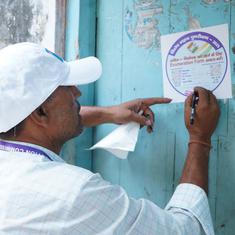
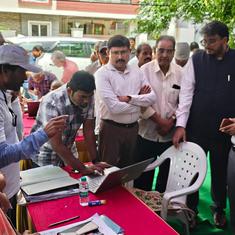

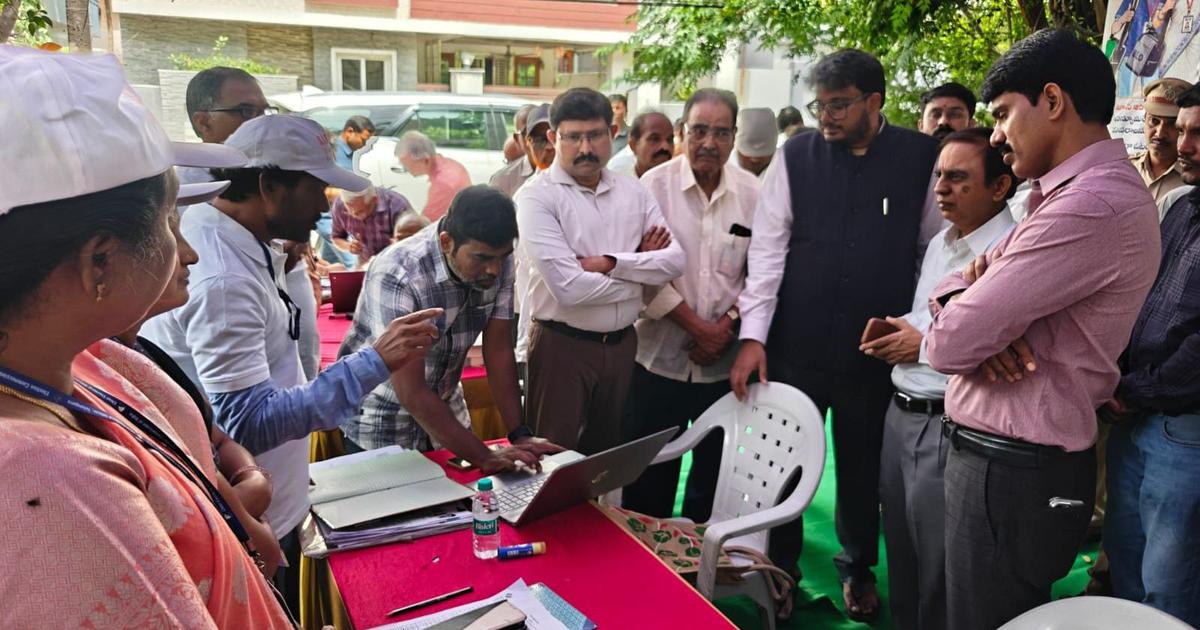
The third phase of the special intensive revision of electoral rolls is underway and, in a repeat of the choppiness that has unfolded in other parts of the country, voters are expressing their frustrations at the process of ensuring that their names are included on the “purified” list.
The Election Commission says the revision aims to eliminate the names of voters who are dead, have moved to other places or are not citizens.
The exercise began in Bihar last year and, in the second phase, was expanded to 12 states and Union Territories. In the latest phase, the voter rolls are being revised in 16 states and three Union Territories.
Since it began, concerns have been raised that the revision could eliminate genuine voters from the rolls and even shape electoral outcomes, as Scroll has reported. In West Bengal alone, about 91 lakh voters – nearly 11.9% of the state’s electorate before the revision process began – had been removed from the electoral rolls as of April 6. About 27 lakh appeals against exclusions are believed to be pending before appellate tribunals.
In May, the Supreme Court upheld the legality of the revision, but said that the exercise does not mean that the Election Commission can decide on whether the person is an Indian citizen. However, Bharatiya Janata Party-ruled states have attempted to weaponise the SIR by denying ration cards to those who have been eliminated from the rolls. In some cases, the police have denied permission for their passports to be renewed.
The Scroll newsroom, a microcosm of urban India, is also witnessing difficulties and confusion. Here’s what is bothering us:
Nandini Ramnath: My brother, our late mother and I moved to Mumbai’s north eastern suburbs in the mid-1990s. Since then, we have been registered as voters in a constituency there. We have voted in successive elections, including the most recent Assembly election in 2024. We have voter ID cards, proof of address, every document that establishes us as residents of that constituency.
To qualify for inclusion in the latest SIR, voters need to be “mapped” to the 2002 rolls. For reasons we can’t figure out, our names are not on those rolls.
We have given our documents to the block level officer, but he says that we will need to appear before a tribunal to establish our right to vote. This is not what other booth level officers in the city are making others in our situation do. The approach seems to differ from BLO to BLO.
It seems disproportionate. If Indian citizens have valid documents and have slipped out of the SIR 2002 rolls for whatever reasons, they should be able to hand in additional documents and have themselves re-enrolled, rather than appear before a tribunal.
Nachiket Deuskar: I was too young to be a voter in 2002, the Election Commission’s benchmark year for the exercise in this round. So to prove that I should remain a voter, I need to mandatorily map myself to my parents’ or grandparents’ voting status in 2002.
However, the names of my parents and paternal grandparents have been omitted from the 2002 electoral rolls. Several other names in the locality are also missing. My parents possess their voter ID numbers from 2002 (they have even retained their voter ID cards from 1994), and voted consistently before and after 2002. So we are unsure how they were omitted. Neither my family, nor the booth level officer has been able to find their names.
My maternal grandparents’ names are present in the 2002 list. There is uncertainty about whether that would suffice because their surname differs from mine – as it would in the case of many Indians.
We have been told that, if necessary, we can submit additional documents as proof to be reinstated to the voter list only after the draft rolls are published. This means an anxious wait.
Johanna Deeksha: The main problem my parents faced was with the 2002 list. They were unable to download it. After visiting two to three election offices, they were finally given the necessary list. But because it was so long, my elderly parents were overwhelmed trying to find their names.
They were unsure whether their names were not on the list or whether they had simply missed them. This resulted in confusion about which sections of the SIR enumeration form to complete.
They have been seeking help from volunteers to confirm that their names are not on the list. They say that even government officials to whom they have spoken are unsure about the process.
Despite being regular voters all their lives, the fact that their names do not exist in the 2002 rolls has caused them a lot of stress.
Divya Aslesha: More than 12 years after my grandfather passed away, I am glad for unintentionally having held on to all his documents. Without his fraying voter ID (with his name spelt wrong), it would have been much more difficult to have hunted down his name on the 2002 list, along with my grandmother’s and mother’s names.
We submitted our forms but now face another worry: names differ across our various documents, a natural outcome of how government forms require Indians to identify themselves – first name, surname, father’s name/husband’s name/middle name and so on. This information, when translated across languages and scripts, is a recipe for disaster resulting in all kinds of spellings and errors.
The helpful booth level officer has said corrections can be made later. But this mammoth exercise that relies on records that are nearly 25 years old in a country where document coverage is patchy and error-prone does not seem to have accounted for how corrections can be made.
Now, while waiting for the first draft rolls to be issued, there is more work to be done: enrolling my sister as a voter online even though she has been out of the country for nearly a decade. Rumours that passports will be up for scrutiny if your name is not on the rolls do not seem very credible, but in these times, one would rather not find out.
If missing names, spelling errors and minor discrepancies are bothering the Scroll newsroom, one can imagine the impact the exercise is having on others.
Also read: Where did your father vote in 2003? Why demand for legacy documents under SIR has no legal basis
Here is a summary of last week’s top stories.
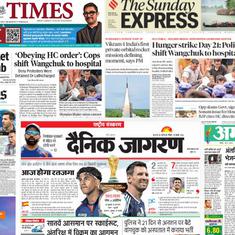
Sonam Wangchuk’s fast. Activist Sonam Wangchuk was taken to hospital by the Delhi Police on Saturday, the 21st day of his hunger strike. The police said he had been shifted to hospital for “essential medical care” in compliance with a Delhi High Court’s order.
Abhijeet Dipke, the founder of the Cockroach Janta Party political campaign, alleged that he was beaten. Soon after, Dipke began an indefinite hunger strike.
Wangchuk’s fast was part of the protest by the Cockroach Janta Party to demand Union Education Minister Dharmendra Pradhan’s resignation on account of alleged mismanagement in how competitive exams have been conducted. The activist had begun the hunger strike at Delhi’s Jantar Mantar on June 28.
On Thursday, the Congress had urged Wangchuk to end his hunger strike. The party said that it shared the activist’s concerns and that it would continue to demand the resignation of Pradhan.
This was the first comment about Wangchuk’s protest by the largest Opposition party, which, along with its allies, has been demanding Pradhan’s resignation.
Maritime safety concerns. The country’s maritime regulator directed shipping companies not to deploy Indian seafarers on vessels transiting through the Strait of Hormuz. This came after a series of attacks on commercial ships in the waterway amid renewed tensions between the United States and Iran.
The Directorate General of Maritime Administration also asked vessels operating in the Persian Gulf, the Strait of Hormuz and nearby waters to maintain heightened security, monitor navigational warnings and security advisories, and comply with ship security measures under the International Ship and Port Facility Security Code.
At least 13 Indian sailors have died in the region since the war in West Asia began on February 28.
Places of worship disputes. Both Hindu and Muslim parties declined the Supreme Court’s proposal for mediation in the disputes relating to the Gyanvapi mosque in Varanasi, the Shahi Idgah mosque in Mathura and the Shahi Jama Masjid in Sambhal. The litigants will continue to pursue the cases in court.
Each of these mosques, Hindutva groups contend, is actually a Hindu temple.
The court had sought consent of parties involved in the three cases to engage in mediation of the disputes under the 2026 Supreme Court Action for Mediated Adjudication and Disputes Harmonization Across Nation Samadhan Samaroh. The initiative began in April and will conclude with a Special Lok Adalat in August.
Also on Scroll last week
- Why the ED has arrested a BJP leader in a money laundering case
- HC sends Assam woman to foreigners tribunal for relief. She is arrested and pushed into Bangladesh
- An Agniveer died in Operation Sindoor. A year later, his parents are still fighting for pension
- How the ‘Satluj’ wave could shape Punjab politics
- How ambush of church leaders on a forested road escalated Naga-Kuki conflict across Manipur hills
- Taslima Nasrin is returning to Kolkata. But will Bangladesh ever end her exile?
- Mumbai is a commuter’s city. Why is it building itself for cars?
- The 13th Dalai Lama fled Tibet for India long before his successor’s famous escape
- ‘The Odyssey’ review: An immersive, visually ravishing homeward voyage that’s also a journey within
- ‘Bol Bol Rani’ review: Sai Tamhankar prevents a mind game thriller from being a brain fade
Follow the Scroll channel on WhatsApp for a curated selection of the news that matters throughout the day, and a round-up of major developments in India and around the world every evening. What you won’t get: spam.
And, if you haven’t already, sign up for our Daily Brief newsletter.
