





Top updates: US naval blockade takes effect, Trump threatens to destroy Iranian ‘attack ships’
The United States president warned that the Iran vessels will be struck if they ‘come anywhere close to’ US military ships.
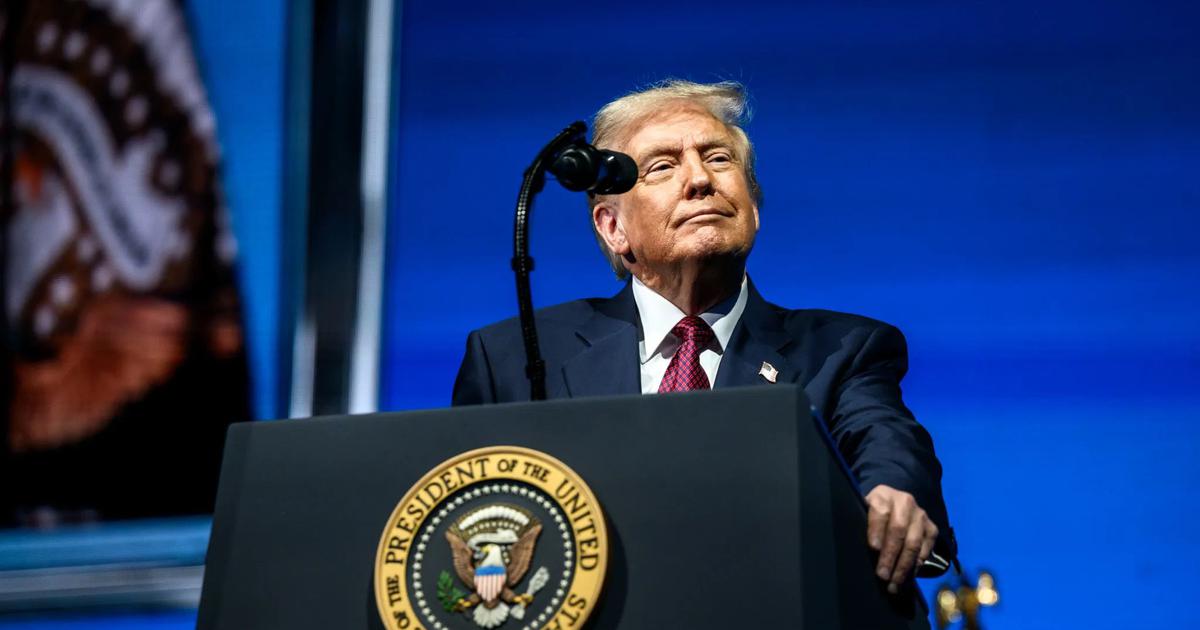
United States President Donald Trump on Monday threatened to destroy Iran’s smaller “fast attack ships” if they “come anywhere close to” US military vessels, as the naval blockade of Iran took effect.
Trump said that while the Iranian Navy had been “completely obliterated” during the war in West Asia, the US forces had not the smaller vessels because they were not considered a threat. “Warning: If any of these ships come anywhere close to our blockade, they will be immediately eliminated…” he said on social media.
The US president’s comment came after the US military’s blockade of Iranian ports in the Persian Gulf took effect at 10 am Eastern Time, which was 7.30 pm Indian time. The blockade is aimed at maritime traffic linked to Iran. The US Central Command said that ships travelling to or from non-Iranian ports will be allowed to pass through the Strait of Hormuz.
Here are more top updates from the conflict in West Asia:
- The safety of Indians: The Union government said on Monday that all Indian seafarers in the Persian Gulf are safe. Mukesh Mangal, additional secretary in the shipping ministry, said that the government has facilitated the repatriation of 2,177 seafarers from the Gulf region.
- The Ministry of External Affairs said that the Indian embassy in Tehran has facilitated the movement of 2,230 citizens from Iran to neighbouring Armenia and Azerbaijan, from where they are returning to India. Of these, 987 are students and 657 are fishers.
- Global fuel prices: Oil prices surged on Monday ahead of the blockade, with the benchmark Brent crude rising to $101.8 per barrel. The price was $78 per barrel on February 27, a day before the conflict started.
- The blockade: Earlier in the day, the Iranian military said that the US’ naval blockade would be illegal and amount to piracy, AFP reported. In a statement, Iran’s military central command warned that no port in the Gulf region and the Arabian Sea would be safe if its own were threatened, the news agency reported.
- The US Central Command had stated that the blockade would be enforced “impartially against vessels of all nations entering or departing Iranian ports and coastal areas”, including those along the Persian Gulf and the Gulf of Oman.
- It added that its forces “will not impede freedom of navigation for vessels transiting the Strait of Hormuz to and from non-Iranian ports”. The announcement had come a day after US-Iran talks in Islamabad ended without an agreement to end the conflict in West Asia.
- On Sunday, US President Donald Trump had announced that the US Navy will blockade ships trying to enter or leave the Strait of Hormuz. “Other countries will be involved with this blockade,” he had claimed on social media, adding that Iran “will not be allowed to profit off this illegal act of extortion”. Trump said that he has instructed the US Navy to “seek and interdict every vessel in international waters that has paid a toll” to Tehran. “No one who pays an illegal toll will have safe passage on the high seas,” he said.
- Iran, however, said that it “will not bow” to pressure and warned that it retains “full control” over the strait. It added that the waterway would remain open to non-military vessels, but any military ships would face a “forceful response”, according to Iranian media reports.
- Mohammad Bagher Ghalibaf, who led Iran’s delegation in the talks, shared a social media post showing gas prices at fuel stations near the White House. The rates listed in the image were around $4 per gallon. “Enjoy the current pump figures,” he said. “With the so-called ‘blockade’, Soon you'll be nostalgic for $4-$5 gas.”
Enjoy the current pump figures. With the so-called 'blockade', Soon you'll be nostalgic for $4–$5 gas.
— محمدباقر قالیباف | MB Ghalibaf (@mb_ghalibaf) April 12, 2026
ΔO_BSOH>0 ⇒ f(f(O))>f(O) pic.twitter.com/rVxlC6vFWG
- Earlier, Iran said that a deal had been “inches away” during talks in Pakistan but accused the US of “maximalism, shifting goalposts and blockade” at the last moment, AFP reported. Foreign Minister Abbas Araghchi said “Iran engaged with [the] US in good faith to end the war”. Ghalibaf added that Iran would respond to any confrontation from the US. “If they fight, we will fight, and if they come forward with logic, we will deal with logic,” he said.
- Trump said that he did “not care” if Iran returned to talks. He added that the ceasefire between the US and Iran is “holding well”, BBC reported.
- When asked about reports that Beijing was preparing to ship weapons to Iran, Trump said he doubts China would do so. However, he warned that “if we catch them doing that”, they would face a 50% tariff, describing it as a “staggering amount”.
- Iranian Foreign Minister Abbas Araghchi had a telephone conversation with his Saudi Arabian counterpart Prince Faisal bin Farhan “to discuss and exchange views on the latest regional developments” and the US-Iran negotiations in Islamabad, Iranian state-owned Mehr news agency reported on Monday.
- Trump criticises the pope: The US president also criticised Pope Leo calling him “weak on crime” and “terrible” on foreign policy after the pontiff criticised the conflict in West Asia. In a social media post, Trump said the pope should focus on being a “great pope” rather than a politician, adding that he was not a big fan of him.
- Pope Leo on Monday said that he had “no intention to debate” with Trump. “I am not a politician,” AFP quoted the pope as having told reporters aboard the papal plane. “I have no intention to debate with [Trump]. The message is the same: to promote peace.”
- The Lebanon front: Fighting continued in southern Lebanon, with Hezbollah launching rocket barrages at northern Israel and claiming dozens of attacks Al Jazeera reported. Israeli strikes killed several people in southern Lebanon, pushing the death toll on that front to 2,055, AFP quoted Lebanese media as saying.
- Lebanese Prime Minister Nawaf Salam said efforts were ongoing to end the war and secure Israeli withdrawal, AFP reported. On the other hand, Israeli Prime Minister Benjamin Netanyahu said the threat of invasion by Hezbollah had been removed but added that “the war continues”. The talks between Beirut and Tel Aviv are expected to begin on Tuesday, AP reported.
The war
The US and Israel launched an attack on Iran on February 28, claiming that Tehran’s action posed an existential threat to Israel. Washington acts as a guarantor of Israel’s security. Iran retaliated by striking Israel and US military bases in the region and targeting major cities in Gulf countries.
Tehran also effectively blocked the Strait of Hormuz, the narrow waterbody connecting the Gulf to the Arabian Sea, for most international commercial vessels, triggering a global energy crisis. About 20% of global petroleum supply passes through the maritime chokepoint.
Washington and Tehran had on Wednesday agreed to a two-week ceasefire to allow further negotiations to end the conflict. While Israel, which was not involved in the talks, has not struck Iran since the ceasefire took effect, it has continued to attack Lebanon.
However, peace talks that were held in Islamabad collapsed on Sunday.
Israel has been claiming that Iran is close to obtaining a nuclear weapon, which could alter the regional security balance. Tehran has long maintained that its nuclear programme is for civilian purposes.
