








US will hit Iran ‘very hard’ tonight, says Trump
The United States president also threatened that his country’s military will take over the key Iranian oil export terminal of Kharg Island.
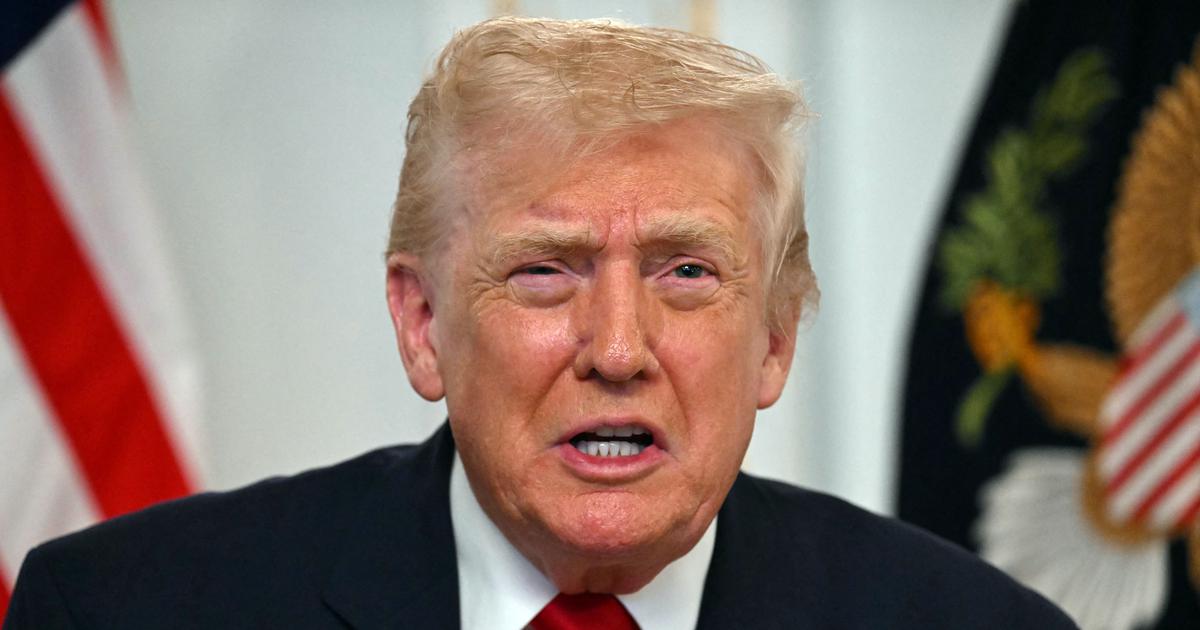
United States President Donald Trump on Thursday said that American forces will strike Tehran “very hard tonight”, further escalating tensions in West Asia and threatening a fragile ceasefire that took effect on April 8.
“The United States will be hitting Iran (Whose Navy, Air Force, Radar, Anti Aircraft, and all other forms of Defense, together with most of its offensive capability, are GONE!), VERY HARD TONIGHT,” Trump wrote on social media.
He also threatened that his country’s military would seize key Iranian oil export terminal of Kharg Island as well as Tehran’s oil and gas infrastructure and markets.
The island is an eight-km stretch of land off the Iranian coast that handles about 90% of the country’s crude exports.
He claimed the action would be “much like we have with Venezuela”.
The US military had abducted Venezuelan President Nicolás Maduro and his wife, Cilia Flores, in an overnight operation on January 3.
Washington had accused Maduro of narco terrorism and drug trafficking, among other crimes – allegations that he has rejected.
Venezuela has the largest proven oil reserves in the world, but is not among the top 10 producers.
Shortly after his post on social media on Thursday, Trump told Fox News that he was not certain that “America has the stomach” for a larger conflict despite it being his “preference”.
He added that the US is continuing to hold talks with Iran.
On March 13, the US president said that Washington had previously carried out airstrikes on “every military target” on Kharg Island, but no action had been taken to seize it.
The war
The US and Israel launched an attack on Iran on February 28, claiming that Tehran’s action posed an existential threat to Israel. Washington acts as a guarantor of Israel’s security. Iran retaliated by striking Israel and US military bases in the region, targeting major cities in Gulf countries and ships.
Since the conflict began, the Strait of Hormuz, the narrow waterbody connecting the Gulf to the Arabian Sea, has been blocked for most international commercial vessels, triggering a global energy crisis. About 20% of global petroleum supply passes through the maritime chokepoint.
On April 8, the US and Iran agreed to a ceasefire to allow for further negotiations to end the war. However, the two sides have not yet been able to turn the ceasefire into a permanent end to the conflict.
On Wednesday, the US launched fresh airstrikes on Iran after Trump blamed Tehran for the downing of a US Army helicopter near the Strait of Hormuz.
In retaliation, Iran’s Islamic Revolutionary Guard Corps claimed that it struck 21 US military sites in Kuwait, Bahrain and Jordan.
Edited by Sneha.
