










SC stays proceedings before High Courts in petitions challenging amended trans rights law
Petitions against the amended legislation are pending in the High Courts of Rajasthan, Karnataka, Kerala and Delhi.
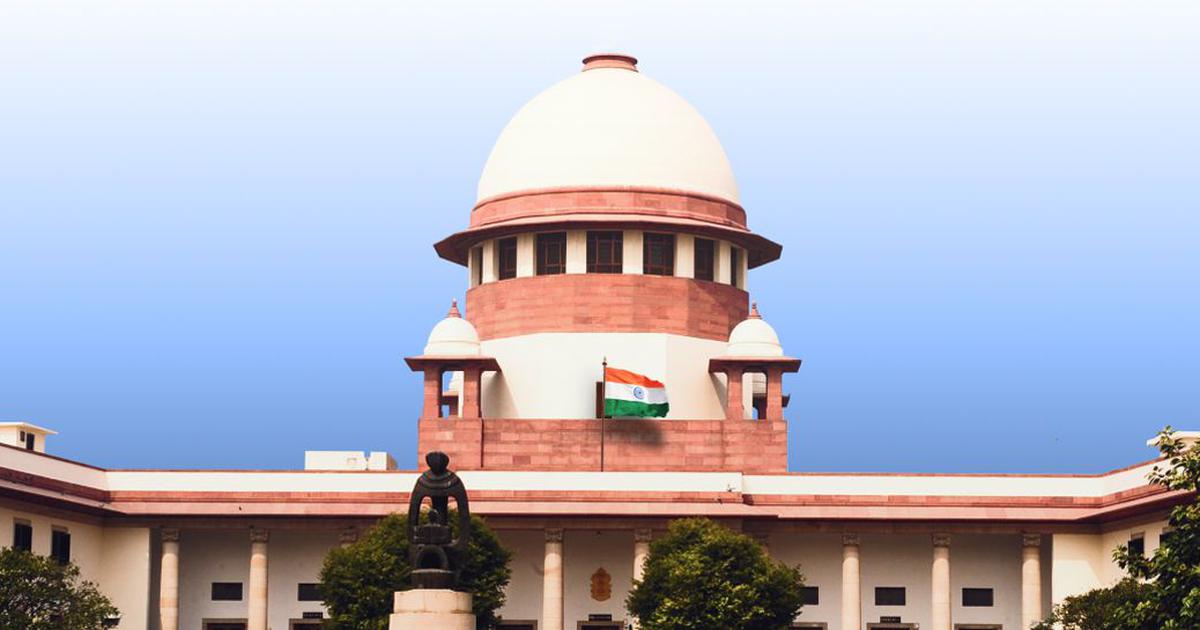
The Supreme Court on Monday indicated that it may hear petitions challenging amendments to the Transgender Persons Protection of Rights Act itself or consolidate them and assign them to a particular High Court, Live Law reported.
Petitions against the amended law are pending before High Courts of Rajasthan, Karnataka, Kerala and Delhi.
A bench comprising Chief Justice Surya Kant and Justice V Mohana also stayed the proceedings in the cases and issued notices on the Union government’s plea seeking their transfer to the Supreme Court.
The 2026 Transgender Persons Protection of Rights Amendment Act was cleared by Parliament on March 25 after a motion to refer the proposed legislation to a select parliamentary committee was rejected.
Introduced in the Lok Sabha on March 13, the legislation amends the 2019 Act by redefining who qualifies as a transgender person.
It removes transgender persons’ right to a self-perceived gender identity and limits the scope of the law to those with certain biological or physiological characteristics, intersex variations, or specific socio-cultural identities such as kinner, hijra, aravani and jogta.
The law makes medical evaluation and certification mandatory for legal gender recognition. It underlines that the authority to permit such transitions is vested in medical professionals operating under a medical board.
When the bill was being discussed in Parliament, Opposition leaders had expressed concerns that it undermines the right to self-identification recognised by the Supreme Court in the 2014 National Legal Services Authority v Union of India matter, or NALSA case.
The judgement had formally created the “third gender” category for transgender persons that recognised them as a socially and economically backward class.
It had issued directions to the government to ensure transgender community gets job quotas, admission in educational institutions, health benefits, separate public toilets and a host of other safeguards against discrimination.
Edited by Sara Varghese.
Also read:
Why activists see the imprint of Hindutva in the new transgender law
Why right to self-determination is essential to improving employment and education among transpeople
Changes to trans rights act will worsen access to healthcare for vulnerable individuals
