







US, Iran presidents sign interim peace agreement
The document envisages a 60-day negotiating period, during which the parties will seek a permanent settlement to the conflict in West Asia.
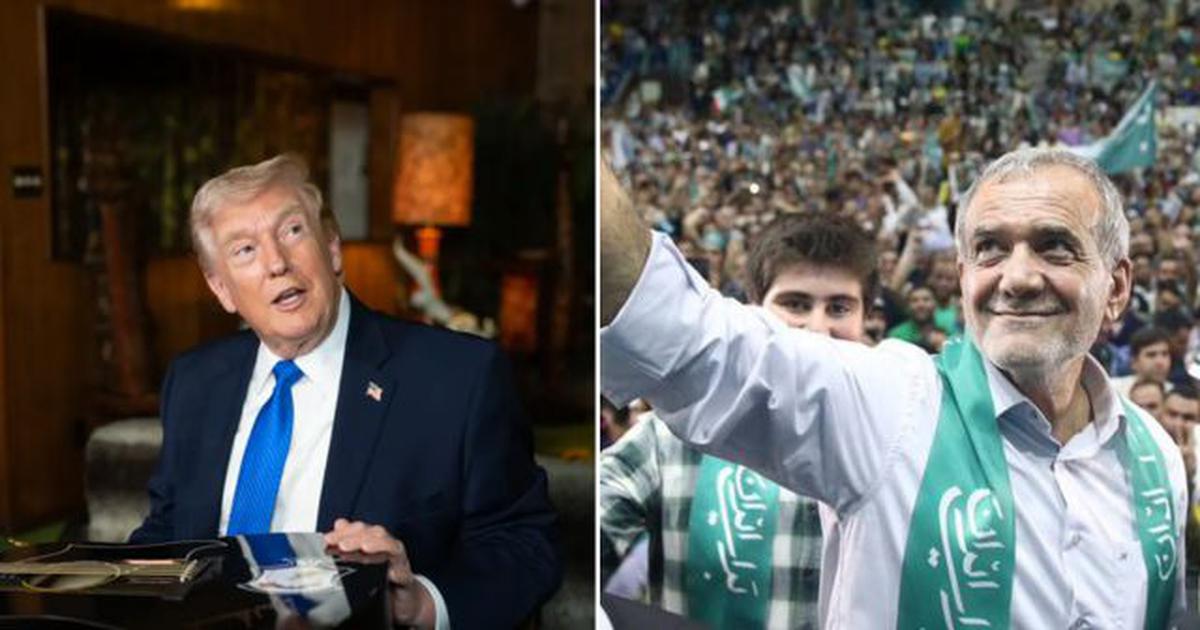
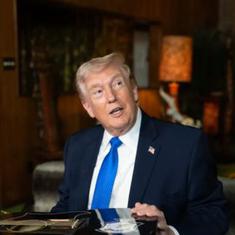
United States President Donald Trump and Iranian President Masoud Pezeshkian on Wednesday signed an interim memorandum of understanding aimed at ending the conflict in West Asia, the White House said.
The agreement envisages a 60-day negotiating period during which the parties will seek a permanent settlement, Al Jazeera reported.
Trump signed the agreement shortly before a dinner with French President Emmanuel Macron at the Palace of Versailles, where the Treaty of Versailles, which formally ended the First World War, was signed in 1919.
🚨 President Donald J. Trump has SIGNED the Iran Memorandum of Understanding at Versailles in France. 🇺🇸 pic.twitter.com/JQ6qlbvFAF
— The White House (@WhiteHouse) June 17, 2026
“As a first step, Islamic Republic of Iran will instantly reopen the Strait of Hormuz and the United States of America will immediately lift the naval blockade,” Pakistani Prime Minister Shehbaz Sharif said on social media.
Pakistan is among the countries that mediated towards an end to the conflict.
The US will also waive oil-related sanctions on Tehran and work towards broader economic relief measures, AFP reported.
The memorandum also outlines plans for a proposed $300 billion reconstruction fund for Iran, supported by “regional partners”, subject to a final agreement being reached within 60 days, Al Jazeera reported.
The agreement had initially been due to be signed by Iran’s chief negotiator and parliament speaker, Mohammad Bagher Ghalibaf, and US Vice President JD Vance, AFP reported. However, Iranian officials later said an in-person signing ceremony was no longer necessary after the memorandum was signed electronically by the two presidents.
President Pezeshkian and his US counterpart Trump signed the MoU between Tehran and Washington digitally and remotely. pic.twitter.com/ratIJxoeLG
— Iran in India (@Iran_in_India) June 18, 2026
Speaking after signing the document, Trump said he hoped the agreement would usher in peace in West Asia and lower oil prices, Reuters reported.
However, he also warned that the US could resume military action if Iran failed to comply with its commitments.
“We’re going to bomb the hell out of them if they violate the agreement,” Reuters quoted Trump as saying. “I don’t want them to. I want them to honor the agreement.”
However, Trump appeared to soften his previous position on Iran’s missile programme, saying it would be “unfair” for the country not to possess ballistic missiles if other countries had them.
Earlier in the conflict, he had repeatedly pledged to destroy Tehran’s missile capabilities.
The memorandum includes Iranian commitments not to pursue nuclear weapons, and provides for the supervised dilution, or “down-blending”, of its stockpile of enriched uranium under the oversight of the International Atomic Energy Agency.
Following the signing of the deal, benchmark Brent crude fell 1.2% to $76.32 a barrel on Thursday. Brent had traded at around $78 a barrel on February 27, the day before the conflict began, but rose as high as $114 a barrel on May 4 as the conflict disrupted shipping through the Strait of Hormuz.
The conflict had begun on February 28 when US and Israel launched an attack on Iran, claiming that Tehran’s action posed an existential threat to Israel. Washington acts as a guarantor of Israel’s security. Iran retaliated by striking Israel and US military bases in the region, targeting major cities in Gulf countries and ships.
Since the conflict began, the Strait of Hormuz, the narrow waterbody connecting the Gulf to the Arabian Sea, had effectively been blocked for most international commercial vessels, triggering a global energy crisis. About 20% of global petroleum supply passes through the maritime chokepoint.
Edited by Neerad Pandharipande.
