








Trump warns US will strike Iran ‘very hard again’ even as peace talks begin in Switzerland
Representatives from Washington and Tehran are meeting days after signing a preliminary agreement to end the war in West Asia.
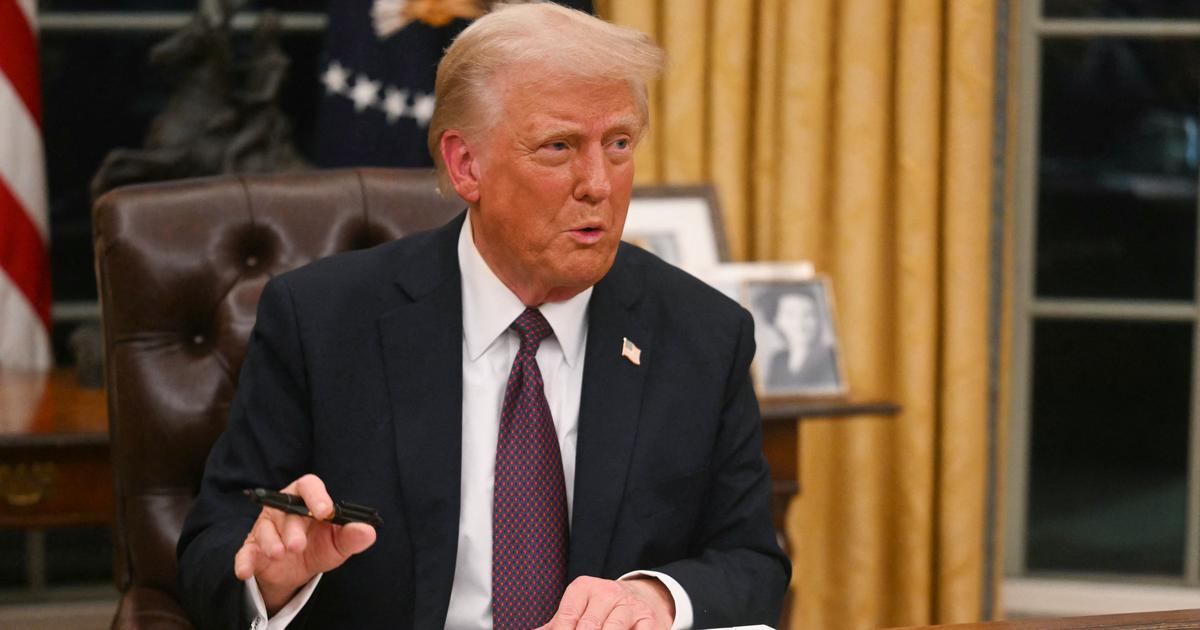
United States President Donald Trump warned on Sunday that his country’s military will “hit Iran very hard again” if Tehran does not stop its “highly paid proxies in Lebanon from causing trouble”.
Trump was referring to Hezbollah, which struck Israel after Tel Aviv attacked Lebanon. Washington acts as a guarantor of Israel’s security.
The US president made the statement even as representatives from Washington and Tehran started talks in Switzerland on Sunday after signing a preliminary agreement to end the war in West Asia.
Representatives from both countries, alongside delegations from mediators Pakistan and Qatar, have gathered at the Swiss resort of Burgenstock for the four-way talks, reported AFP.
However, Israel’s continued attacks in Lebanon have raised uncertainty about the outcome of the meeting. On Saturday, Iran’s top joint military command said that the Strait of Hormuz would be closed to vessel traffic, citing alleged violations of a ceasefire agreement by the US and Israel.
This came as Israeli strikes in Lebanon killed at least 32 persons.
On Sunday, Trump said that if Iran does not stop Hezbollah, “we will hit Iran very hard again, just like we did last week, only harder”.
On June 18, leaders of the US and Iran signed a 14-point memorandum of understanding to end the war between their countries, as well as Israel’s military assault on Hezbollah in Lebanon.
The war
The US and Israel launched an attack on Iran on February 28, claiming that Tehran’s action posed an existential threat to Israel. Iran retaliated by striking Israel and US military bases in the region, targeting major cities in Gulf countries and ships.
Since the conflict began, the Strait of Hormuz, the narrow waterbody connecting the Gulf to the Arabian Sea, has effectively been blocked for most international commercial vessels, triggering a global energy crisis. About 20% of global petroleum supply passes through the maritime chokepoint.
On May 21, International Energy Agency chief Fatih Birol said that a continued blockade of the strait and depleting fuel storage could push the global oil market into the “red zone” in July or August.
The peace talks between Iran and the US that were held in Islamabad, Pakistan collapsed on April 12, but the ceasefire in the region had largely held for nearly two months. Last week, Israel-US and Iran exchanged several rounds of fire.
Israel has been claiming that Iran is close to obtaining a nuclear weapon, which could alter the regional security balance. Tehran has long maintained that its nuclear programme is for civilian purposes.
Edited by Sneha.
Also read:
In deal with Iran, US is giving up a lot for very little in return
US, Israel have nothing to show for meaningless war that puts Iran in stronger position
