





Talk of separate Tamil Nadu today would be seen as mental health issue, not sedition: Madras HC
Such a comment may at best cause annoyance in the present social context and cannot be considered as inciting hatred, the bench said.
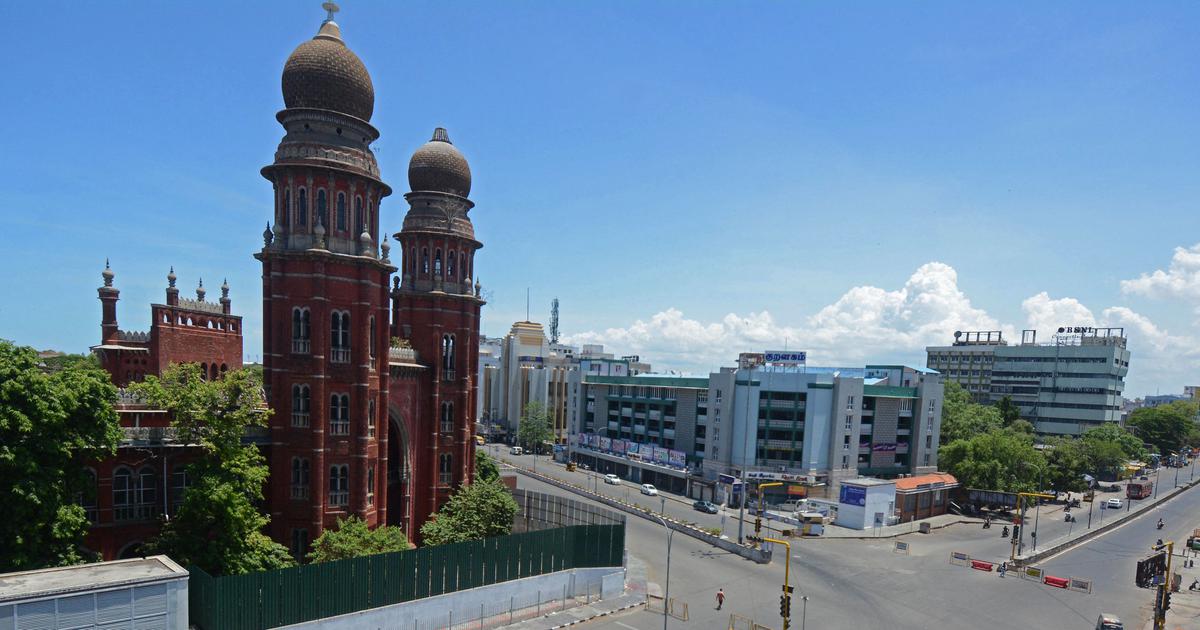
Statements about making Tamil Nadu a separate country will not amount to sedition in today’s social context, the Madras High Court has said. Instead, a person making such a comment will be viewed as having mental health issues, it observed.
Such a statement can at best cause “annoyance and therefore, in the present social milieu, the mere publication of that sentence cannot be considered as inciting hatred against the nation” or the Indian government, the bench of Justice D Bharatha Chakravarthy said in a June 29 ruling.
The observation was made while quashing a sedition case against two publishers. They had been booked under Section 124 of the Indian Penal Code in 2019. In 2022, the Supreme Court ordered proceedings and criminal prosecutions for sedition under the section to be kept in abeyance.
The publishers had moved the High Court challenging the case, which was pending before a magistrate court.
The matter pertains to a book released in 2014 by publishing house Kalagam Pathipppagam, which is run by the petitioners. The book was authored by a separate person who had died while the case was being heard.
The book allegedly stated that in 1967, one Tamizharasan had proclaimed in Coimbatore that Tamil Nadu should be a separate nation, and guerrilla warfare should be adopted in order to “divide and secede”.
The petitioners argued that a division bench of the High Court had previously quashed sedition proceedings in a similar case involving another book.
Opposing the publishers’ petition, the state argued that the book amounts to sedition if it contained a statement that Tamil Nadu should secede and that guerrilla warfare would be carried out to that end.
The bench rejected the state’s argument. Chakravarthy said that the essence of sedition lay in written or visible representation “bringing into contempt, or exciting or attempting to excite disaffection towards the government”.
The judge said that the Supreme Court had held that such acts must be considered “in the light of the current social milieu and the times in which we are living”.
The court observed that while “it will be true that during the days of Tamizharasan in 1967, when he formed the Tamil liberation front, etc., such a speech or publication would have incited hatred or contempt” to the Indian government. “But in today’s scenario, India as a nation, is unified by heart and soul,” it added.
Mere recording of what had happened does not amount to an attempt to incite hatred, the bench observed.
Written by Nachiket Deuskar. Edited by Sara Varghese.
