











India bars deployment of its seafarers on ships passing through Strait of Hormuz
This came after a series of attacks on commercial vessels in the waterway amid renewed tensions between the United States and Iran.
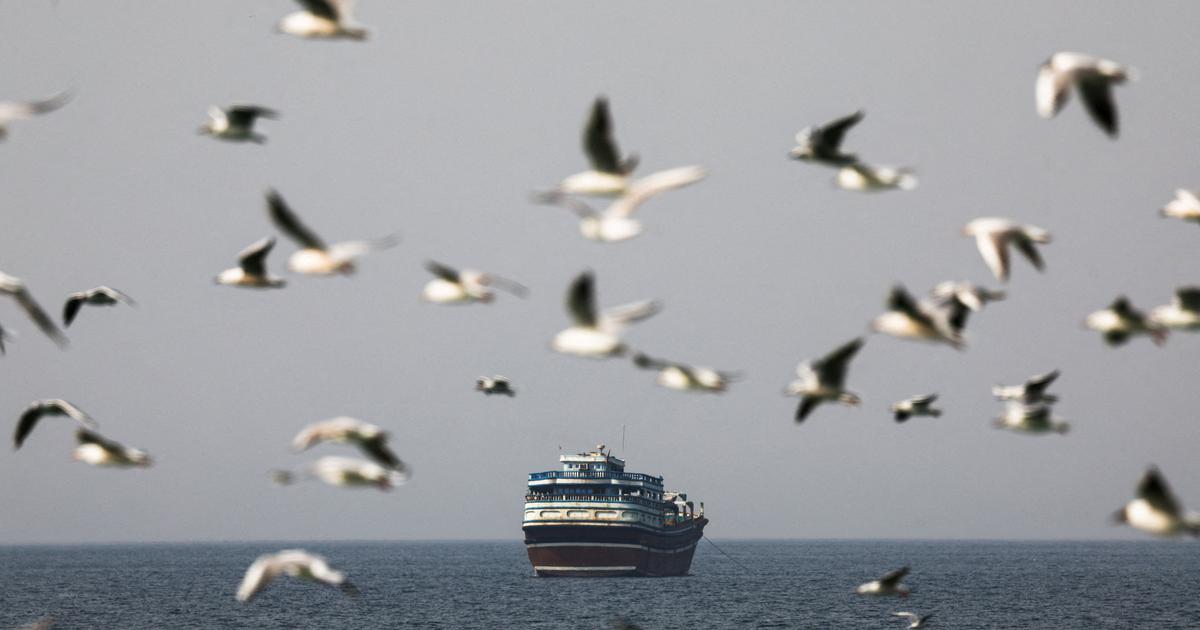
New Delhi on Thursday directed shipping companies not to deploy Indian seafarers on vessels travelling through the Strait of Hormuz.
This came after a series of attacks on commercial vessels in the waterway amid renewed tensions between the United States and Iran.
The Directorate General of Maritime Administration, the country’s apex maritime regulator under the Union Ministry of Ports, Shipping and Waterways, issued the directive to ship owners, ship managers and recruitment and placement service licence companies.
It also asked vessels operating in the Persian Gulf, the Strait of Hormuz and nearby waters to maintain heightened security, monitor navigational warnings and security advisories, and comply with ship security measures under the International Ship and Port Facility Security Code.
The authority said that it would continue to “closely monitor the evolving security situation”.
Advisory for Indian Maritime Stakeholders
— Directorate General of Shipping, Govt. of India (@dgshipping_IN) July 15, 2026
In view of the heightened security situation in the Gulf region, the Directorate General of Maritime Administration (DGMA), through DGMA Circular No. 36 of 2026, has directed Ship Owners, Ship Managers and RPSL Companies to avoid… pic.twitter.com/s8XgKI1ifn
On Sunday, an Indian seafarer went missing after a Cyprus-flagged ship transiting the waterway was targeted. His family later said that he has died, though the Indian government has not confirmed his death.
The vessel, GFS Galaxy, was attacked off the coast of Oman and disabled after a fire damaged its engine room.
On Tuesday, the Union government confirmed that another Indian sailor was killed and 10 others were injured after Iran attacked two ships in the Strait of Hormuz. It was unclear when the attacks took place.
Following the recent attacks, the government on Wednesday announced plans to establish a dashboard to track in real-time, Indian seafarers on vessels operating in the conflict-hit Persian Gulf, the Strait of Hormuz and the Gulf of Oman.
India has more than 3.1 lakh seafarers working on merchant ships, making it one of the largest suppliers of maritime workers, according to estimates cited by Bloomberg from shipping associations.
At least 13 Indian sailors have died in the region since the conflict in West Asia began on February 28, The Indian Express quoted unidentified government officials as saying.
Written by Sara Varghese. Edited by Tanya Shrivastava.
