






Two injured in pellet firing move SC seeking ban on metallic projectile guns against civilians
Such weapons are ‘unreasonable’ and ‘dangerous’ tools unfit for dispersing protesters, the petitioner submitted.
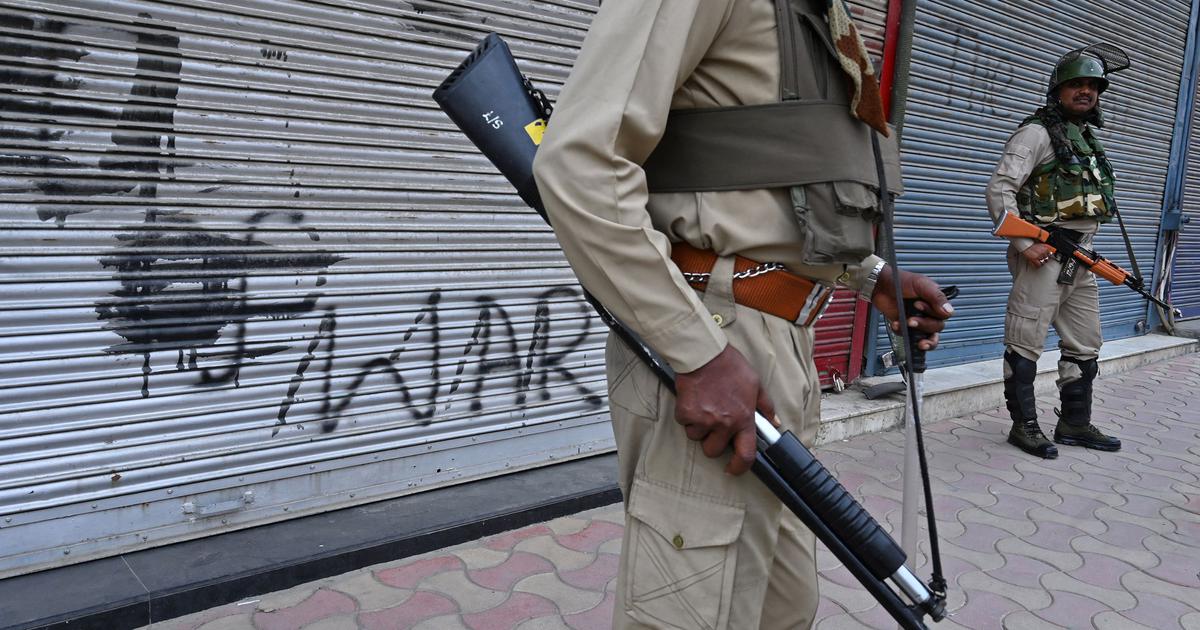
Three petitioners on Monday moved the Supreme Court seeking a ban on the use of pellet guns to disperse crowds during protests.
Two of the petitioners, Prashant Kumar Singh and Sheikh Irshad Mansoor, were injured by pellets fired by security personnel during the youth protest march to Parliament in Delhi last week. The lead petitioner is former Intelligence Bureau Special Director Yashovardhan Azad.
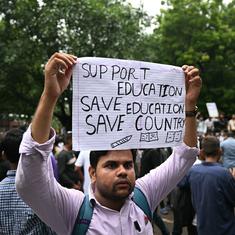
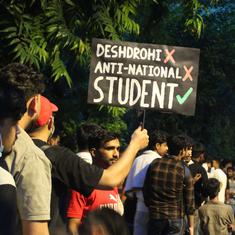
The agitation in Delhi began on June 6, when the Cockroach Janta Party political campaign began a protest at Jantar Mantar to demand the resignation of Dharmendra Pradhan, the Union education minister at the time, over the alleged irregularities in the conduct of competitive exams. Pradhan resigned on Saturday.
On July 20, thousands joined the protest two days after the police forcibly took activist Sonam Wangchuk, who had been on a hunger strike for three weeks, to hospital. Their march to Parliament was met with a crackdown by the police. Dozens were injured as the police used lathis, fired tear gas shells and pellet guns against the demonstrators.
The police action turbocharged the agitation, which spread to other parts of the country.
On Monday, the two petitioners said that they were injured by metallic pellets fired by the Rapid Action Force at Connaught Place on July 20.
The petitioners contended that no water cannons were used to disperse the protesters and no announcements were made before force was used.
They said that even as the protesters were fleeing the site, “with many raising their arms up as if in ‘surrender’ mode, despite no provocation, RAF personnel suddenly fired pump action gun(s) releasing a wide spray of splinter like pellets”, which penetrated the bodies of the two petitioners.
The persons were taken to hospital for treatment. They have been discharged but still have pellets lodged in their body.
On Monday, The Indian Express quoted unidentified officials as saying that a person from the Rapid Action Force deployed at Connaught Place fired at least seven rounds from his pellet gun. While five rounds hit protesters, two struck the ground, the newspaper reported.
Also read: Delhi hospital reports show pellet wounds on journalist covering students’ protests
Pellet guns unfit for dispersing civilians, contend petitioners
The petitioners contended before the Supreme Court that projectile action guns are unfit for dispersing peaceful gatherings and that the use of such weapons should be banned when security personnel are dealing with civilians.
They argued that given the “sporadic and unpredictable nature” of the trajectory of pellets once fired, the weapon is an “unreasonable, arbitrary and dangerous tool unfit for deployment against civilian assemblies for the purpose of their dispersal”.
“Although such guns are classified as ‘less lethal’ or ‘non-lethal’ alternatives to general firearms, when fired into a large crowd from close proximity, it has the propensity to cause fatal and grievous injuries, especially to vital organs,” the petitioners said.
They added that the 2020 United Nations guidelines on less lethal weapons in law enforcement advise against the use of such guns against crowds.
“The use of such projectile activated guns or pellet guns loaded with partly or wholly metallic pellets for crowd dispersal fails the constitutional tests of necessity, proportionality and reasonableness,” the petitioner submitted before the court.
Hearing a separate matter on Monday, the Supreme Court verbally observed that the right to protest peacefully is guaranteed by the Constitution and that excessive use of force by the police on agitators cannot be justified.
“Self-evolved discipline is needed, which is essential to the democratic process,” the chief justice’s bench said.
Written by Nachiket Deuskar. Edited by Tanya Shrivastava.
Follow Scroll’s coverage of the youth protests here
