



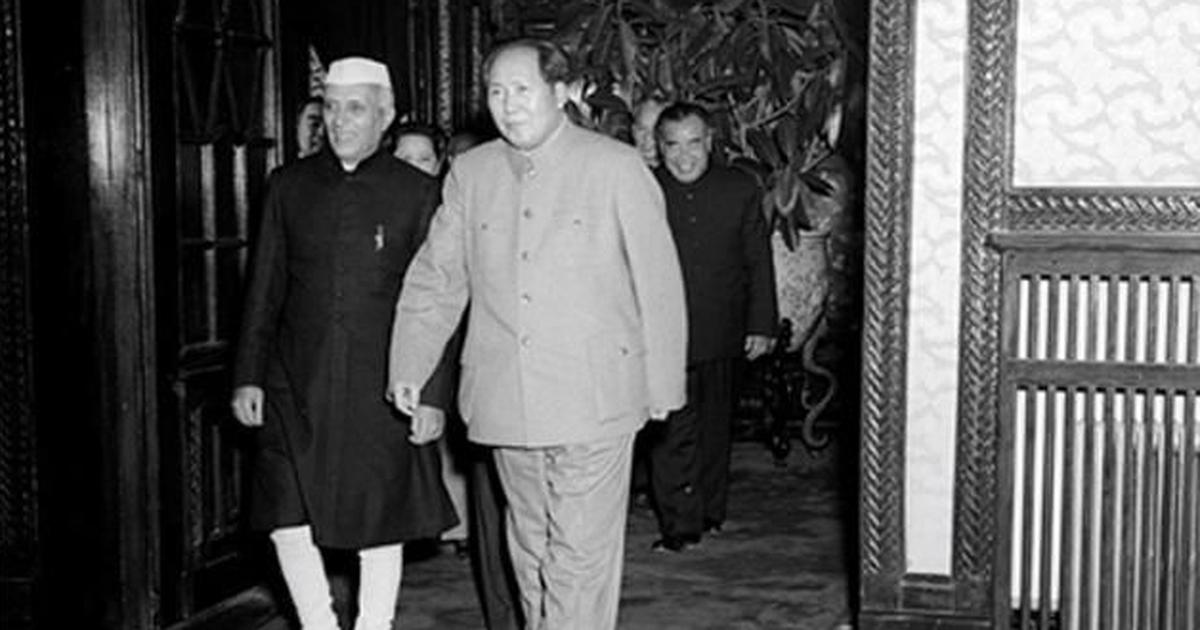
In the early 1950s, as newly-independent India embraced Western-style democracy and China followed the path of Soviet-styled Communism, Western analysts closely monitored the economic trajectories of Asia’s two largest countries.
Although the Cold War cast its shadow over both countries, India and China maintained cordial diplomatic relations at the time. To many in the West, however, they were another theatre in the ideological battle between democracy and communism.
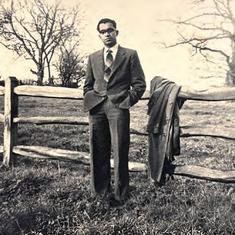
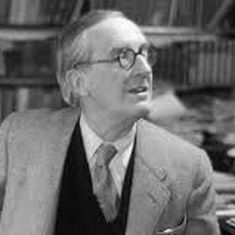
Among the keen observers of the region was Maurice G Hindus, an American journalist and author best known for his expertise on Russia and the Soviet Union. Born in 1891 in what is now Belarus, into a moderately wealthy peasant (kulak) family, Hindus emigrated to the United States at the age of 14. His experiences as a war correspondent in the USSR during World War II and his deep familiarity with both Communist ideology and American life shaped his insights into global affairs.
In a column published in Canada’s Star Weekly in December 1953, Hindus analysed the competing models of “backward China” and “backward India”, describing them as being on the brink of “the most decisive battle in their own and Asia’s very turbulent history” despite their “outward friendliness”.
“Another way of stating it is whether Pandit Nehru, India’s prime minister, who is Asia’s most distinguished apostle of democracy, or Mao Tse-tung, who is Asia’s foremost apostle of Communist totalitarianism will win the battle of Asia,” Hindus wrote. “No other Asian leaders begin to approach these two men in stature and influence, and an examination of their personalities and of the ideas they represent will give us the measure of the historic forces with which they are grappling and of the strength and weakness of each man.”
Though Hindus, of Jewish heritage and a vocal anti-Communist, preferred democracy, he was critical of India’s economic pace. He admired Nehru’s statesmanship and moral authority but questioned whether a democratic system could achieve rapid transformation in a society still mired in poverty, illiteracy and feudal traditions.
Statesman Nehru
In the 1950s, Nehru was highly respected in both the East and West. It was his stature, and India’s diplomatic ties with both Communist and Western blocs, that allowed the country to be seen as neutral during the Korean War.
“Let it be noted that it was Nehru who originated the formula for the repatriation of the Korean War prisoners, which is an extraordinary diplomatic achievement,” Hindus wrote. “Calculated to save Mao’s face and win approval of the United Nations, it broke the deadlock in the Korean armistice negotiations.”
It struck Hindus as “remarkable” that a country he considered more backward than Tsarist Russia and slightly more developed than China had produced a leader like Nehru. For this, he credited India’s cultural heritage and British constitutionalism.
“Nehru is an aristocrat by birth, and Mao is a peasant,” Hindus wrote. “Nehru studied at England’s Harrow and Cambridge, is an accomplished linguist and a most highly educated man. Mao is largely self-taught and speaks not a single foreign language.”
Despite the difference in their intellectual achievements, both leaders faced common challenges. “Like India, with a population of 350,000,000, China with a population of 440,000,000 is overwhelmingly peasant,” Hindus wrote. “For centuries both nations have been steeped in feudalism; in both the peasant has been a victim of landlordism, usury, famine, illiteracy and disease.”
Hindus estimated that the average per capita income in both countries hovered around $50 and noted that neither had experienced a “significant industrial revolution”. “Not even the steel plow is in widespread use on the fields of either,” he wrote.
Both India and China, he argued, shared the structural disadvantages of Tsarist Russia – industrial backwardness and the absence of a strong middle class, a group he described as “communism’s worst enemy”.
He argued that while Mao and Nehru shared similar goals – uplifting their nations – they chose radically different paths. “Nehru, the democrat, relies exclusively on peace and persuasion,” he said. “Mao, the Communist, relies essentially on class war and compulsion.” Nehru, he said, would “shudder” at Mao’s people’s courts, firing squads and brainwashing campaigns, while the Chinese leader would “laugh” at Nehru’s “sensitiveness to human suffering” and “abhorrence of all violence”.
Slow progress
Hindus admired Mahatma Gandhi, calling him “the latest of the great prophets of Asia”. He recalled in his column the “privilege” of spending an evening with the Indian leader in London, where Gandhi told him it was “a sin” to use wrong means no matter what the end. And yet, Hindus believed that Nehru’s strict adherence to Gandhian non-violence and democratic principles was slowing India’s progress.
“Nehru has refused to apply force or dictatorial decree even to the breakup of landlordism,” Hindus wrote. “That is why he is still struggling with the problem, whereas Mao rid himself of it within only a few years, even as Lenin did it in Russia.”
China, Hindus observed, was progressing faster in both agriculture and industry. “This is best illustrated by the amount of investment each nation has assigned to its respective first five-year plan. In India it is only five percent of the national income, in China it is 25 per cent, or about the same as Stalin diverted to his early plans.”
He said Mao, like Stalin, sacrificed consumption to fund rapid development, whereas Nehru refused to impose such hardship on the Indian people. “The more irrigation projects he launches, the more railroads he lays out, the more factories he builds, the more he must cut down on the daily consumption of the people, including factory workers. But Nehru will not sacrifice consumption, whether of food, shoes or clothes, to any ultimate objective.”
For Nehru, he said, man came first, whereas for Mao, machine came first. “Besides, in a democracy it is impossible to impose severe self-sacrifice on a people, however laudable and far-reaching the purpose for which it is done,” he wrote. “Under a dictatorship nothing is impossible, and if the people protest or rebel, there is always a police force to quell them.”
Chinese edge
Despite China’s relative successes, Hindus acknowledged India’s advantages – including its efficient civil service. “Neither Russia nor China has ever developed such a service or can hope to train one like it in the foreseeable future,” he observed. “In consequence, the process of administration, whether in government or nationalized enterprises is infinitely more competent and infinitely less costly in India than in China or Russia.”
Another advantage India had was its access to Western science and technology. “There is no embargo on the sale of industrial equipment or even of strategic materials to India as there is to China,” he said. “If India builds a steel plant or a tractor factory, it may do so according to [the] latest US models; and if India wishes to send engineers and agricultural experts for study in the US, the doors are open to them, as they are shut to Russian and Chinese industrial and agricultural leaders.”
Nevertheless, he predicted that China’s authoritarian system would outpace India. “There can be no question...that within the next 10 or 20 years, China will far outstrip India in industrial development and in the mechanization of agriculture.”
He warned that India was destined to fall “far, far behind” “as long as China devotes five times as much of the national income to construction projects as India does”.
The only way to prevent this, he argued, was if the West aided India’s development. He noted that the Western bloc had allocated $100 billion to paralyse what it called Communist expansionism. Even if just a hundredth of this amount was given to India as financial aid, he said, it would fortify its democracy.
“Indeed because of India’s high regard for the dignity and inviolability of the individual citizen, she might become a challenge, if not a threat to totalitarian China and serve as an example to other nations in Asia, which are still groping for a way out of their historical backwardness,” he wrote.
Hindus’ prediction did not materialise within the timeframe he envisioned. Over the next two decades, India and China struggled with internal challenges, including poverty. However, in 2025, the development gap between them is undeniable – and Western interest in positioning India as a counterbalance to China remains as strong as it was in the early 1950s.
Ajay Kamalakaran is a writer, primarily based in Mumbai. His Twitter handle is @ajaykamalakaran.
