





In 1920, the India Office in Whitehall, London, compiled a comprehensive blacklist of foreigners to be barred from entering the subcontinent. Just two years after World War I and less than three years after the Bolsheviks seized power in Russia, the list was dominated by Russians, both suspected and confirmed communists. It also included Americans, Italians, Finns and Swedes, who were viewed as potential facilitators of the communist movement in India.
On September 19, 1921, the Secretary of the Judicial and Public Department at the British Home Office sent a warning circular to both the Home Department and the Intelligence Bureau in India. “I am directed by the Secretary of State for India to forward, for information, copies of circulars issued by the Home Office regarding the persons whose names are given in the accompanying list, and to state that these persons should be removed in the event of their landing at any port in India,” the circular stated.
In addition to British missions and Indian authorities, officials in places like Marseilles, France, were instructed to be on the lookout for anyone on the list.
The blacklist, driven by intense fear of communism, targeted Westerners sympathetic to Soviet Russia. This included a blanket ban on attendees of the 3rd World Congress of the Communist International (Comintern), held in June-July 1921. Among them were seven Italians, five Germans, three French nationals and even a Mexican and an American.
Bureaucratic slip-ups
Some names on the list were of Eastern Europeans deported from Britain. Jacob Habergritz, a Russian Jew living with his wife and children on London’s Tottenham Court Road, was accused of being a member of the “Communist Club” and actively “spreading Bolshevik propaganda”. He and his family were forced to leave Britain. Similarly, Isaac Goldberg, likely “a Polish subject”, was accused of being a delegate of the “Russian Jews Protection Committee” and was also banned.
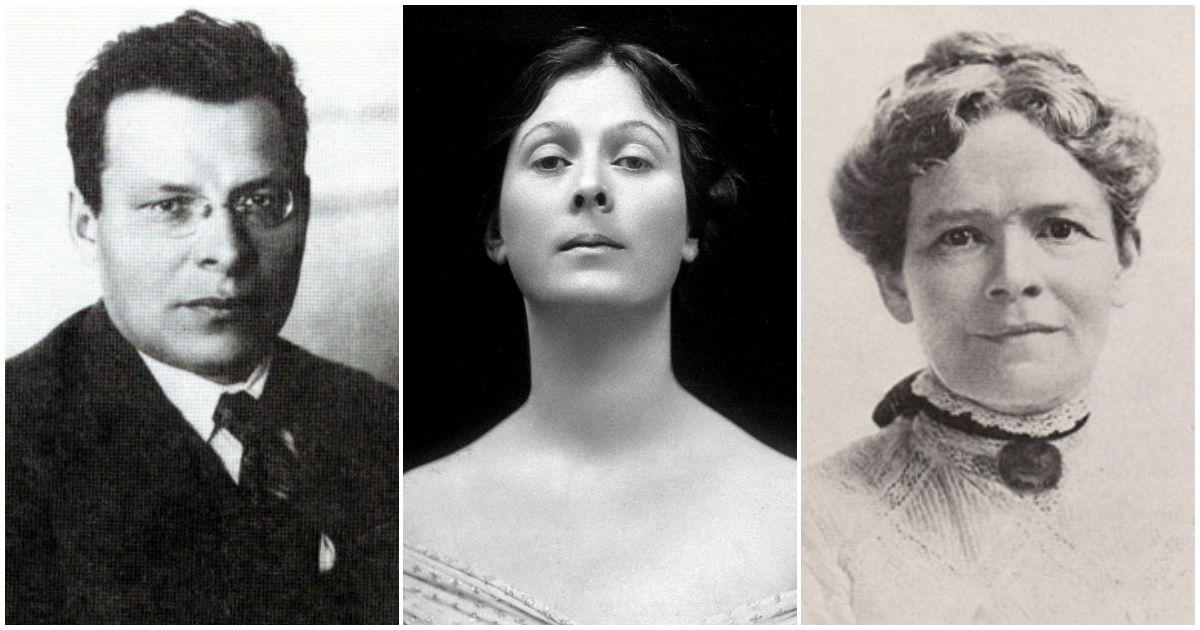
Among the hardcore revolutionaries on the blacklist was Jan Ernestovitch Rudsutak, a Latvian who would later join the Soviet Union’s Politburo in 1926. Although it is unclear if Rudsutak was planning to visit India, he was well-respected in the Soviet Union before falling victim to Stalin’s Great Purge in 1938, when he was executed.
Despite the ban, a few individuals on the list managed to slip through. Baron Edgard de Cramm, an ethnic German with a Russian passport issued in Florence, was granted a transit visa for passage to Shanghai by the British Passport Control Office in Marseilles. Unaware of his blacklist status, the passport officer approved the visa since de Cramm had other British visas on his passport.
“He stated that he was travelling on behalf of Murias & Co. Cigar Manufacturers of Cuba, a firm in which he and several friends were partners,” noted JA Crothers, the passport officer, in a secret memo in June 1921.
In response, the Home Office sent a memo instructing that de Cramm “should be removed in the event of his landing at any port in India”. Separately, MI5 issued a notice to block his entry, describing him as a German agent linked to the Bolsheviks.
American entries
The colonial authorities were especially keen to keep American socialists out of India. One such individual was Reverend Robert Whitaker, an English-born American Baptist pastor. Aged 59, Whitaker had worked as a missionary in Mexico and become active in causes such as women’s suffrage and labour rights. He had even served time in a California prison for his activism.
The British banned Whitaker from entering India because of his strong support for the Indian independence movement. He was a close friend of Indian freedom fighters in the US, including Anoop Singh Dhillon and Dalip Singh Saund, the latter of whom would go on to serve in the US House of Representatives. Whitaker also challenged the widespread pro-British narratives in the US, often lecturing on India’s ancient contributions to world culture, which incurred the ire of the British Raj.
Another American placed on the blacklist was Emma Reeve Bloor, a socialist and feminist activist. Bloor, one of the founders of the Communist Labor Party of the United States, had attended the second and third Comintern conferences in Soviet Russia. She also wrote Women in the Soviet Union, a book aligning with ideologies that contradicted Western positions.
Frederick Kuh, an American journalist who worked at the United Press news agency as their Moscow bureau chief, also found himself on the list. Although the reasons for his inclusion remain unclear, Kuh would later be allowed to live in Britain. He made a name for himself by covering World War II and major Cold War events like the Soviet blockade of Berlin.
Later additions
In June 1922, three more names were added to the blacklist, including “Duncan or Esenin, Isadora”. The famed American dancer, known for rejecting traditional dance forms, angered the British by openly praising Soviet Russia. After moving to Moscow in 1921, Duncan opened a dance school and began a romantic relationship with Sergei Yesenin, a 26-year-old poet. They married in May 1922, even though she spoke little Russian and he did not speak English.
Duncan’s open admiration for the Bolshevik regime and her statements about Soviet Russia’s transformative qualities led to her ban in India. “Russia is wonderful,” she said in New York in October 1922. “Its soul is free. The youth of Russia has a different mind and soul than the Russians of the old regime.”

She felt Russia’s “intellectual wealth” was greater than “America’s wealth in dollars”, arguing, “Over there they play Shakespeare, Gorky, Tolstoy and other masters on the stage. Here, plays are horrible.”
Duncan advocated for stronger cooperation between America and Russia, stating, “America and Russia are the two countries of the future. America needs Russia, and Russia needs America.”
Also added to the blacklist was Russian opera singer Feodor Chaliapin. Having left Russia in 1921 due to disillusionment with the Bolsheviks, Chaliapin gained fame in Paris. His ban from India, along with other British-controlled territories, was likely lifted within a few years, as he frequently performed in Britain.
British attitudes toward the Soviet Union gradually changed in the 1930s. Not everyone affiliated with the authorities in Moscow was seen as a direct threat to the Raj in India. However, surveillance of Soviet-connected individuals continued until 1941, when Nazi Germany’s invasion of the USSR transformed the Soviets into allies of the British.
Today, independent India is reported to maintain a confidential blacklist that includes critics of the government alongside members of terror groups.
Ajay Kamalakaran is a writer, primarily based in Mumbai. His Twitter handle is @ajaykamalakaran.
