









In late 1908, British diplomat Walter Ralph Durrie Beckett was facing an unusual diplomatic problem in Bangkok.
A senior Siamese minister was pressing the British Legation to do something about a growing number of crimes they believed were being committed by Pathan (Pashtun) migrants from British India. Yet, under the terms of the Bowring Treaty of 1855, Siam could not arrest British subjects and prosecute them through its own courts. Instead, jurisdiction over both civil and criminal cases involving British subjects in Siam rested with the British Consul.
The dispute sparked a stream of correspondence that sheds light not only on migration from South Asia to South East Asia, but also on the workings of Britain’s system of extraterritorial privilege in Siam.
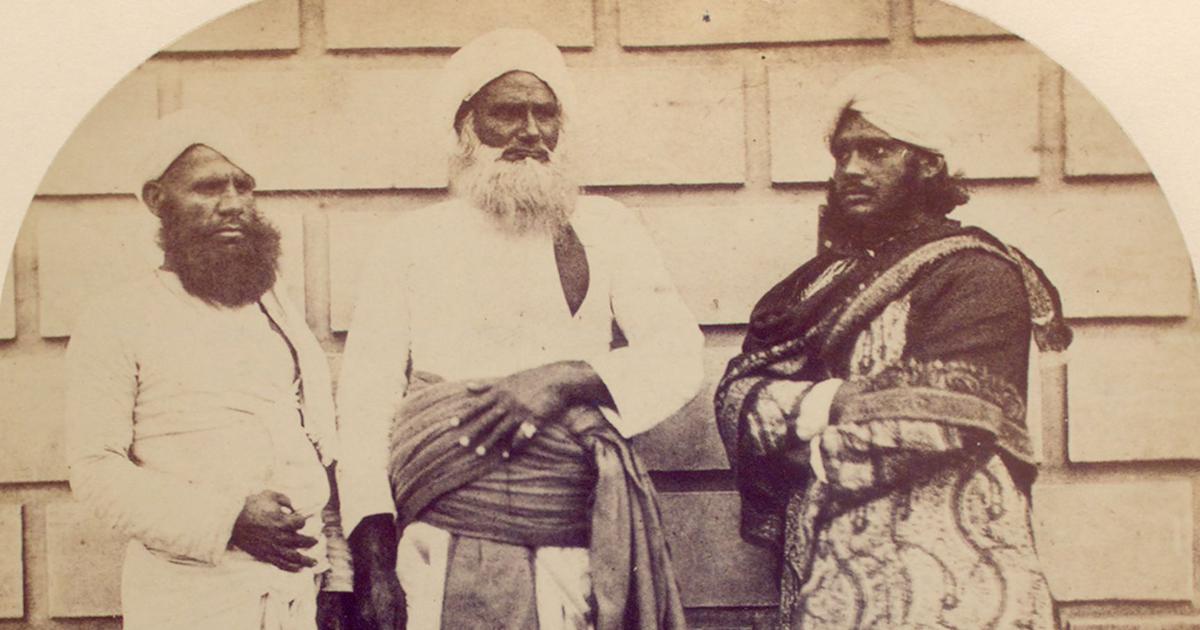
Today, Thailand’s Pashtun community – known as Khaek Pathans or Pathan guests – numbers in the thousands and is well integrated into Thai society. But official records from the early 20th century reveal a period when colonial administrators viewed Pathan migrants as a growing security concern and debated restrictive measures to control their movement.
Early migration
According to Beckett, Pathans had been virtually unknown in Siam until the late 1880s. “The first-comers appeared to have filtered through from the Federated Malay States, where they had found temporary employment in the Malay State Guides,” he wrote in 1908 to the secretary of the government of India’s Foreign Department.
Their imposing physique earned many early arrivals jobs as police constables and private security guards. Others operated horse-drawn carriages or ponies for hire. As news of these opportunities reached Peshawar, more migrants travelled to Siam via Singapore and British Malaya.
But the boom did not last.
Beckett wrote that the new arrivals acquired a reputation for violence and “disgusting habits”, which he believed closed the “former channels of lucrative employment”. Recruitment into the police gradually ceased and existing Pathan constables were dismissed. Demand for private watchmen also declined, while the carriage trade became overcrowded. Many unemployed migrants, Beckett wrote, drifted into the countryside in search of work, where colonial officials increasingly associated them with violent crime.
Legal loophole
For Siamese authorities, the issue extended beyond crime itself. Under Britain’s extraterritorial jurisdiction, local police often had little authority over British Indian subjects. Cases had to be investigated through British officials and trials conducted in Bangkok under British jurisdiction.
Bangkok Police Commissioner Eric Lawson argued that the system effectively discouraged victims in the provinces from pursuing justice. “The vast majority of the Siamese people are cultivators,” he wrote in a letter to Beckett. “To leave their fields while agricultural operations are in progress, means ruin. In any case, it means heavy expense for travelling and again heavy expense for staying in Bangkok.”
According to Lawson, the provinces posed the greatest challenge. Because most Pathan migrants did not speak English, British officials struggled to investigate crimes or gather witness testimony outside the capital. “It is in the provinces that the bullying and swaggering Pathan is fast becoming a nuisance which the population will not endure much longer,” Beckett wrote, channeling Lawson’s warnings. “Mr. Lawson believes that if remedial measures are not taken, the time will come when an exasperated peasantry will take the law into their own hands, and kill Pathans at sight.”
Lawson, who had previously served in India, appears to have harboured deep hostility towards Pathans. He accused the vast majority of them of living by theft, gambling and extortion, claiming that only a small minority earned an honest living. In a letter to Beckett, he wrote: “The majority notoriously practise sodomy, and bestiality is very rife amongst them. They carry on the feuds which they have brought with them from their own country, and murderous assaults on Pathans by other Pathans are extremely frequent.”
Lawson also portrayed Pathans as exploiting the protections afforded by their status as British subjects. “The Pathan is a bully and the Siamese is smaller than he,” he wrote. “It is easy to swagger about the country with a big stick, getting food from the villagers, and if the villagers turn on him, appeal in a loud voice for British protection.”
Officials debated the migrants’ identities. Some maintained that many of the alleged troublemakers were not British Indian subjects at all, but Afghans from beyond the Durand Line. Lawson initially endorsed this view, but later contradicted himself by stating that most Pathans in Siam came from the Yusufzai clan from Kalu Khan, Mardan and other parts of the Peshawar district.
Colonial panic
British consular statistics claimed that Pathans accounted for about 25% of the 112 recorded crimes committed by British subjects in Siam in 1907, while making up roughly 40% of the Indian population in the country, excluding migrants from Burma. More than half of the offences attributed to Pathans were classified as violent crimes, including three murders.
Desperate for a solution, colonial officials scrambled for answers. One proposal was to cross-reference the names of Pathans in Siam with “Register No. 10” – a British surveillance log used to track habitual offenders in India – allowing the Consul to deport known criminals.
Another idea was to pressure Singapore to enforce the Indian Immigration Ordinance of 1904 to block “agricultural class” Pathans from travelling onwards to Siam. Under the ordinance, only agricultural workers with contracts could enter Singapore and proceed to the Malay peninsula.
The Indian Foreign Department dismissed these ideas as impracticable. While the Singapore authorities had technically banned the departure of Pathans to Siam in 1905, the policy was rarely enforced.
British officials in Bangkok also floated the idea of mandatory registration for all arriving Pathans to prove an “honest means of livelihood” or be deported, but Calcutta responded that it was nearly impossible to track individuals unless a crime had already been committed.
The colonial authorities in Calcutta also addressed concerns that Pathans from Afghanistan were crossing into India before emigrating while claiming to be British Indian subjects. “The question of controlling the immigration into India of Afghans, and trans-frontier tribesmen by a system of passports, was considered in 1905, and rejected as impracticable, and it appears impossible to devise a workable scheme for controlling the emigration of Pathans from India,” the Foreign Department said.
In March 1909, Britain and Siam signed the Anglo-Siamese Treaty, under which Britain agreed to surrender many of its extraterritorial privileges in Siam. The agreement gave Siamese courts and police full rights to arrest and prosecute British subjects.
British authorities also tightened screening at Indian ports to prevent known offenders from the Pashtun community from boarding ships for Singapore.
As word filtered back to the North-West Frontier that Bangkok was no longer a land of opportunity, the flow of migrants slowed significantly. For the next few decades, arrivals remained limited, until migration picked up again after the Second World War. Pashtun soldiers serving in the British Indian Army were stationed in Siam during the country’s post-war transition. Some stayed behind, laying the foundations for the community that continues to exist in Thailand today.
Ajay Kamalakaran is a writer, primarily based in Mumbai. His latest book, Colombo: Port of Call, has been published by Penguin Random House.
