



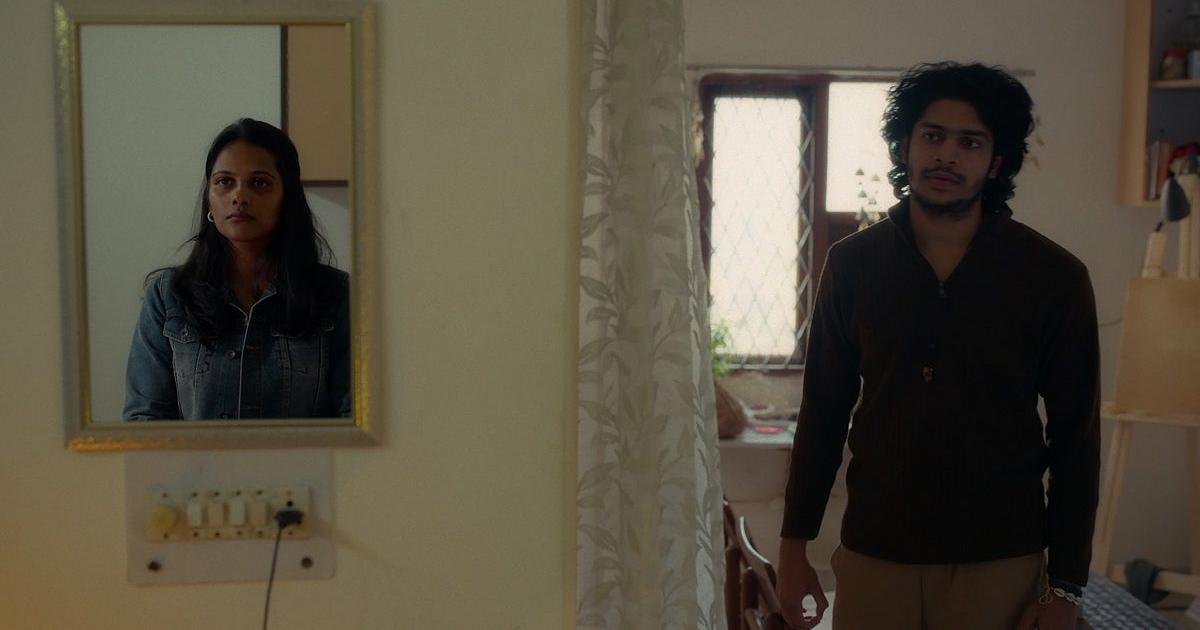
Sanju Surendran’s Khidki Gaav refers both to the film’s setting – the neighbourhood of the same name in South Delhi – as well as the window that viewers get into a couple’s world. Surendran’s evocative and beautifully performed second feature, which is predominantly in Malayalam, looks at the seesawing relationship between live-in lovers Sarah and Abhi.
While Delhi is harsh and alienating for Sarah (Bhanu Priyamvada) and Abhi (Roshan Abdul Rahoof), their apartment is a refuge from the outside world. Sarah is far away from her conservative and controlling family; Abhi has the opportunity to pursue his career as an artist.
But their nest is violated ever so often. Their landlady is intrusive and suspicious without reason. Their friends Simon and Gopika are welcome until they appear to cross the limit. Sarah’s domestic woes catch up with her. The intimacy soon becomes stifling.
Khidki Gaav’s English title, If On A Winter’s Night, is taken from the Italo Calvino novel If On A Winter’s Night A Traveler. The winter season plays an important role in the movie, running parallel to the growing chilliness between the couple.
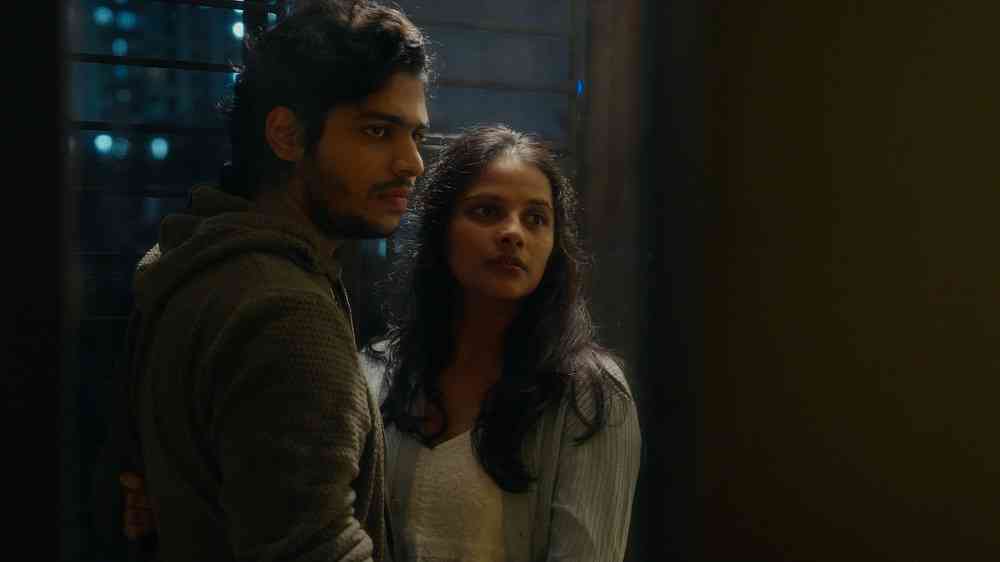
The film’s story was partly inspired by real-life incidents as well as Hrishikesh Mukherjee’s debut feature Musafir (1957), in which Mukherjee and co-writer Ritwik Ghatak follow three sets of tenants renting the same house, Surendran said. After a friend, Rahul Pratap Singh, referred Surendran to Musafir, the filmmaker was moved to explore a dynamic that plays out within domestic confines.
“My writer, Rekha Raj, wrote a beautiful script, which is like reading a detailed and nuanced novel,” Surendran told Scroll. The film too has an episodic structure, in which a chain of incidents adds to the growing strain between Sarah and Abhi. Cinematographer Manesh Madhavan captures the emotional claustrophobia that develops between the couple.
Khidki Gaav was premiered at the Busan International Film Festival (September 17-26) in the Vision – Asia section. Surendran, whose credits include the documentaries Gundert The Man The Language (2012) and Kapila (2014), had been previously given a funding grant by the festival.
The actual Khidki Gaav’s particular aesthetic encouraged Surendran to set his film there. “I like the name very much, it’s so beautiful,” the 44-year-old filmmaker said. The locality’s reputation for affordable housing for artists and students was an added attraction, as were the narrow streets, the Khidki fort, the art galleries and a public library.
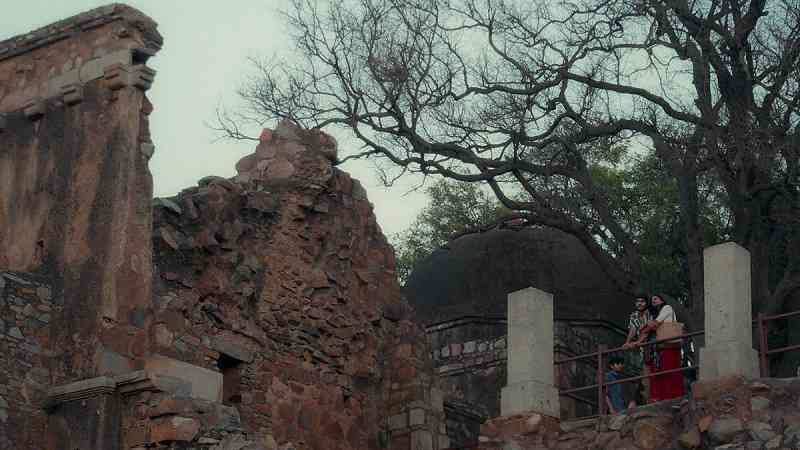
Although Surendran hasn’t lived in Khidki Gaav, he did spend some time in Gurgaon in neighbouring Haryana. A Film and Television Institute of India alum, Surendran was among the students who took turns to care for the acclaimed director Mani Kaul when he was battling cancer in Gurgaon in the early 2010s.
Kaul had studied at FTII in the 1960s, and he later returned to the institute to teach filmmaking. “He was a hero to all of us students, and it was very difficult to see him fading away,” Surendran said. “He would talk about music, painting and philosophy, all of which would eventually lead to cinema.”
There is arguably the influence on Mani Kaul’s use of physical spaces and emphasis on architectural details on Khidki Gaav. Several FTII alumni worked on the film, Surendran said.
All We Imagine as Light director Payal Kapadia is an executive producer on the project. “I had sent a screener to Payal, and she liked the film a lot and decided to support it,” Surendran said. “She was kind, gracious and very encouraging.”
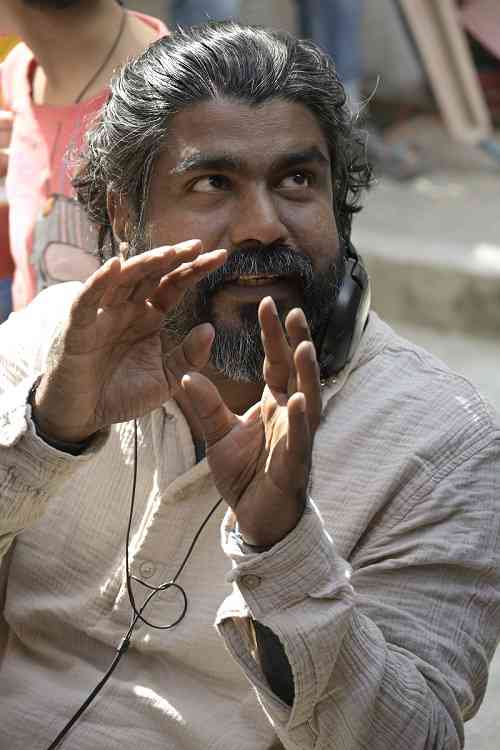
Being an independent art film, Khidki Gaav was a challenge to mount – from finding a producer to finalising the locations.
“Nobody thought that this film would get made – it’s a miracle,” Surendran said. “It’s very difficult to get things done in Delhi. Also, you tend to get bored while working within a single space. Every day, I had to think of new ways to imagine the location, work out variations and possibilities.”
Surendran praised Manesh Madhavan’s camerawork – “it’s tactile, very fluid, very beautiful” – but this also meant that there were “too many options” for editor Praveen MK to tackle. “The edit was tough, and it took us a long time to find the rhythm,” Surendran said. “We had to subtract a lot of pieces to get to what we now have.”
Much also depended on finding the right actors. Bhanu Priyamvada and Roshan Abdul Rahoof met for the first time during the shoot, and developed their rapport while filming their scenes with each other.
“Bhanu came in at the last moment, but she quickly memorised the script and religiously worked on her role,” Surendran said. “Roshan came through a casting call. I found a strange and rare innocence in him, which was suitable for Abhi’s character. He has a very subtle way of delivering his scenes.”
Jitheesh Raichel Samuel and Arathy KB play the couple’s friends, Simon and Gopika. The performances were rehearsed, but there was room for improvisation too.
“The idea was to look at contemporary relations in urban spaces,” Surendran said. “I didn’t want a picture-postcard Delhi but a lived-in experience of the city. I wanted to show how ordinary people live here, the kind of places they visit and how they navigate the crowds. I was trying to capture a certain essence of the space without being melodramatic at any point.”
