









After 40 years and 400 films, I had nothing left to prove to anyone anymore. It was time to explore, not just films and television, but even OTT. But it wasn’t as if I was waiting to do a web series. I hadn’t even done one in Bengali when Vikramaditya Motwane approached me with a period drama he was directing for Amazon Prime Video.
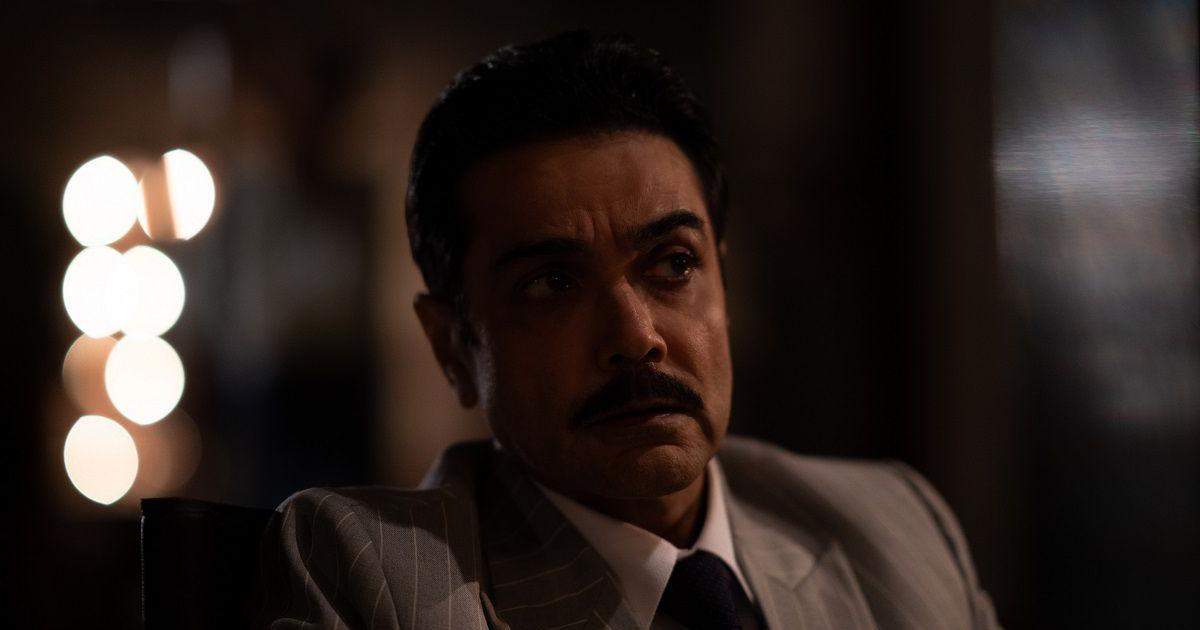
Since I had already worked with Soumik Sen, who had written the story with Atul Sabharwal and created Jubilee (2023) with Vikram, I was aware that they had been working on this series for over five years. But I had never imagined that I would be offered a character like studio baron Srikant Roy, which, Vikram confided during our very first meeting, had been written with me in mind.
Dibakar Banerjee, Hansal Mehta and Vikramaditya Motwane are third-generation directors for me, whom I recognized as pan India game-changers, and had always envied Ronit Roy for landing the role of the father in Vikram’s Udaan (2010). But I didn’t give the nod to Jubilee (2023) immediately.
Vikram met me twice, maybe even thrice. I also met Soumik and Atul, along with the team, and every time I would ask, ‘Why me?’ And each time Vikram would reply, ‘Not because you are a superstar, Dada, but because we have seen your work in Chokher Bali (2003) and Autograph (2010) and we can’t think of anyone but you to play Roy.’ Eventually I gave in, believing it would be my tribute to the greats of Indian cinema, including my idol Guru Dutt.
Not too many people today are familiar with an era when studio bosses strode around with walking sticks, smoked pipes and had designated chairs with ‘Director’ written on them. But I have watched Kaagaz Ke Phool (1959) at least a thousand times and I hugged Vikram after we replicated the iconic scene in which Guru Dutt’s famous director, Suresh Sinha, drives into the studio like royalty, in his big, open car, smoking a pipe (a cigar in my case), everyone doffing a salaam as he passes by. I hugged him a second time after we re-enacted another unforgettable moment from the same film, me alone in the studio, lit up only by a beam of light.
I am a student of the history of cinema; not just Hindi, Bengali and Odia cinema, but Tamil, Telugu, Kannada and Malayalam cinema as well. From Dilip Kumar, Guru Dutt and Raj Kapoor to P.C. Barua, L.V. Prasad and Sivaji Ganesan, I have been studying the works of these legendary greats to understand my roots.
When Vikram spoke about Himanshu Rai and Devika Rani, the power couple who founded Bombay Talkie Studios, I showed him the research I had done. Since I had also thought of making a film on the same subject, I already knew 60 per cent of what he was narrating.
Jubilee was a lesson in both film history and film technology, because Srikant Roy not only introduces songs in his films but also cinemascope. It was exciting to learn how black-and-white films were made, how filmmakers edited on reels and dubbed in loops, before moving to rock ‘n’ roll dubbing.
Like with Dibakar’s Shanghai (2012), we had innumerable workshops for Jubilee. I flew down to Mumbai thrice, the third time after the restrictions brought on by the Covid-19 pandemic were lifted and we could move freely again.
I had come prepared to stay for a week, but on the third day I was told I could return to Kolkata. I was aghast, ‘Mujhse ho nahin raha hai kya? Do you want to replace me because I am not able to do justice to the character?’ I asked Vikram. He laughed and explained that while the rest of the team had forgotten what we had done earlier, I remembered everything we had discussed two years ago to the smallest detail. ‘You are like Anil Kapoor, so well prepared that you are making the others nervous, which is why you were asked to leave, Dada,’ he clarified.
Once shooting started, I was dubbed ‘first bencher’ by Vikram and my co-stars, Aparshakti Khurana and Aditi Rao Hydari, because I was always the first one on the set and the first to rehearse. My performance went off seamlessly, but I continued to seek reassurance from Vikram. ‘You never tell me if the shot is okay, mujhse nahi ho raha hai kya (am I not able to do it to your satisfaction)?’ I would ask him repeatedly, and he would laugh, ‘Dada, you are Roy!’
I put a lot of the aristocratic Mahendra from Chokher Bali (2003) and superstar Arun Chatterjee from Autograph (2004) into Srikant Roy. All that I had learnt from Rituparno Ghosh and Srijit Mukherji went into this performance.
To Vikram’s credit, he was able to extract the best from me. It was easy for me to empathize with my character because, like Roy, I too breathe cinema and can even kill for it. If, as Vikram says, Roy is Al Pacino from The Godfather series, then I am a real-life Hitler when it comes to my passion.
But I was still taken aback when the Jubilee unit rose as one and applauded the shot where I order Jamshed Khan to be killed. ‘Why are you all clapping when you don’t even see my face in the frame, only the cigar between my fingers?’ I asked, bewildered. Vikram explained that it was chilling the way I spoke, the quiet words ringing in the ears long after the scene had ended, which prompted the spontaneous reaction. ‘It was terrifying!’ he shuddered.
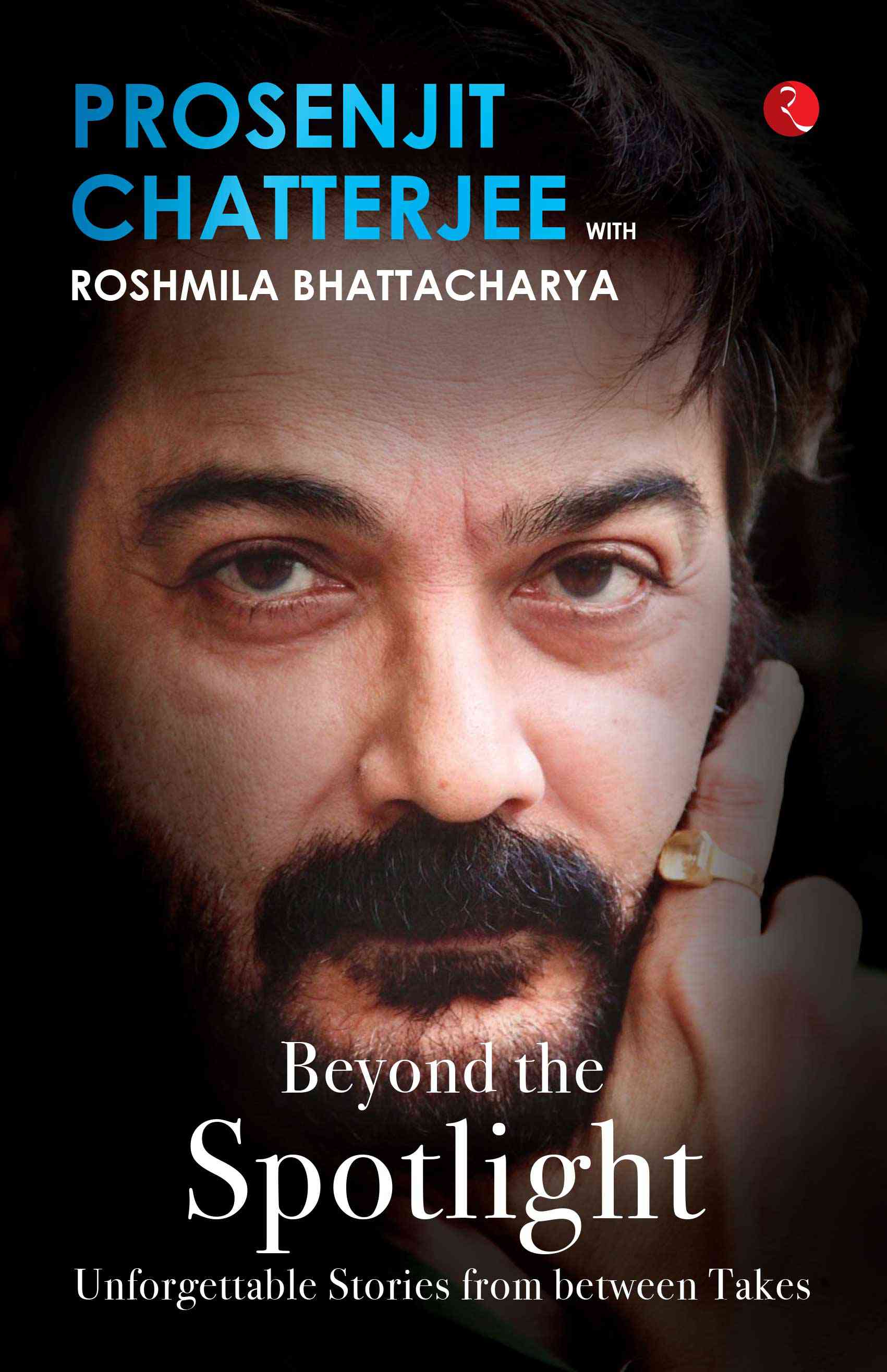
Excerpted with permission from Beyond the Spotlight – Unforgettable Stories from Between Takes, Prosenjit Chatterjee with Roshmila Bhattacharya, Rupa Publications.
Also read:
Superstar Prosenjit Chatterjee on his 15 best roles
‘Jubilee’ review: In brooding tale of the price of stardom, a few notes of celebration
