










The Sundance Film Festival that concluded on Sunday handed out awards to fictional features and documentaries that pushed the cinematic language as well as reaffirmed faith in universal values of tolerance, curiosity and justice. A standard-bearer for indie cinema for the past several decades, Sundance this year recognised several films from around the world, including Iran and the Philippines.
Here are reviews of five award-winning titles in the competition sections that were available for online viewing – and a bonus documentary that premiered in a non-competition category.
The Directing Award: US Dramatic award went to the exhilarating Ha-chan, Shake Your Booty! Half-Japanese American director Josef Kubota Wladyka’s multi-lingual film stars Babel actress Rinko Kikuchi in terrific form as a woman struggling with grief.
Haru has lost her beloved partner Luis, with whom she performed in ballroom dance events in Tokyo. Persuaded to get back to dancing, Haru falls for the new teacher, Frederik. But Luis is still around, reappearing before Haru in a bird costume.
Rinko Kikuchi’s mesmerising performance unfolds within frames dipped in saturated colours and set to a pulsating score. A sequence in which Haru takes over a subway train is pure magic.
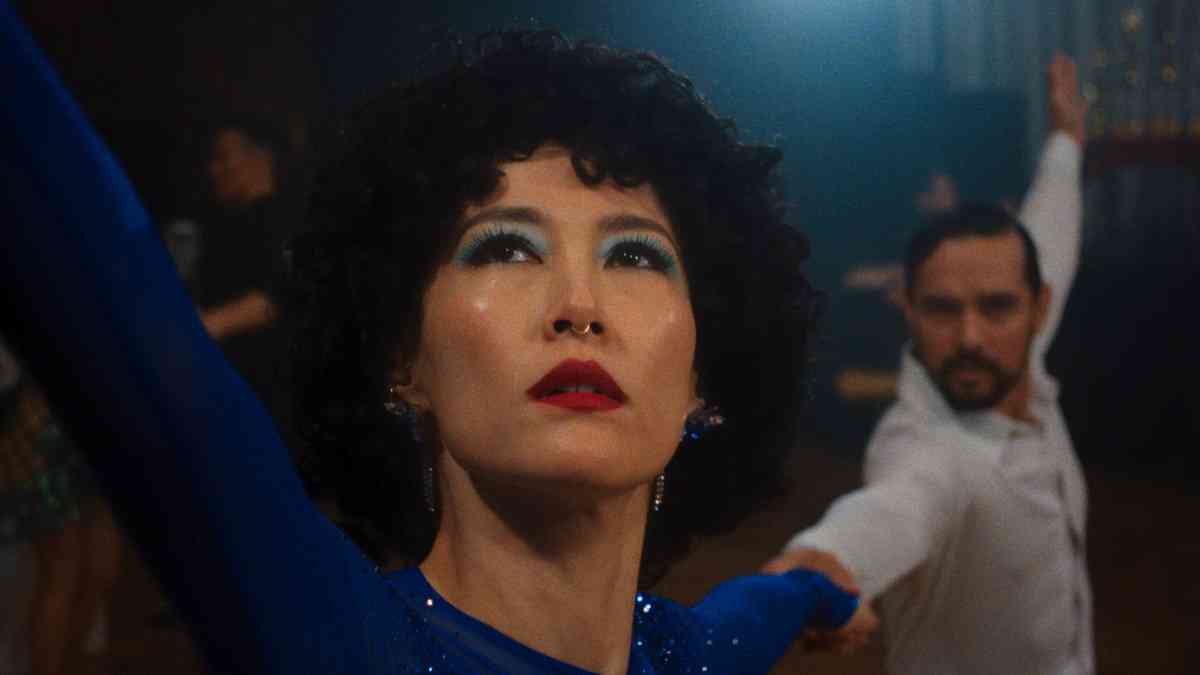
The Friend’s House is Here won the US Dramatic Special Jury Award for Ensemble Cast. Shot in secret by Hossein Keshavarz and Maryam Ataei in Iran’s capital Tehran and smuggled out of the country, the film is a tribute to defiance and resilience.
The title is a play on the Abbas Kiarostami classic Where is the Friend’s House? That question is amply answered over the course of the drama, which explores a rarely seen aspect of Tehran – its vibrant underground art scene.
A group of artists regularly convenes to ask taboo questions about Iranian society. Among them, two women form a fast friendship that is threatened by the attacks on free speech that have seen numerous Iranians being proscribed and even jailed.
My body is tired and my spirit is tired, one of the women says. Yet, they and their larger circle of friends persevere, drawing strength and courage from a sense of community.
The film dexterously slips between fiction and documentary. Scenes of some of the artists in public places – the women boldly without head scarves – running about and laughing are an extension of their artistic practice. To act freely in public is a radical form of performance art too, forever under threat and therefore all the more precious.
Filipinana won the World Cinema Dramatic Special Jury Award for Creative Vision. Rafael Manuel, expanding his short of the same name, makes his feature debut with a formally rigorous, coolly distant and yet emotionally resonant film about the class divide, the exploitation of labour and power dynamics in the Philippines.
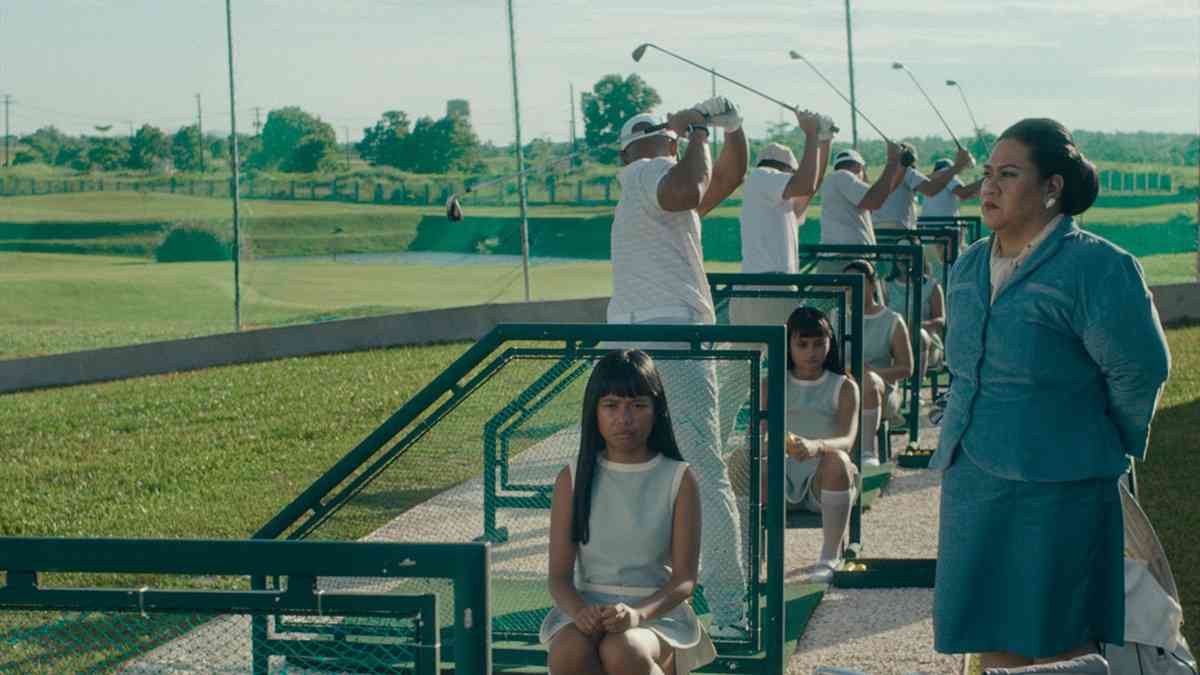
The allegorical drama is set in an elite club, whose every plane is marvellously captured by cinematographer Xenia Patricia. Amidst an oppressive heat wave, wealthy members, Chinese tourists and fortunate priests congregate to practise their putting. They are attended to by tee-girls, or female caddies.
One of them, Isabel, is irrationally attracted to the club’s much older president. Another woman, Clara, calls her mentor “Uncle” – the first hint of the Epstein-like vibe that prevails over the club.
Filipinana is heavily stylised in its staging, colour coding and performances. A torpor hangs over the club as well as the narrative, which is conveyed through lengthy and fluid takes.
Various staffers flit across the screen as though in a choreographed dance. Any attempt to disrupt their ritualised behaviour is met with violence that is overt as well as covert. The White Lotus it certainly isn’t.
Scottish director Louis Paxton’s The Incomer won the NEXT Innovator Award. Paxton’s feature debut is an imaginative, delightfully droll account of a pair of siblings who refuse to leave their remote island in Scotland.
Isla (Gayle Rankin) and Sandy (Grant O’Rourke) haven’t overcome the death of their parents and the flight of other residents to the mainland. They survive by hunting birds and evading beings called “Fin-Men” who are visible only to them. When the government sends the official Daniel (Domhnall Gleeson) to force them off the island, mayhem ensues.
Daniel introduces the siblings to such wonderments as the internet and potato croquettes. To counter the island’s origin story narrated by Isla, Daniel comes up with his own myth – stolen from JRR Tolkien’s The Lord of the Rings.
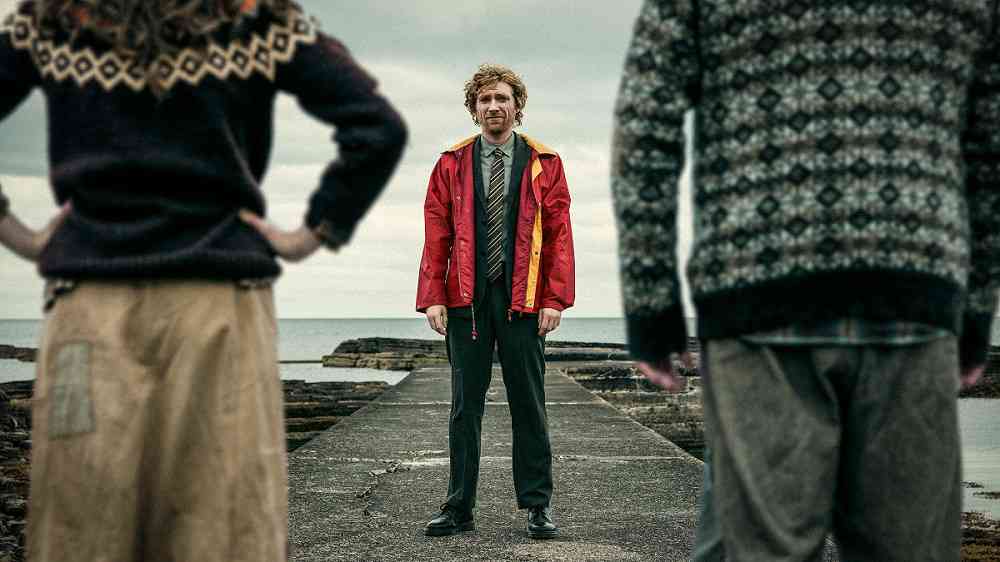
Paxton dips into animation and fantasy sequences to illustrate a timely fable about self-imposed loneliness, inflexibility and the age-old battle between tradition and modernity. The hilarious film is moving too, especially when Isla and Sandy find common ground with Daniel. The closing passages are especially sharp, emphasising the need to let go but also hold on to what matters.
Another kind of battle between tradition and modernity is waged in Nuisance Bear, directed by Gabriela Osio Vanden and Jack Weisman. Nuisance Bear explores a predicament that will be familiar to Indians: the best possible way to conserve a species while also ensuring human survival. The film’s triumph in the US Grand Jury Prize: Documentary category is richly deserved.
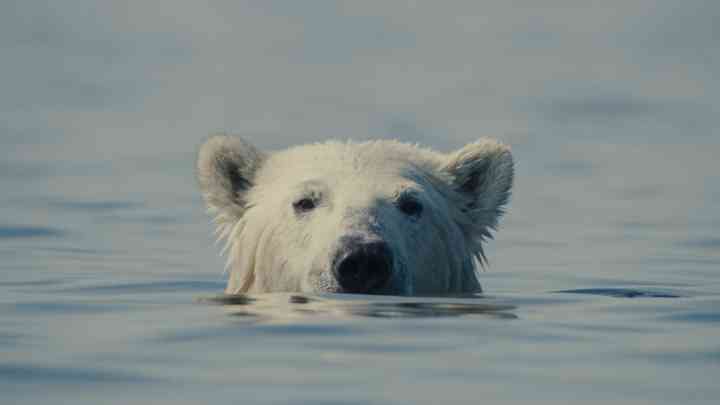
The Churchill town in Canada’s Manitoba province is known as the “Polar Bear Capital of the World”. This is where scores of the deceptively fluffy white-coated mammals are in an uncomfortable dance with humans.
Sensation-hungry tourists descend on the polar bear’s habitat. Tour guides encourage them to get dangerously close to the fierce beasts. In a telling sequence, the tourists also draw out caribou in a manner that is nothing short of invasive.
The bears are the bigger worry, rummaging through garbage and wandering into homes. Local officials keep a close watch on them. The bears rebel against the often disorienting contact with humans by attacking road signs and refusing to get out of the path of incoming vehicles.
That human intervention is intrusive rather than beneficial is evident in a disturbing scene in which a wandering bear is tranquilised, fitted with an electronic tag and transported by a chopper to its own habitat.
Did the bear ask for this? The remarkably intimate camerawork and smooth editing reveal the bear’s unhappy perspective.
A third point of view is provided by the indigenous Inuit population, which has been hunting the bears for millennia but is now restricted to following hunting quotas. The film suggests that the delicate balance between the original predators and prey is healthier for both the bears and the humans than misguided conservation efforts.
One of the most charming documentaries at Sundance wasn’t competing for any award. Sam Green’s The Oldest Person in the World is a poignant and insightful exploration of longevity, mortality and humankind’s need to put on a show.
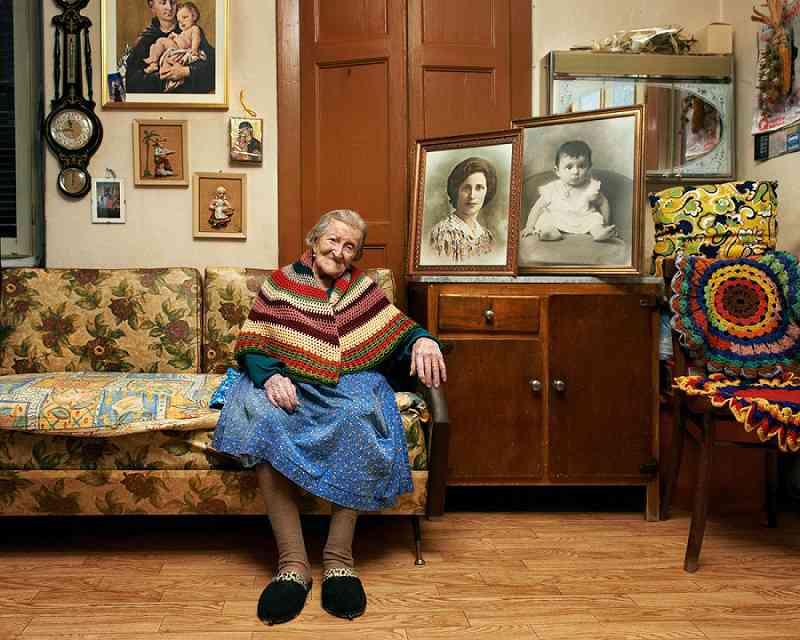
Filmed over a decade, the documentary revolves around the women – they are all women – who hold the Guinness World Records title for being the oldest person alive. As Green cheekily observes in his voiceover, the honour isn’t held for very long. It passes from one person to the next, provided the Guinness organisation has confirmed the official birth records.
Green meets a bunch of very old and often only semi-sentient women in various corners of the world. Between America and Italy, Japan and France, Green seeks to understand how the supercentenarians view their extraordinary lifespans. He also unearths why the world is fascinated with these miracles of age.
“Every time the world’s oldest person dies, it is in every paper – as if this one person has somehow outsmarted time and death and fate,” Green says. His mission is intertwined with personal concerns – his cancer diagnosis, the death by suicide of his brother, the coronavirus pandemic that interrupts filming.
Green’s “monument to the mystery and the heartbreak and the beauty of it all” is consistently wise and joyous, raising important questions about who gets to live long, who leaves early, and what is the meaning of it all.
