



“Every life has its kernel, its hub, its epicentre, from which everything flows out, to which everything returns,” Maggie O’Farrell writes in her bestseller Hamnet, the basis of Chloe Zhao’s Oscar-nominated film of the same name. O’Farrell’s chronicle of the heartache that follows untimely death is the Shakespearean tragedy that William Shakespeare never wrote.
Hamnet was the only son of Shakespeare and his wife, Anne Hathaway. The boy, who had a twin sister Judith, died from illnness in 1596 at the age of 11. O’Farrell’s historical fiction novel speculates that Hamnet is another name for Hamlet, and that the boy’s demise inspired one of Shakespeare’s best-known plays.
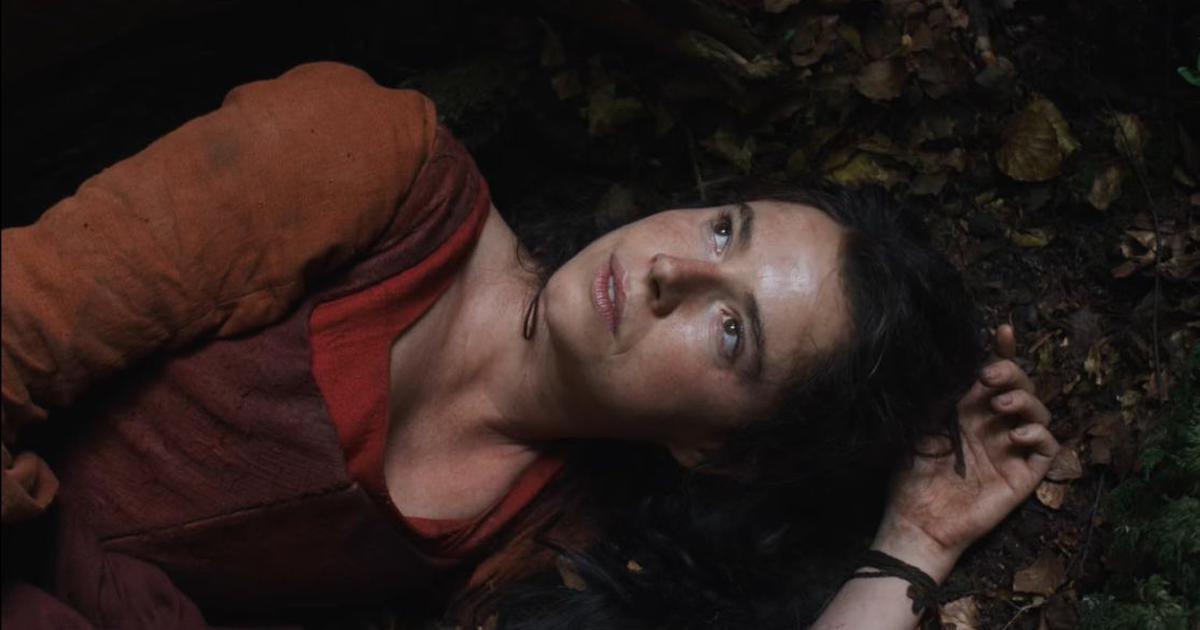
O’Farrell has co-written the screen adaptation along with Zhao. Agnes, as Anne is known in the film, is a child of nature, bursting like a wild flower out of the forest floor in her earthy red gown.
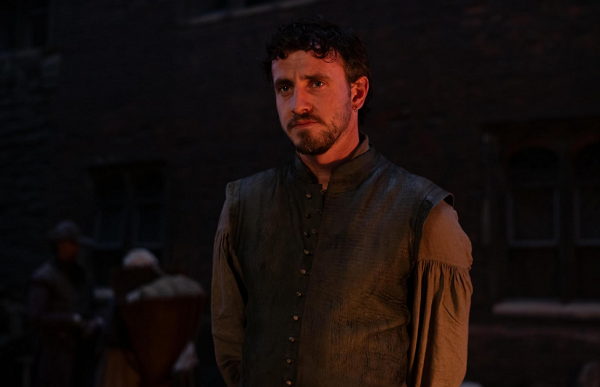
Will (Paul Mescal) is smitten with Agnes (Jessie Buckley), her unkempt hair and lack of inhibition, the force field she carries within her body. Agnes’s mother was a natural healer, and there is something otherworldly about Agnes too – a tendency to speak in riddles at times; talk of portents and prophecies; dreams that tend to come true.
Agnes encourages Will to move from their rural home to London to seek his fortunes. The marriage produces three children. Despite his frequent absences from the family, Will manages to spend time with them, especially his beloved son (Jacobi Jupe).
Like the foreshadowing in Shakespeare’s yet-to-be-written plays, there are signs that the forest grove will demand sacrifices from the pagan goddess in human form. The murmuring lushness that characterises the courtship between Will and Anne – beautifully brought out by cinematographer Lukasz Zal and production designer Fiona Crombie – will make way for darkness and drabness.
Chloe Zhao wrings out the tears in her exploration of the agony resulting from the loss of a child – the scenes evoke Satyajit Ray’s nonpareil Pather Panchali. In Hamnet, art acts as a salve, making the film more than a speculative exploration of a real-life occurrence.
Performed by a cast that includes Emily Watson as Will’s mother and Joe Alwyn as Agnes’s brother, Hamnet centres on Jessie Buckley’s heart-rending performance. Agnes is the movie’s raw, throbbing centre. Jessie Buckley is contained as well as expressive, wild but graceful too, always alive to her co-actors and her surroundings. is remarkable as the preternaturally wise Hamnet.
The lyrical narrative loses its way after Hamnet falls seriously ill. The extended climax borrows heavily from Hamlet’s play-within-a-play device. The 126-minute movie goes into tearjerker mode, creating moments that demand, rather than gently ask for, closure.
The ethereal score by Max Richter includes his most famous and oft-used tune, On the Nature of Daylight. This composition was beautifully placed in Denis Villeneuve’s Arrival, in a sequence about a child’s death. On the Nature of Daylight plays a key role in Hamnet too, but it can’t match the welter of emotions on Jessie Buckley’s marvellously mobile face.
