









Chiraiya takes on the uncomfortable, often avoided subject of marital rape in India. The JioHotstar show is based on the idea that marriage itself does not imply consent. For a while, Chiraiya really bends into that discomfort. But what starts off as a character-driven drama with a very quick setup slowly turns into something more heavy-handed and less satisfying.
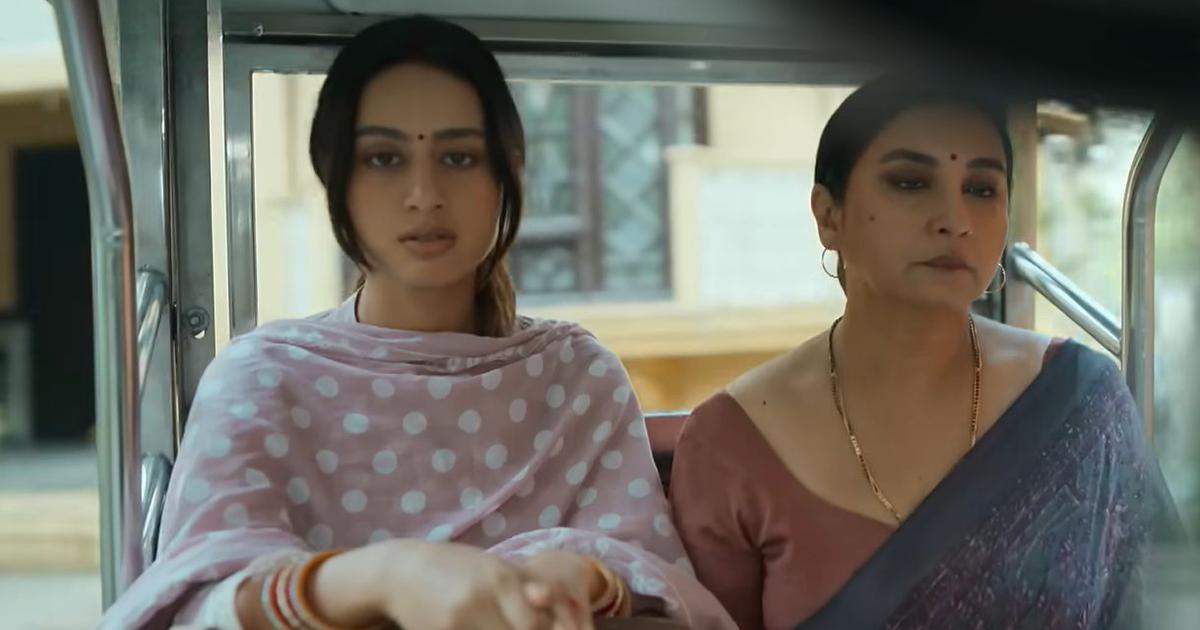
The six-episode Hindi series is based on an idea by Soumyabrata Rakshit, created by Divy Nidhi Sharma and directed by Shashant Shah. Set in Lucknow, the story follows Kamlesh (Divya Dutta), the ideal daughter-in-law in a tightly-knit clan led by the scholarly Papaji (Sanjay Mishra).
Kamlesh takes pride in tradition, in knowing her place, and in ensuring that others do too. She dotes on her younger brother-in-law Arun (Siddharth Shaw), almost like a son, and shares a loving marriage with her husband Vinay (Faisal Rashid), which only strengthens her belief that the system works. She thinks nothing of the fact that she overindulges Arun, compensating for her own disappointment at having given birth to a daughter.
Things begin to shift when Arun’s new bride, the “woke” Pooja (Prasanna Bisht), enters the household. It soon becomes clear that she is being forced into sex within her marriage. Pooja’s resistance is brushed aside as immaturity or stubbornness. Kamlesh, at least initially, is part of that machinery, urging her to adjust, keep the peace, maintain the family’s reputation, and not make a scene.
The first couple of episodes capture how deeply these ideas are ingrained – whether it’s Kamlesh’s belief that women should stick to the “back pages” of the newspaper (reading recipes) while men deal with the important stuff, or the way the older women in the house maintain silence. When Pooja pushes back, the tension rises within the family. More importantly, it pushes Kamlesh to confront some harsh realities and unpack generational inequalities.
There are some solid touches: the casual entitlement with which Arun behaves; the sense of how Pooja is gradually made more isolated, manipulated and entrapped. A legal thread involving Nanaji (Tinnu Anand) points out the glaring lack of laws around marital rape and the workaround.
The narrative often depends on exposition, repetition and copious tears. You get NGO-style meetings, group therapy sessions and long conversations spelling out what consent means, which are important, but give the sense of an extended PSA rather than a fictional story.
The non-linear structure adds some depth through flashbacks. We see Kamlesh’s early days as a bride, her respect for her father-in-law, her curiosity to learn, and her steadfast belief in a woman’s duties within the family.
Tonally, the show drifts into soap opera territory more often than it should. The gender lines are deeply entrenched, and the confrontations and soul-searching are largely limited to Kamlesh’s epiphany. The climax goes big, but rather than feeling earned or moving, it comes across as staged and overly dramatic.
The character arcs don’t fully come together either. Kamlesh’s shift feels rushed when it should have been the emotional backbone of the series. Vinay, the good husband, barely gets space until it’s too late. Arun remains more of a sketch than a fully realised person, which makes the conflict feel a bit one-note.
Pooja’s character arc is weak, neither adequately explaining why this seemingly aware woman agrees to an arranged marriage, nor giving her enough space to exist beyond her trauma. A scene of her attending an LGBTQ rally feels like tokenism.
Yet, the ensemble works well. Divya Dutta is solid throughout, doing the heavy lifting even when the writing and direction is wanting. Sanjay Mishra brings a quiet authority to Papaji. Prasanna Bisht and Siddharth Shaw work well as the young couple at the centre of it all. Faisal Rashid adds some texture to Vinay.
A slate at the end cites statistics from the 2019-21 National Family Health Survey on domestic and sexual violence, urging that in the absence of clear laws against marital rape, the burden of change “falls on families and communities” to change mindsets and raise boys and girls as equals. Chiraiya is saying something that matters, but it leans so heavily on its message that it begins to feel less like a story and more like a lesson.
