





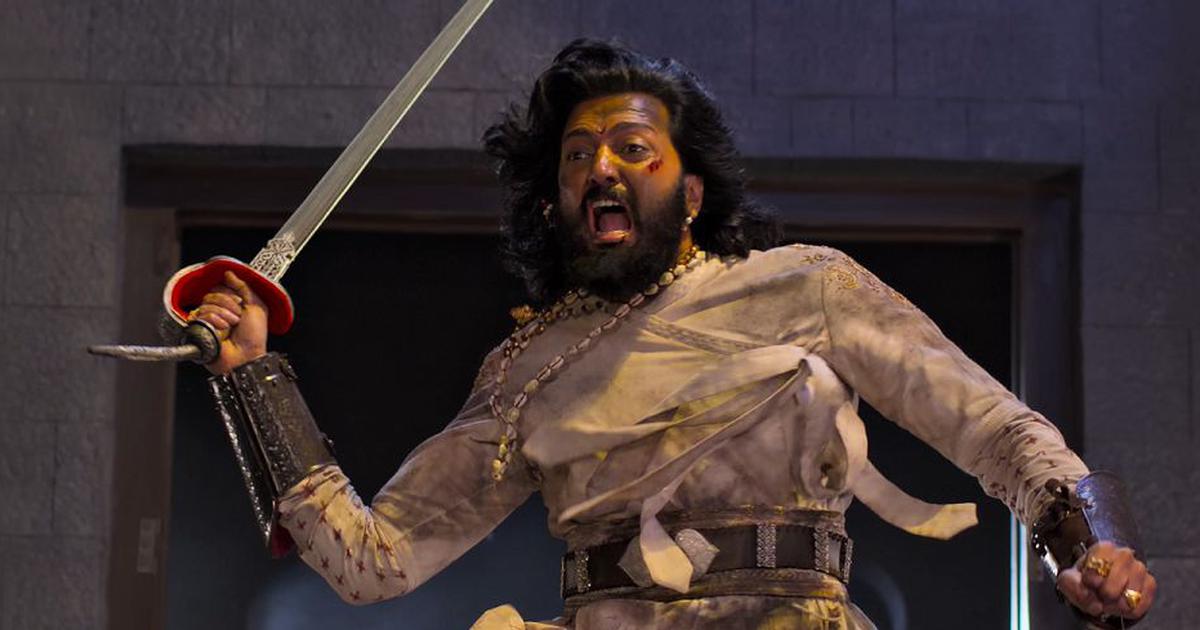
Riteish Deshmukh’s second movie as director traces the evolution of Shivaji Shahaji Bhonsle into Chhatrapati Shivaji Maharaj. Raja Shivaji is a title that will keep chauvinists busy. Indeed, only a day before the film was released in cinemas, the Bombay High Court dismissed a petition claiming that the title was “derogatory”.
The nature of nobility is the main theme in Deshmukh’s by-the-numbers historical, in which he also plays the lead role. In the mid-seventeenth century, parts of the future state of Maharashtra are under the Deccan Sultanate. It’s a time of legitimised anarchy courtesy various green flags. Betrayal, looting and wanton killings are rampant.
Whether it’s the Deccan rulers, the Nizams or the Mughals in the north, their “ilk” is not to be trusted, Shivaji’s ancestor says bitterly. The Muslim rulers and their soldiers even kill children without a second thought, the film shows.
Shivaji’s father Shahaji Bhonsle (Sachin Khedekar) and mother Jijabai (Bhagyashree Patwardhan) are forced to follow the diktats of the buffoonish, dove-obsessed Adil Shah (Amole Gupte) and his canny wife Khadija (Vidya Balan). The Bhonsles bide their time – Jijabai less patiently – until their sons Sambhaji and Shivaji come of age.
As adults, Shivaji (Deshmukh) and Sambhaji (Abhishek Bachhan) rebel against the Deccan sultans and the Mughal emperor Shahjahan (Fardeen Khan). Shivaji’s main adversary is the gleefully cruel Afzal Khan (Sanjay Dutt).


Shivaji’s inexorable ascent is presented as a response to a series of incitements. Reacting to unrelenting attacks and fed up with being a vassal, Shivaji starts pursuing Hindavi Swaraj, or sovereignty, for his land and people. In the film, though, there’s a thin line between Hindavi Swaraj and Hindutva.
Raja Shivaji emphasises Shivaji’s religious bent, the saffron flags that fly over his capital, the brutal ways of his opponents. In a couple of scenes, editor Urvashi Saxena pointedly cuts between Deccan soldiers massacring children and grown-ups on Dussehra with Shivaji in a religious setting. Raja Shivaji isn’t as explicit in its religious politics as other recent historicals, especially Chhavva (2025), but there are ample hints scattered all around.
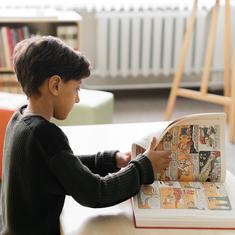
The new movie does share with Chhavva, about Shivaji’s son Sambhaji, a love for gore. The power struggle causes blood to flow and bodies to be desecrated. Deshmukh is steadily building up to the moment when Shivaji will spectacularly eviscerate Afzal Khan. This incident, familiar to every student of history or readers of Amar Chitra Katha comics, is the film’s centrepiece.
The 195-minute movie is epic in length but not in scope. There’s little freshness or imagination in the slow-mo action scenes or in Santosh Sivan’s cinematography. Ajay-Atul’s soundtrack has one catchy tune, the title song.
The screenplay, co-written by Deshmukh, Jaideep Yadav and Prajakt Deshmukh, emphasises Shivaji’s battlefield prowess while trying to cram in various other facets of his personality, such as his genius for military stratagems, his love for his wife Saibai (Genelia Deshmukh) and his vision of liberation from subjugation.
Vidya Balan is a scene stealer as the glamorously diabolical Adlishahi queen. Shivaji’s baiting of Afzal Khan, although needlessly stretched out, is a display of how psychological warfare is in lockstep with actual warfare.
The film’s Bollywood tilt is most evident in its casting. Raja Shivaji has been released in Marathi with copious stretches of dialogue in Hindi as well as entirely in Hindi. The ambition of reviving national interest in the Maharashtrian icon results in plum roles for barely competent Bollywood actors who trip on their Marathi bits and secondary parts to Marathi-speaking actors.
The parade of Bollywood actors includes Salman Khan as Jeeva Mahala – one of the most ill-judged cameos.
Riteish Deshmukh plays the Maratha emperor with dedication, if not quite kingliness. Only Vidya Balan and Sanjay Dutt emerge as somewhat fleshed-out characters. Most of the cast members deliver performances as uninspiring and studious as the film itself.
