








Bi-Gan’s Resurrection has landed in an age dominated by dumbed-down scripts and fashionably fractured narratives. The acclaimed Chinese director’s third feature proudly stands in opposition to conventional notions about the attention economy. Resurrection is opaque in its storytelling and stately in its pacing. Therein lies its beauty.
Resurrection is out on Prime Video. Although a small screen does absolutely no justice to the film’s grand visuals, viewers can get a fair sense of the achievements of Bi Gan, cinematographer Dong Jingsong and production designer Liu Qiang.
Resurrection is set sometime in the future – or is it a parallel timeline? This is a future without cinema, or a life without political freedom, or an AI-dominated landscape – take your pick.
The movie begins with gnomic text, like in silent cinema, which sets the tone for whatever follows: “In a wild and brutal era, humans have discovered that the secret to eternal life is to no longer dream! People not dreaming is like candles that do not burn, they can exist forever!”
The hold-out dreamers are called deliriants. These shape shifters must be extinguished, since they can send “time into spasms”.
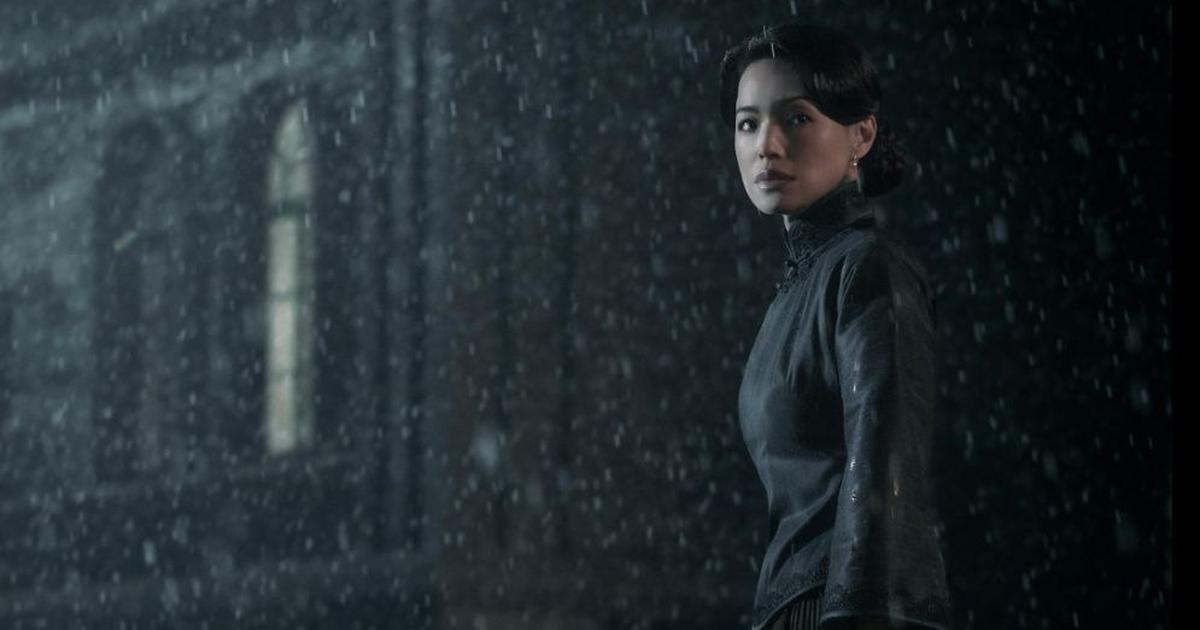
An unnamed woman (Shu Qi) is a member of a deliriant-hunting squad. She locates one such deliriant (Jackson Yee) in an opium den. When she finds a movie projector inside his heart, she accesses four separate dreams.
Each dream, meant to reflect the six senses in Buddhist thought, is fashioned like a film genre – detective thriller, Chinese period drama, social realist tale, romance set in the underworld. Cinema itself has been called a kind of dreaming.
The delirient’s adventure are mesmerising tableaus characterised by distinctive perspectives, colour palettes and sets. The opium den is like a dollhouse into which the woman can peek. The period sub-plot is set in an abandoned monastery. The final dream is set in 1999, involves crime lords and vampires, and welcomes the new millennium with one of Bi Gan’s signature long takes.
“Visionary” is a word used freely to describe certain films. The adjective certainly applies to Resurrection.
A clue into the title is provided in the opening sequence, which is set in an old-fashioned cinema. A fire burns a hole in the screen, which then serves as a portal into unpredictable and wondrous worlds – also a function of cinema, whose power to re-cast old ideas and imagine new ways of seeing is limitless.
Bi Gan’s film is meant to overpower as well as outlast short reels, editing cuts that butcher the narrative flow and scripts that leave no room for mystery. The movie’s trance-like effect is both intimate and transcendental – something that’s rare in noisy, cluttered times.
Resurrection was a big hit in China when it was released in 2025 after a premiere at the Cannes Film Festival. Chinese audiences saw something that made them vote with their wallets – an experience that’s immersive in the true sense, while always refusing to be accessible.
Also start the week with these films:
In ‘Khalid Ka Shivaji’, the true meaning of the emperor’s legacy
The Third Man’ is a first-rate game of lies and shadows
Cult thriller ‘13 Tzameti’ is a nerve-wracking game of chance
