



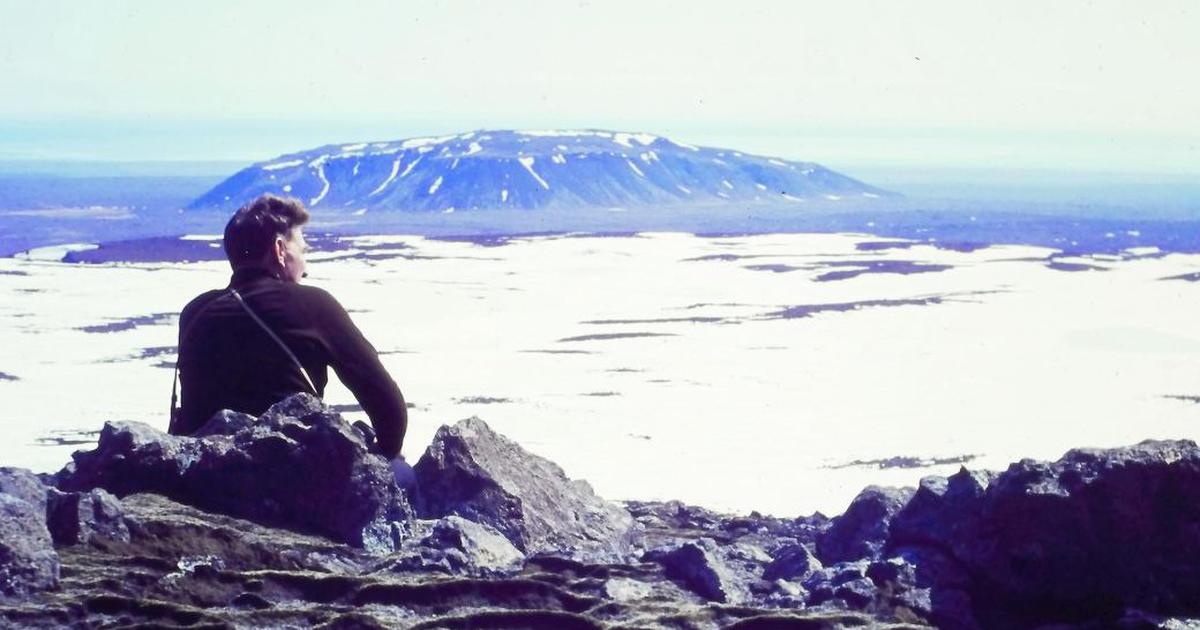
The 19th edition of the Mumbai International Film Festival kicked off on Monday with a song of ice and fire. Among the opening films was Sara Dosa’s visually sumptuous Time and Water, which examines the threat to Iceland’s glaciers from rampaging climate change and overheated oceans.
The other titles reflected the Mumbai festival’s three-pronged focus on documentaries, short films and animation. In addition to Time And Water, the opening films were the short fiction Agapito by Arvin Belarmino and Kyla Danelle Romero (Philippines) and the animated short Good Luck to You All by Cordell Barker (Canada).
On until June 21, the biannual MIFF is organised by the National Film Development Corporation. The number of awards and attractive prize money in the competitive sections makes MIFF attractive for filmmakers despite the baggage carried by the government-run event. The festival pays Rs 45 lakh for 18 prizes across international and national competition categories.
MIFF was handled by Films Division until its merger with NFDC in 2020. Even before the merger, the festival was wracked by censorship and bureaucratic bloat. Over the years, MIFF’s interest in giving independent, politically oriented filmmakers a fair platform has steadily dwindled.
The inaugural ceremony on Monday comprised a punishingly long series of felicitations, speeches and a reality show-style dance performance. The event began after playing, in that order, all of Vande Mataram, the national anthem Jana Gana Mana and the state song Jai Jai Maharashtra Mazha.
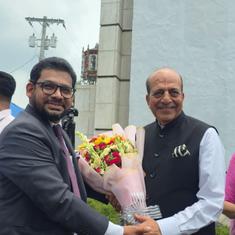
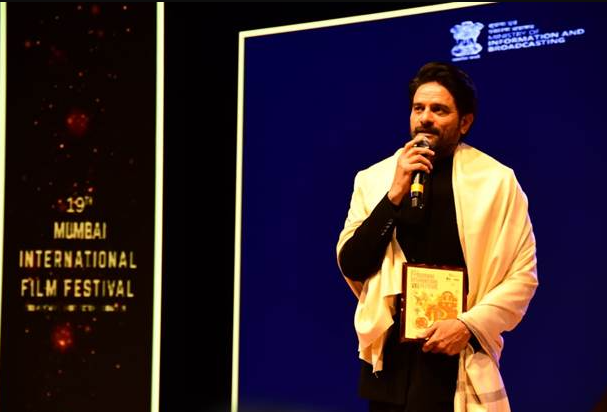
Apart from NFDC Managing Director Prakash Magdum, the prominent guests included Union Minister of State for Information and Broadcasting L Murugan, Maharashtra state’s Cultural Affairs and IT Minister Ashish Shelar, Ministry of Information & Broadcasting secretary Chanchal Kumar, the actor Jaideep Ahlawat, and filmmaker and International Film Festival of India director Ashutosh Gowariker.
The latest edition has a sizeable number of documentaries about Indian cultural practices and artificial intelligence. While the opening film Good Luck to You All is a cautionary tale about the consequences of unchecked AI, the festival itself is all for machine learning.
The signature film has been created with the help of AI. There’s an entire section dedicated to films that use AI tools.
There are also several short films in the fiction and non-fiction formats. Animation, a traditional focus of MIFF, is being served by new and old productions. Apart from packages of Chilean and Belgian animation, MIFF has a retrospective of German animation filmmaker Raimund Krumme. He is also attending the festival, and will deliver a master class.
Who isn’t present at MIFF is the American director Sara Dosa, who was nominated for an Oscar for Fire of Love (2022). The gorgeous documentary repurposes footage recorded by a volcanologist couple over the years to examine their professional commitment as well as their relationship. The couple died in 1991, while observing a volcanic eruption in Japan.
Dosa took the same approach of creating new meaning out of pre-recorded footage in ReMastered: Tricky Dick & the Man in Black (2018). Co-directed with Barbara Kopple, the documentary relooks at US President Richard Nixon’s attempts to co-opt the popular country singer Johnny Cash.
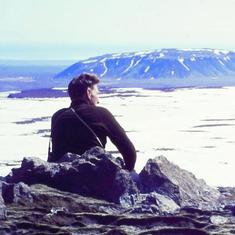
Dosa’s Time And Water, which was premiered at the Sundance Film Festival in January, relies on both home videos shot by Icelandic writer Andri Snaer Magnason and original cinematography. The absorbing documentary twins Magnason’s family history with concerns over the fate of his country’s magnificent glaciers.
Dosa previously examined the risks to Iceland’s volcanic rocks in her 2019 documentary The Seer and the Unseen. In Time And Water, Magnason’s commentary includes the simple and yet existential question: what happens if the ice goes out of Iceland?
Climate change is causing Iceland’s centuries-old glaciers to melt sooner than predicted. Magnason has even authored the obituary of one such glacier. The natural feature that is embedded in national identity, culture and folklore might soon become a thing of the past, Magnason worries.
The massive hunk of ice, which has its own unique sound and rhythms, is also woven into the fabric of Magnason’s life, the documentary reveals. One set of Magnason’s grandparents were glacier enthusiasts who met through a mountaineering club and celebrated their honeymoon at a glacier. Glacier trekking comes naturally to Magnason and his family members.
Time And Water carries over the melancholic, mildly fatalistic tone seen in Fire of Love. Also similar is the personal archive that doubles up as a candid nature documentary.
Although there’s more of Magnason’s family videos than is needed, Time And Water has awe-inspiring vistas of wonderment. When Magnason’s voiceover is silenced and Dosa lets the visuals of the glaciers take over, the connections between personal and ecological become dazzlingly apparent.
The film doesn’t go too deeply into the reasons for the melting glaciers, instead simply inviting us to gape at them – and thereby be moved to protect them. A scene set in a “library” that stores the ice that has melted from glaciers is a sign of what will be lost if the crisis isn’t addressed.
