










All is not well between India and Bangladesh. This time, trouble is along the maritime boundary the two countries share.
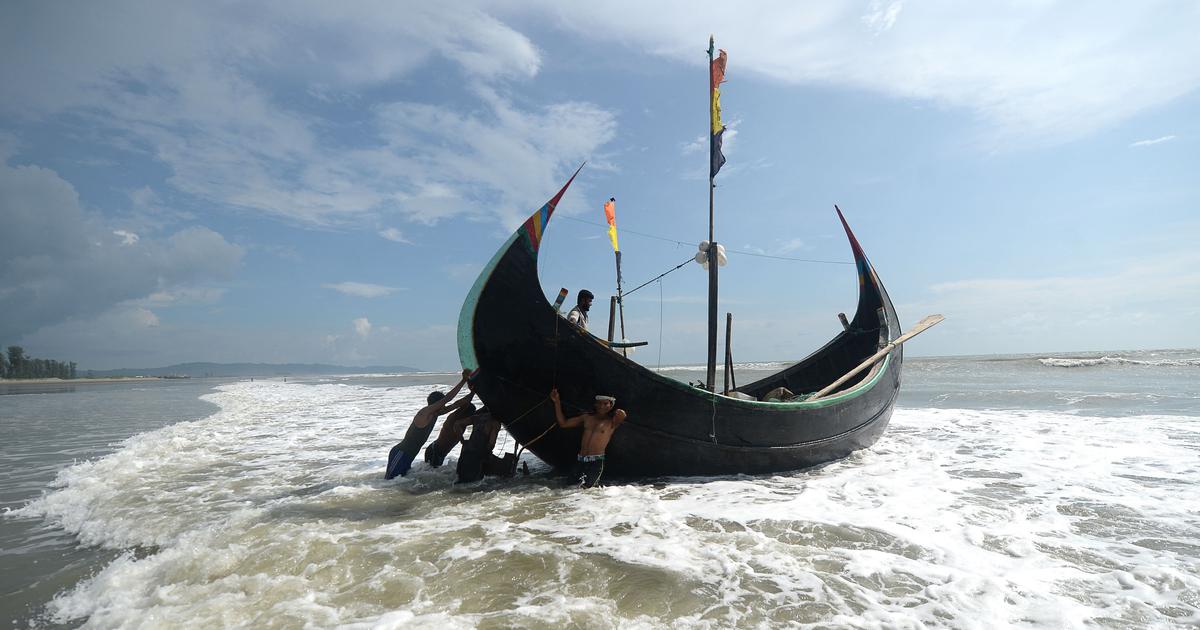
In the first week of August, 14 Indian fishermen were arrested and a trawler, FB Paromita, was detained by the Bangladeshi Navy. Before that, in the second week of July, 34 Indian fishermen were arrested and two trawlers, FB Jhor and FB Ma Mangal Chandi, were detained near Bangladesh’s Mongla Port.
Transgressions by fishermen are a regular issue between India and Bangladesh, but the frequency and intensity of these incidents are on the rise.
In 2024, between August and December, 185 fishermen – 90 Bangladeshis, 95 Indians – were detained. After considerable engagement, the fishermen from both sides were finally repatriated in January.
But with India-Bangladesh relations nosediving, political negotiations look difficult and the issue is likely to turn even more intractable.
Transgressions are common along maritime boundaries.
A steady demand for fish and dwindling resources at sea have led to indiscriminate fishing. Transgressions by fisherfolk happen deliberately or unknowingly. Deliberate transgressions are driven by the mismatch between marine and political geographies and the desperation for a good catch.
Oftentimes, when fishers are chasing a good catch, the temptation to cross the international boundary is too high to resist – despite knowing the repercussions. This can lead to indiscriminate fishing and over-exploitation of fishing resources, which is known as illegal, unreported and unregulated fishing.
Frequently, fishers do not understand that they are, or already have, crossed the maritime boundary line. Unlike land boundaries, international maritime boundaries do not have well demarcated barbed-wire fences.
Though governments conduct awareness sessions and training for fishers, it is hard to tell where the boundary lines are on the sea. For fishing communities, these political boundaries are impositions on their long-established traditional fishing grounds.
Maritime borders
The first step to resolve transgressions is to institutionalise a clearly-drawn maritime boundary between countries. This provides clarity about the extent of sovereign waters, management of resources and allows for the deployment and patrolling of troops who can signal or deter fishers from crossing or inadvertently entering another state’s territory.
But as the India-Bangladesh incidents show, maritime boundaries do not automatically end transgressions. Both countries have formalised their International Maritime Boundary Line, Exclusive Economic Zones and Continental Beds through the Permanent Court of Arbitration in 2014 after several rounds of negotiation, but the transgressions have only continued with neglected and delayed repatriations.
Both states have maritime laws that demand arrests and detentions when foreign vessels are caught fishing in their waters. Transgressions are dealt with through arrests and detentions, and sometimes even shoot-at-sight incidents. Arrests are followed by long, drawn-out judicial processes where the fishermen languish in foreign jails for months. There are no dedicated regional or bilateral frameworks on this issue to repatriate them.
It is surprising that India and Bangladesh have maritime convergences but these do not deal with fishermen transgressions apart from mentioning that they need to be trained to not cross the line. When arrests and detentions soar, local political pressure pushes New Delhi and Dhaka to initiate repatriations out of mutual goodwill and reciprocity.
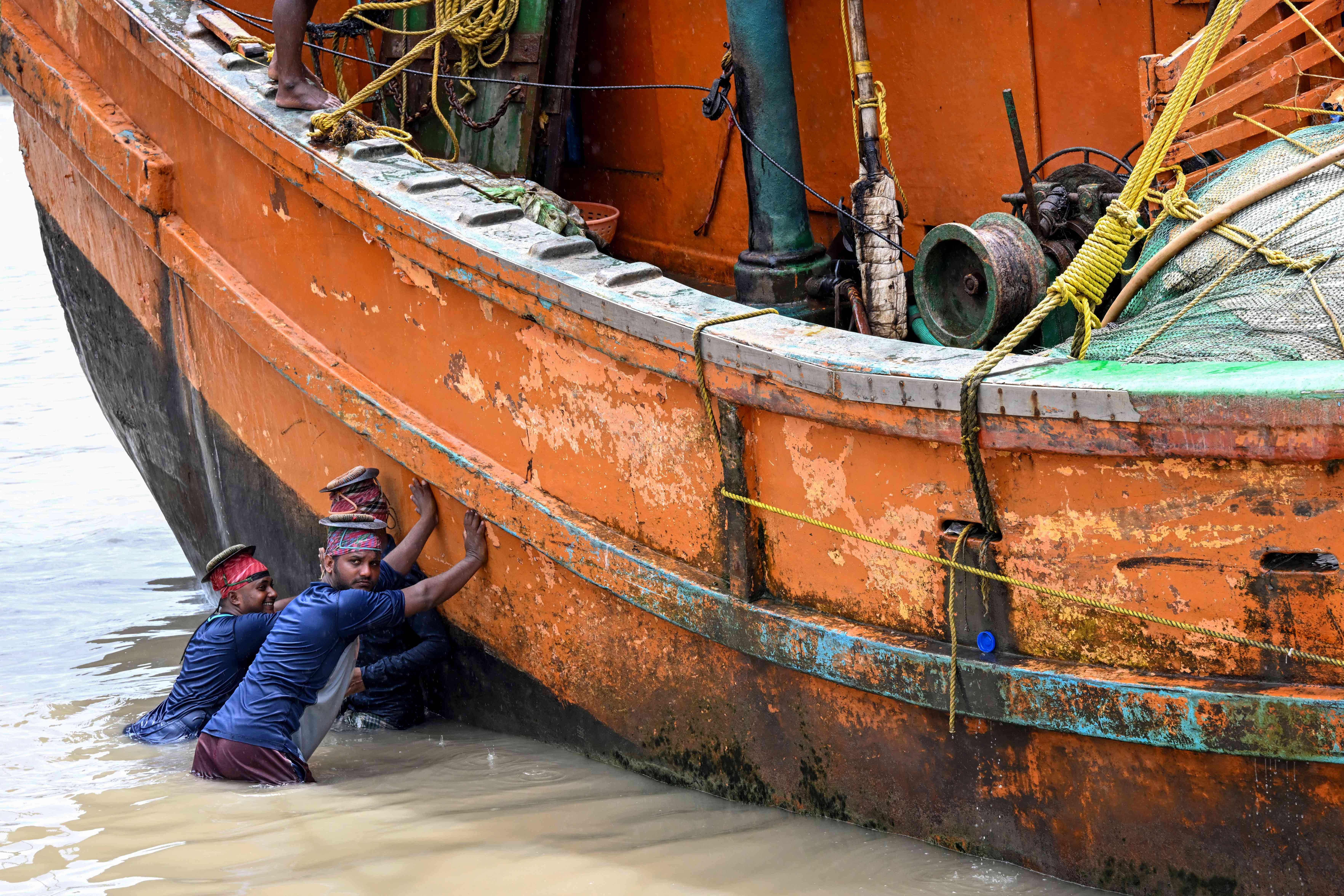
Despite being a regular feature along the maritime boundary, transgressions are at the sidelines of bilateral relations.
There are two reasons for this. First, transgression by fishers is a low-intensity issue. No matter how regularly the maritime boundary is violated, the overall numbers remain low. The issue is not flagged at the higher levels until a substantial number of arrests and detentions feature in the public domain.
Second, unlike the issue of India-Sri Lanka fishers, the India-Bangladesh transgressions are not as fiercely discussed in regional and local-level politics.
Early this year, West Bengal Chief Minister Mamata Banerjee took up the cause of detained fishers more publicly. She welcomed and felicitated repatriated Indian fishermen and highlighted their suffering in Bangladeshi prisons. Banerjee also told fishers not to venture too close to the International Maritime Boundary Line.
Following the arrests in August, the All-Bengal Fishermen Association said the fishers had violated principles by crossing the maritime boundary despite knowing the consequences. It would be better to starve than cross the line and be arrested, said the association.
This implies that there is little state government-level support for these associations and the cause of the fishers venturing into the sea. Fishers have been left to fend for themselves with the association refusing to rally politically on their behalf.
Possible solutions
It is difficult to find a comprehensive solution, but a framework that coordinates two kinds of policies is a good place to start.
The first set of policies must align fishing practices to control indiscriminate fishing and pre-empt transgressions. Transgressions are not the causes but symptoms of indiscriminate fishing. Both countries must independently set limits on fishing in the sea while incentivising alternative livelihood avenues. Given the cultural ties to fishing, it will take a long time to encourage alternative livelihood opportunities.
Simultaneously, the existing methods of fishing must be reconsidered keeping in mind the best ecological practices. There are already warnings that a dead fishing zone is emerging at the heart of the Bay of Bengal. Both countries should coordinate while imposing seasonal fishing bans to rejuvenate marine life. If fishing bans are not in sync, fishers from the other country will get a free hand in overexploiting the catch and even transgress the maritime boundaries. A blue economy, which refers to a sustainable use of ocean resources for economic purposes, can be an effective anchor for these pre-emptive policies.
The second set of policies should deal with situations where transgressions have already taken place. This involves monitoring by armed forces at sea and changes to the standard operating procedures. There must be a separation between innocent and deliberate violations of the maritime boundary line.
India and Bangladesh should align their existing maritime policies and determine whether they would treat fishing in the Economic Exclusive Zones and Territorial Waters at par. Instead of direct arrests and detentions, there can be a segregated and graded approach to minimise human security costs.
If the fishers and vessels of one state are found to be crossing the maritime boundary line but do not have fishing stocks with them, they can be given the benefit of doubt and sent back from the sea. These could be considered innocent violations. If they are found with catch inside the other country’s boundary, the fish and vessels can be seized while repatriating the fishers.
Finally, if vessels and fishers of another state are found fishing in the country’s waters, criminal cases will have to be registered. An untimely judicial process will not make repatriations easy. But it is here that political interventions can help.
Indiscriminate fishing and boundary violations are an inevitable outcome of modern commercial fishing. Without sustainable practices and political agreements, neither human nor ecological resources are safe. India and Bangladesh must go beyond “ad-hocism”, but the major challenge remains the slump in their ties.
Udayan Das teaches at the Department of Political Science, St Xavier’s College (Autonomous), Kolkata and is a Visiting Fellow with Asian Confluence, Shillong.
