





The Buddha had travelled the road from Varanasi to Rajagaha before. He walked slowly and enjoyed the surrounding forests and rice fields. Towards noon, he stopped to beg in a small hamlet by the roadside. He then entered the forest to eat quietly and then did walking meditation right there. When he was finished, he sat beneath a shady tree to meditate. He enjoyed being alone in the forest. After he had meditated for some hours, a group of well-dressed young men passed by, obviously agitated over something. Several of them clutched musical instruments. The young man at the head of their party bowed his head to greet the Buddha and then asked, “Monk, did you see a girl run by here?”
The Buddha asked, “Why do you wish to find her?”
The young man recounted their story from the beginning. They were from the city of Varanasi and had entered the forest that morning on a pleasure outing, bringing with them their musical instruments and a young woman to entertain them. When they had finished singing, dancing, and feasting, they stretched out on the forest floor to take a nap. But when they awoke, they discovered that the young girl had stolen their jewellery and disappeared. They had been chasing after her ever since.
The Buddha looked calmly at the young men and asked, “Tell me, friends, is it better in this moment to find the young woman or to find your own selves?”
The young men were startled. The Buddha’s radiant appearance and his unusual question brought them back to themselves. The first young man answered, “Respected teacher, perhaps we should try to find ourselves first.”
The Buddha said, “Life can be found only in the present moment, but our minds rarely dwell in the present moment. Instead, we chase after the past or long for the future. We think we are being ourselves, but in fact we almost never are in real contact with ourselves. Our minds are too busy chasing after yesterday’s memories or tomorrow’s dreams. The only way to be in touch with life is to return to the present moment. Once you know how to return to the present moment, you will become awakened, and at that moment, you will find your true self.
“Look at these tender leaves caressed by the sunlight. Have you ever really looked at the green of the leaves with a serene and awakened heart? This shade of green is one of the wonders of life. If you have never really looked at it, please do so now.”
The young men grew very quiet. With their eyes following the Buddha’s pointing finger, each of them looked at the green leaves gently swaying in the afternoon breeze. A moment later, the Buddha turned to the youth sitting on his right and said, “I see you have a flute. Please play something for us.”
The youth felt shy, but he lifted his flute to his lips and began to play. Everyone listened attentively. The flute’s sound was like the lamenting cry of a disappointed lover. The Buddha’s eyes did not waver from the young man playing the flute. When he finished his song, sadness seemed to veil the afternoon forest. Still no one spoke, until suddenly the young man held out his flute to the Buddha and said, “Respected monk, please play for us.”
The Buddha smiled as several of the young men burst out laughing, taking their friend for a real fool. Whoever heard of a monk playing the flute? But to their surprise, the Buddha took the flute in his hands. The young men all turned their eyes to the Buddha, unable to mask their curiosity. The Buddha took several deep breaths and then raised the flute to his lips.
The image of a young man playing the flute long ago in the royal gardens of Kapilavatthu arose in the Buddha’s mind. It was a full moon night. He could see Mahapajapati sitting on a stone bench quietly listening. And there was Yasodhara with her freshly lit incense holder of fragrant sandalwood. The Buddha began to play the flute.
The sound was as delicate as a thin strand of smoke curling gently from the roof of a simple dwelling, outside Kapilavatthu at the hour of the evening meal. Slowly, the thin strand expanded across space like a gathering of cloud,s which in turn transformed into a thousand-petalled lotus, each petal a different shimmering colour. It seemed that one flutist suddenly had become ten thousand flutists, and all the wonders of the universe had been transformed into sounds – sounds of a thousand colours and forms, sounds as light as a breeze and quick as the pattering of rain, clear as a crane flying overhead, intimate as a lullaby, bright as a shining jewel, and subtle as the smile of one who has transcended all thoughts of gain and loss. The birds of the forest stopped singing in order to listen to this sublime music, and even the breezes ceased rustling the leaves. The forest was enveloped in an atmosphere of total peace, serenity, and wonder. The young men sitting around the Buddha felt completely refreshed, and they now dwelled completely in the present moment, in touch with all the wonders of the trees, the Buddha, the flute, and each other’s friendship. Even after the Buddha put the flute down, they could still hear the music. Not one of the young men thought about the young woman or the jewels she had stolen.
No one spoke for a long while. Then the young man to whom the flute belonged asked the Buddha, “Master, you play so wonderfully! I’ve never heard anyone who could play so well. Who did you study with? Would you accept me as your student so that I could learn flute from you?”
The Buddha smiled and he said, “I learned to play the flute when I was a boy, but I have not played in nearly seven years. My sound, however, is better than it was before.”
“How can that be, master? How can your playing have improved if you have not practised in seven years?”
“Playing the flute does not depend solely on practising the flute. I now play better than in the past because I have found my true self. You cannot reach lofty heights in art if you do not first discover the unsurpassable beauty in your own heart. If you would like to play the flute truly well, you must find your true self on the Path of Awakening.”
The Buddha explained the path of liberation, the Four Noble Truths, and the Noble Eightfold Path. The young men listened intently, and when the Buddha was finished speaking, every one of them knelt down and asked to be accepted as a disciple. The Buddha ordained them all. He then instructed them to make their way to Isipatana and introduce themselves to the bhikkhu Kondanna who would give them guidance in the practice of the Way. The Buddha told them he would see them again before long.
That night, the Buddha slept alone in the forest. The next morning, he crossed the Ganga and headed east. He wanted to visit the children of Uruvela before making his way to Rajagaha to see King Bimbisara.
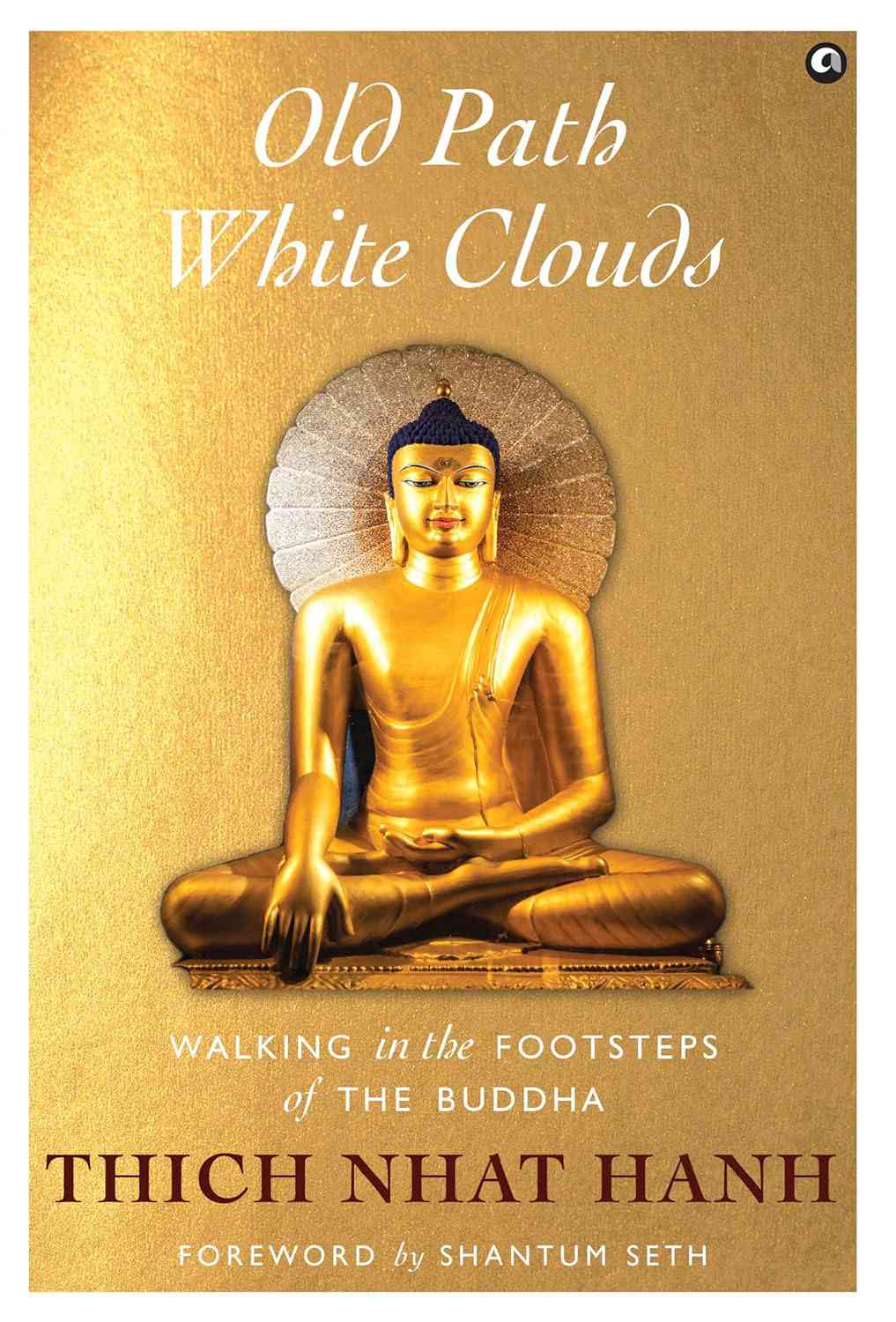
Excerpted with permission from Old Path White Clouds: Walking in the Footsteps of the Buddha, Thich Nhat Hanh, Aleph Book Company.
